
05.2020 Adapt or Die
Time is not a circle. When it is said history repeats itself, it means past lessons have not been learned. When it is said there is nothing new under the sun, it means perceived originality can’t help but reference the past. There is an irresistible gaze over the shoulder, but time is an uncontrollable tumble forward.
There is no normal. It is not a quantifiable state. Normal only refers to a previous state we had grown to accept. When the status quo is disrupted, we can only settle into a new status quo. It is impossible to bring what was normal back because time is not a circle.
Right now normal is: working from home, takeout, face masks, drive-ins, video calls, Netflix parties, solitary walks.
Who knows what normal tomorrow will bring.
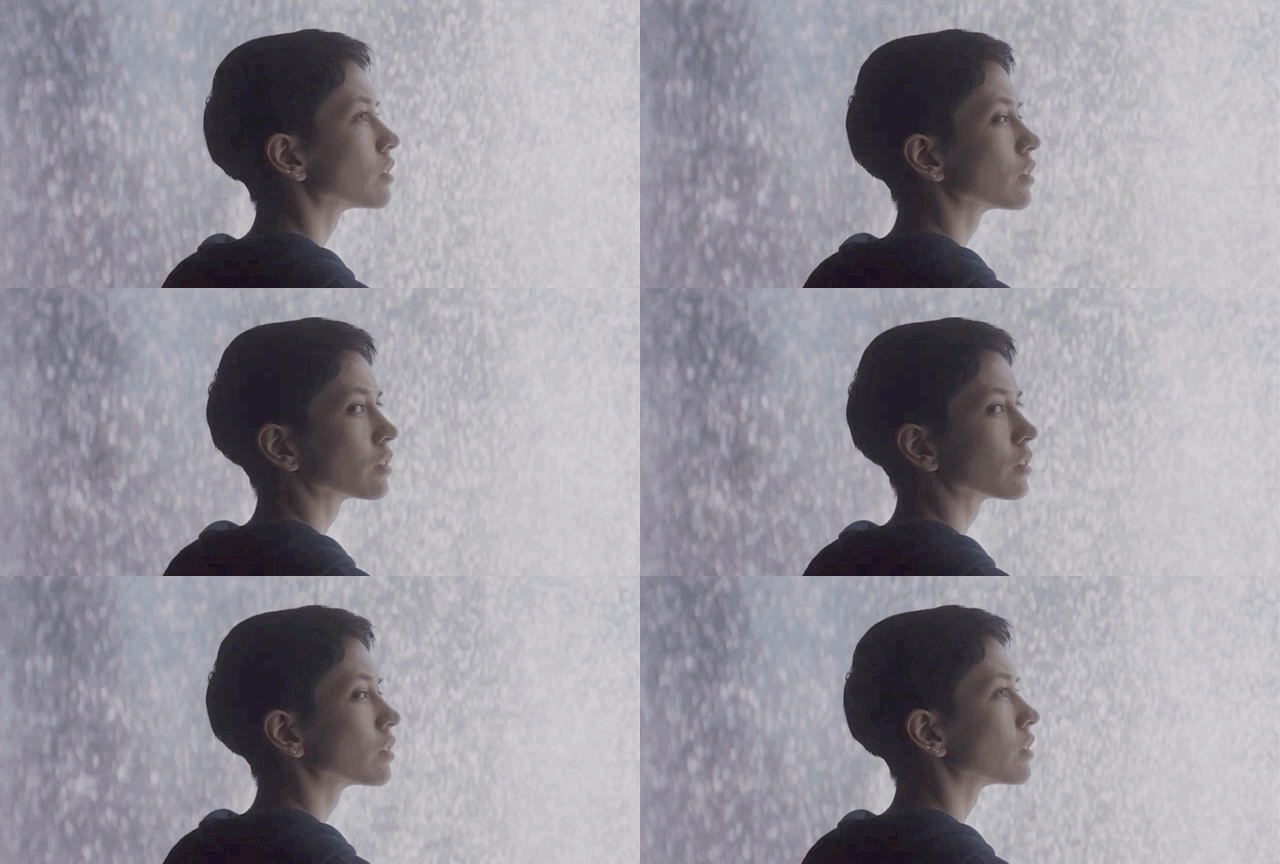
DEVS
These are true about DEVS: the dialogue can be awkward, the performances wooden, the imagery stunning, and the concepts overwhelming.
DEVS is hardcore sci-fi.
When I read sci-fi, I judge it by the number of times I have to put down the book and attempt to wrap my mind around its contents. I paused DEVS a lot to simply sit in silence and think.
Alex Garland delivers yet again.
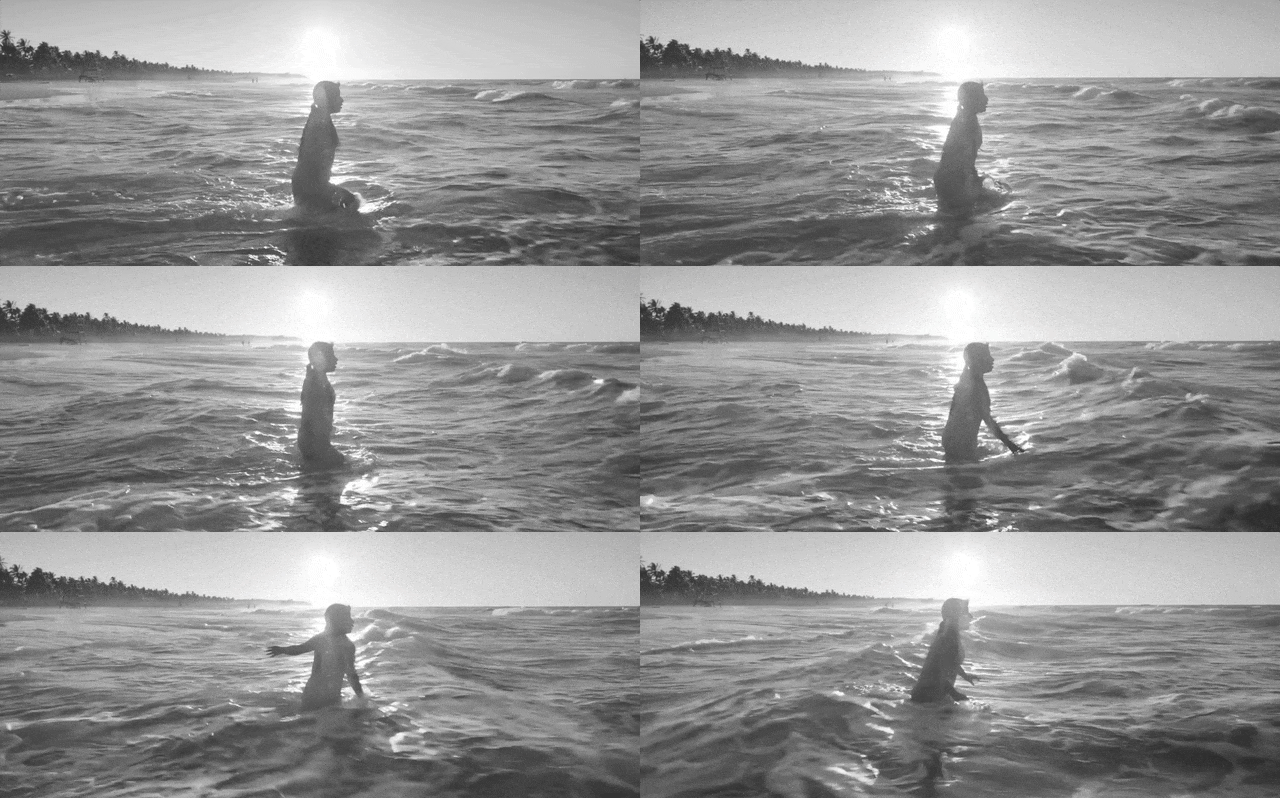
Roma
Roma is a film I will have to revisit many times. The long, scoreless takes of mundane life in black in white ought to conjure boredom, but the result is magic. These characters took hold of my heart from the very first scene and showed me a time and culture I knew little about. When I was not engrossed by the drama unfolding, Alfonso Cuarón took my breath away with his masterful cinematography. His “simple” long takes are masterclasses of movement, blocking, and composition.
Pure art and emotion.
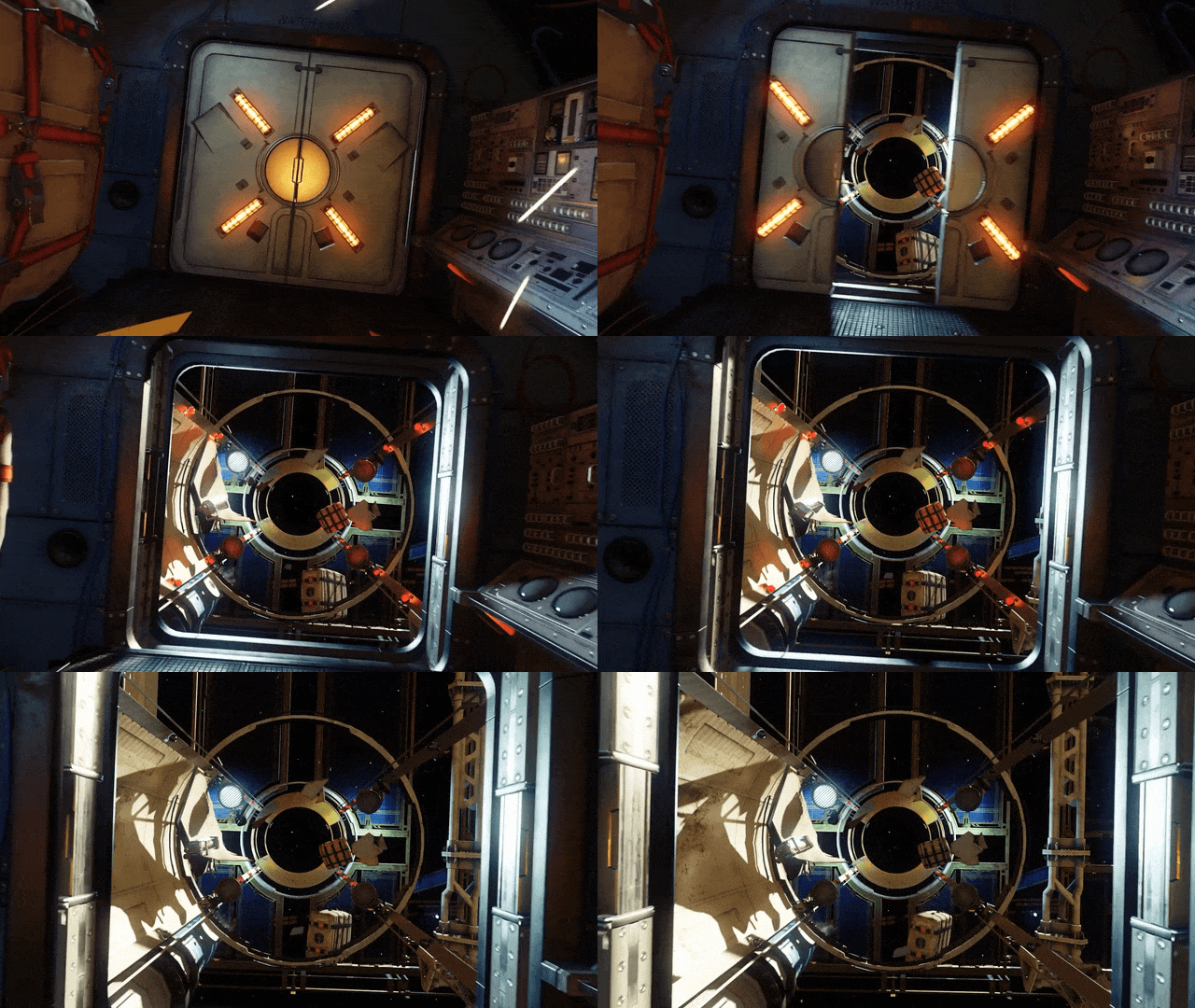
Prey (2017)
The parts of Prey sound great written out. A retro-future '60s aesthetic. A sci-fi tale that causes you to second-guess what you think you know. Deliberate, slow-paced gameplay involving exploration, environmental puzzles, and tough combat. Aliens.
But they don’t seem to sum for me. The promotional materials for Prey are far more aesthetically interesting than the visuals that ended up in the game. The design decisions for the environments and objects don’t seem to mesh properly.
The alien foes, Mimics, are just different variations of black boogymen that are neither scary or interesting. You would think the fact that the weakest variant can disguise itself (mimic) any object and attack you when your back is turned would be terrifying. But it ends up merely annoying.
The combat is clunky and the enemies feel unnecessarily hard. I know the studio is going for a survival horror vibe with scarce ammo and the player feeling underpowered at the beginning. Yet, halfway through the game my character doesn’t feel any more powerful and the enemies are only getting stronger. So combat feels, again, annoying.
Maybe I’m playing it wrong.
What sustains me is the story. It’s interesting and I don’t know where it’s going. I guess that’s enough.
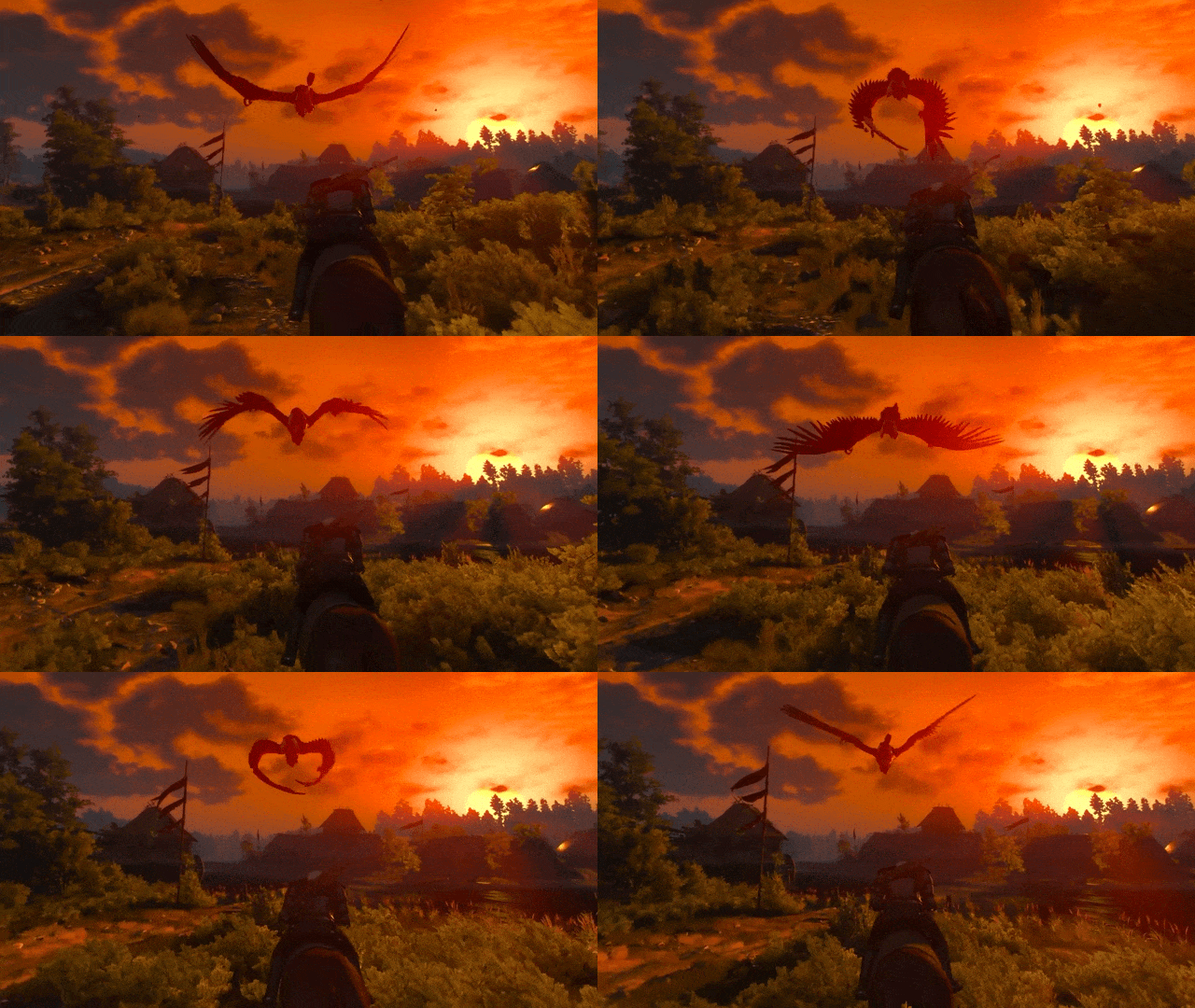
The Witcher
I’ve been reading through The Witcher series for the better part of a year. This project was initiated by playing The Witcher 3: Wild Hunt a video game adaptation by CD Projekt — of which I’ve played an embarrassing 170 hours to date — then interrupted by Netflix’s series adaptation of the books, and finally I turned the last page of the last book this month.
I am enamored by the world Andrzej Sapkowski has wrought. But I must say I prefer the short story collections that precede the mainline series. The author's writing style is sparse, only describing what is necessary, instead focusing on action and dialogue. He leaves it up to the reader to fill in the gaps with their imagination. I appreciate this style immensely, mainly because it is similar to that of contemporary scriptwriting.
The short story collections feature nonlinear vignettes that are not drawn together until the end. And the eponymous Witcher is never really introduced. He drifts in and out of the tales, often from a third party's perspective. He is mysterious, mythic at times. Then mundane, and grounded at others.
The novels hold to this sparse style, for the most part, and the nonlinearity to a degree. But Sapkowski does gradually become more detailed and verbose, a similar evolution that can be seen with A Song of Fire and Ice. For that reason, the novels hold a little less magic for me. The scope becomes so grand for a story I wish stayed small. Sapkowski dives deep into the politics of war, economics, racism and colonialism. And I do not begrudge him that exploration. These are his books. In fact, he succesfully conveyed to me a sense of helplessness in the face of tyranny.
I just would have liked another short story collection.
I must say the ending to the series is stunning. And that Sapkowski held to his theme to the end: dark realities lurk behind revisionist fairytales.
Watch:
“The Past We Can Never Return To”
animation by Kurzgesagt
words by John Green