
Color Symbolism in The Green Knight
The Green Knight is rich in symbolism. I’ve read dozens of articles that attempt to unravel this tapestry to discern its meaning. All have been fascinating. I have nothing to add. But I am enamored by the use of color in the film. All I offer are musings and no answers.
Colors have always shouldered deep meaning, often symbolizing contradictory themes. This film leans boldly into them with masterful visual simplicity and an enthralling monologue that explicitly defines green as dominant over all else. Green is naturally the theme color (it’s in the name), but visually there are more to examine.
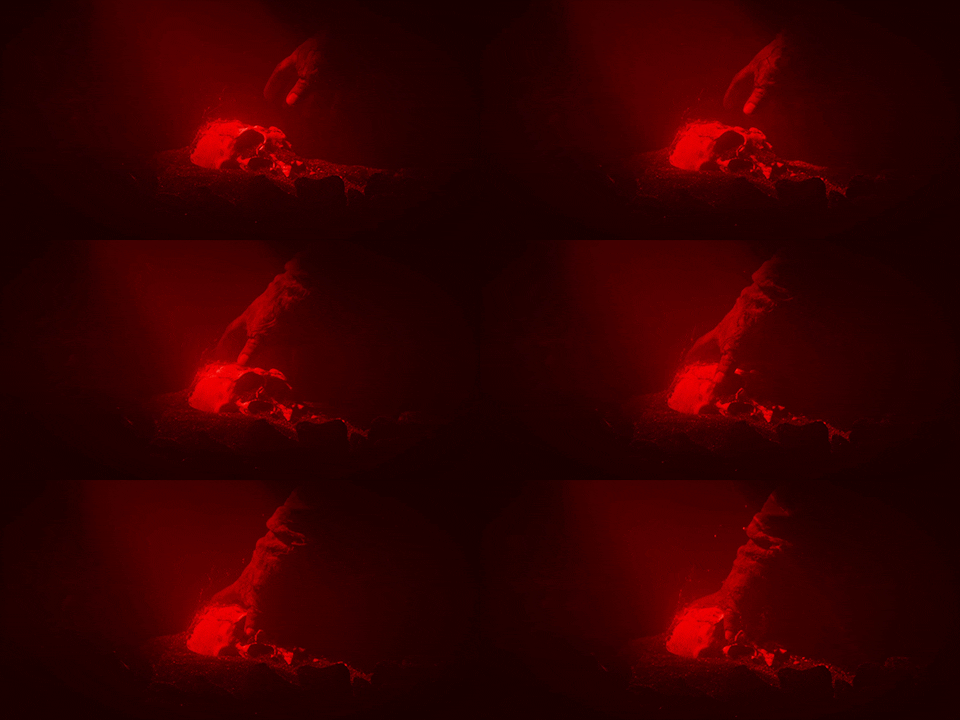
RED
We see this color the least. Blood. Spilt wine. Briefly, when Merlin works his magic. And most prominently, during dive into the spring to recover Winifred’s skull. Red is often associated with passion, desire, and courage, but also anger, danger, and violence.
In the case of Winifred, the red scene likely highlights the nature of her death. What we can glean from the character in The Green Knight and the legend of Saint Winifred (likely the movie version’s inspiration) indicates her lover or aspiring suitor (or rapist) murdered her via decapitation.
I don’t think this color relates to Gawain directly. However, it does imply that Winifred knows the worst of man and that her measure of Gawain’s knightliness (or lack thereof) is accurate.
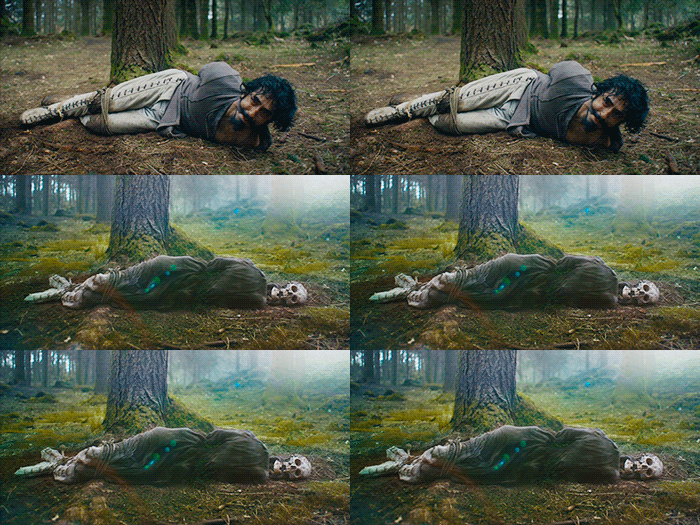
BLUE
This shade (for it mainly appears as a shade) appears around humanity/civilization, especially in Arthur’s throne room. Blue is associated with loyalty, peace, and wisdom, but also sadness, cold, and faith.
I believe blue functions as an opposite theme to that of green, even if it is not a direct contrast. Rather, it may simply invoke a sense of cold and placidity in distinction to one of warmth and vibrance. When Gawain imagines his death in the forest, his resting place is depicted amid a verdant spring, but when we return to his living present, the forest is cool and brown. True, a natural progression of seasons, but also a comparison of the presence versus the absence of man. While this shade may thematically define human locations like the throne room, I’d argue blue’s purpose is mainly to evoke a sensation.
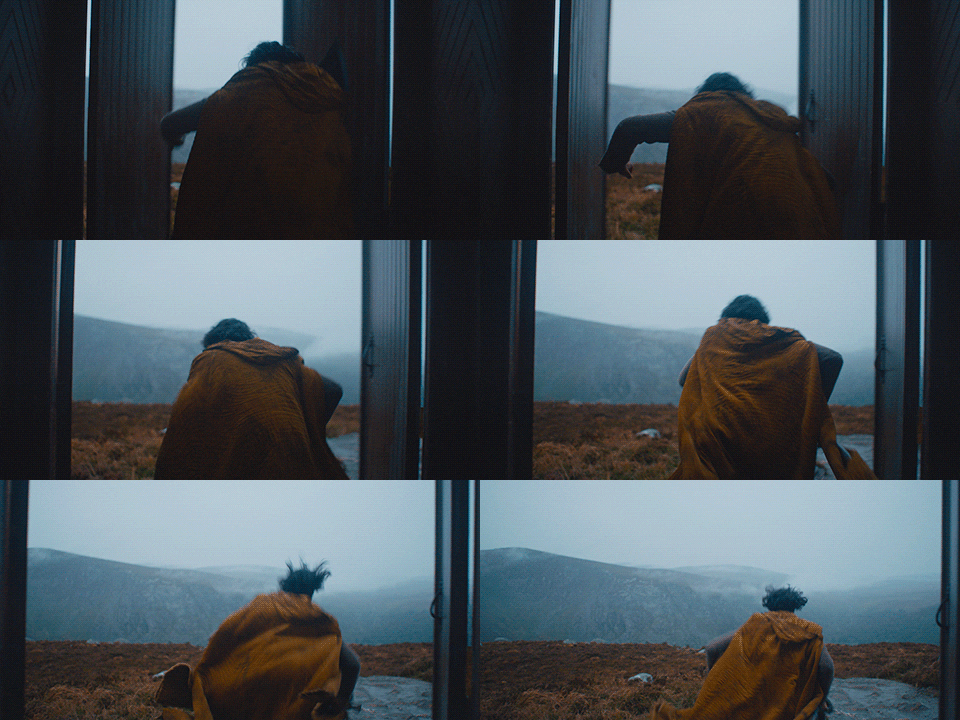
YELLOW
Gawain’s color. He wears it proudly about his neck. The color represents joy, sunshine, and hope, but also famously cowardice, danger, and madness. This coloring allows the protagonist to stand out in his surroundings. It also efficiently defines his character.
Mixing yellow and blue together results in —
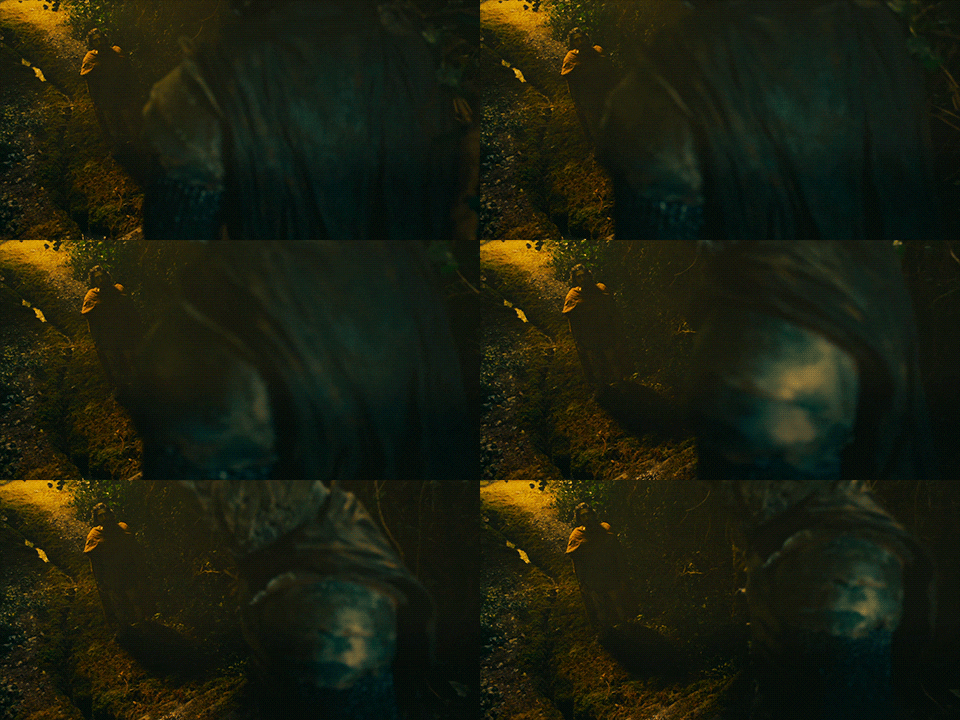
GREEN
It’s everywhere. It is both threatening and joyous in the film. It is directly described as representing nature by the Lady. We should take that at face value.
Green also represents life, newness, health, and fertility, but also envy, inexperience, sickness, or even death.
The Lady’s monologue effectively explains all these dichotomies, heralding green as both decay and renewal. And man’s powerlessness before it. While the Green Knight is the wild embodiment of this vibrant cycle, Gawain is desperate to garb himself in a girdle of a similar hue. He believes it will protect his life from the Green Knight’s strike, but a vision of the future shows it to be more of a poison in the end.
Green embodies its varied symbolism more thoroughly than any other color in the film. After all, green is nature. And everything bows before it.