Travelogue: Thailand
Travelogue was a pop-up newsletter that ran from July 19-31 of 2025 and documented my return to Thailand in May, eight years since my last visit and 15 years since I left my childhood home to attend college in the States.
“Pop-up” means it ran for a period of time and then disappeared; the email list was deleted. The entries of reflection, photography, and ambient video recordings are preserved here as one document.
July 19, 2025
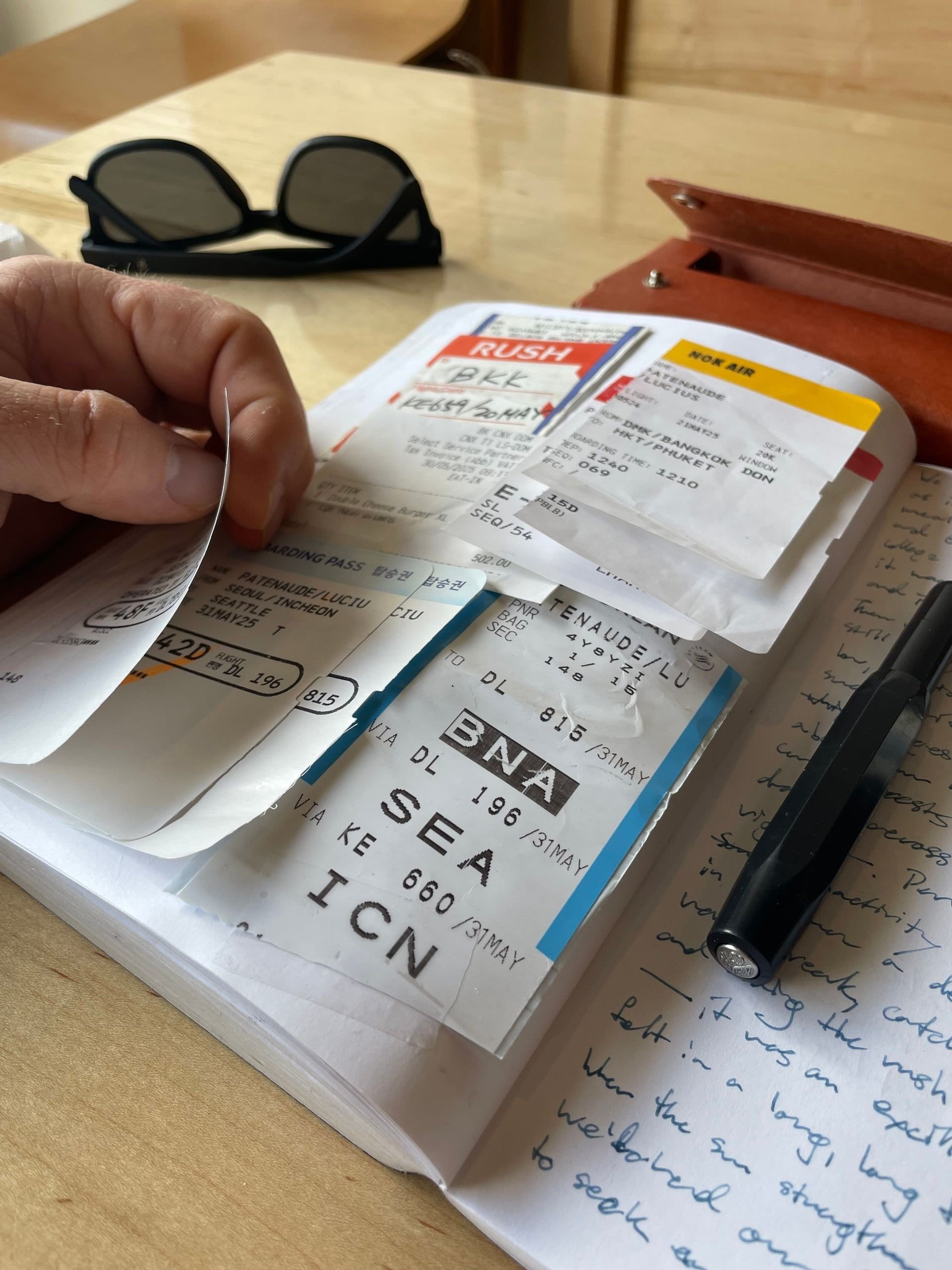
05.19.25 | BNA>SEA
It is impossible to sleep the night before a morning flight. Even though I packed early and checked and rechecked my bags. Even though I have all my tickets and documents in order. Even though I set five alarms I wouldn’t need. Sleep is light and fitful.
Arriving at the airport before the sun and settling in at the departure gate with the morning light is a familiar ritual. Not one I crave. But one I have fondness for. So is this flightpath--from the middle of the country, to the coast, to East Asia, to home.
I was four years old when we moved to Thailand. I remember we had to wake up at 4 a.m. to catch our flight at DFW. It was my first time flying on a plane. And it was taking us to the exact opposite side of the globe. Twelve hours time difference from Texas. The flight was long and arduous according to my parents. I remember nothing, mercifully, of the hours in the air, extended layovers, of packing up a whole life and shipping bits of it by boat to a foreign country, of worrying about passports and visas, of learning a new language, of leaving friends and family far, far behind.
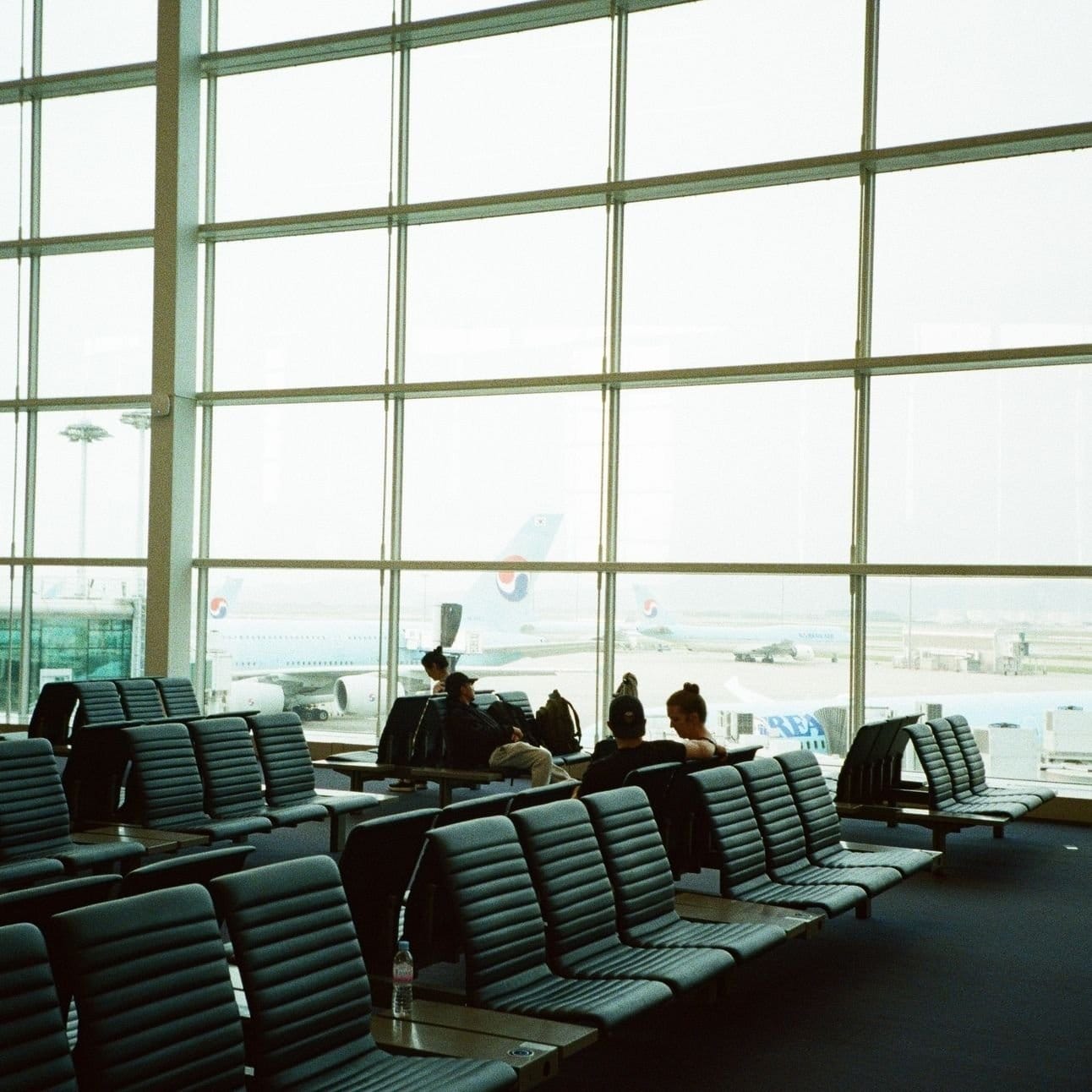
It was nothing but adventure for me. And quite normal. I traded Texas for Thailand without qualms. Everything is strange and wondrous as a child, so everything is easily embraced.
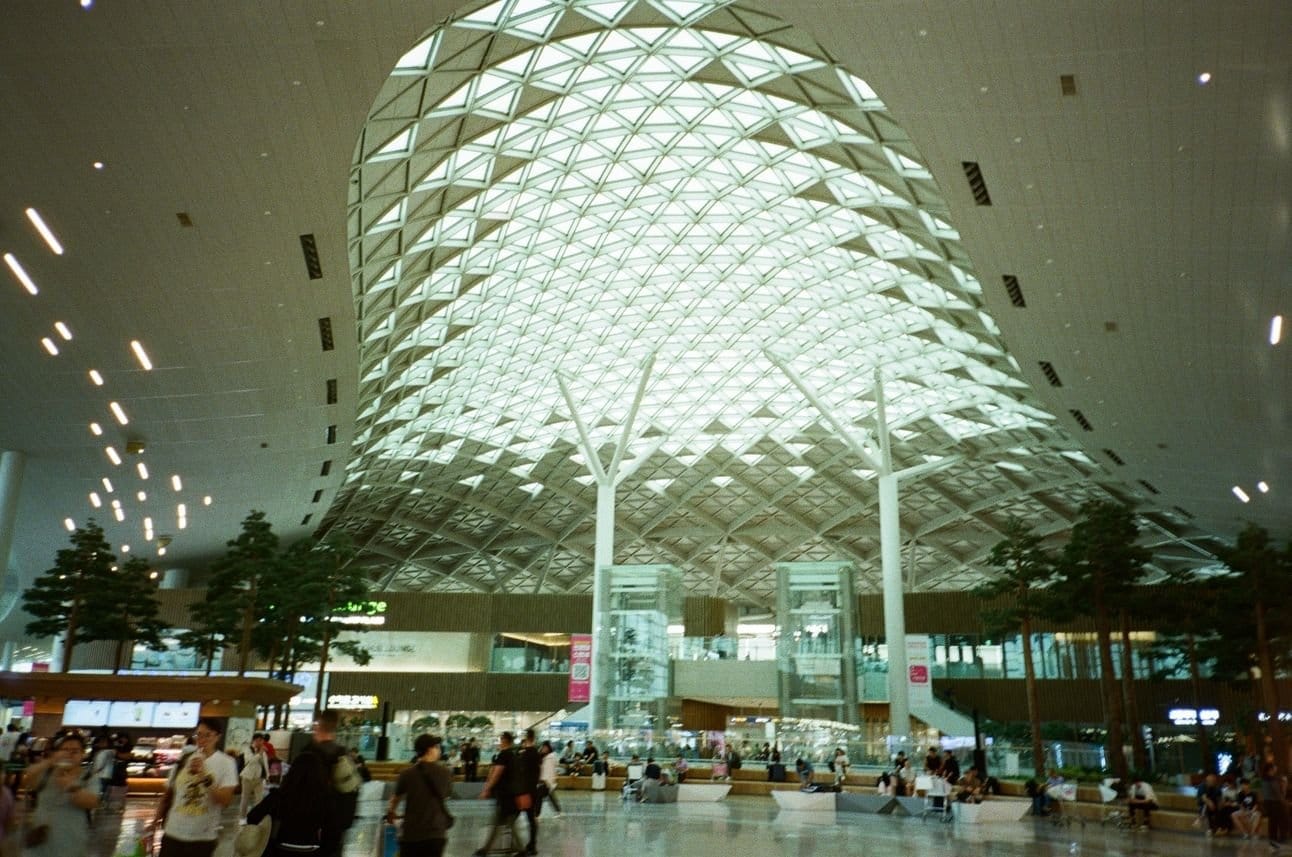
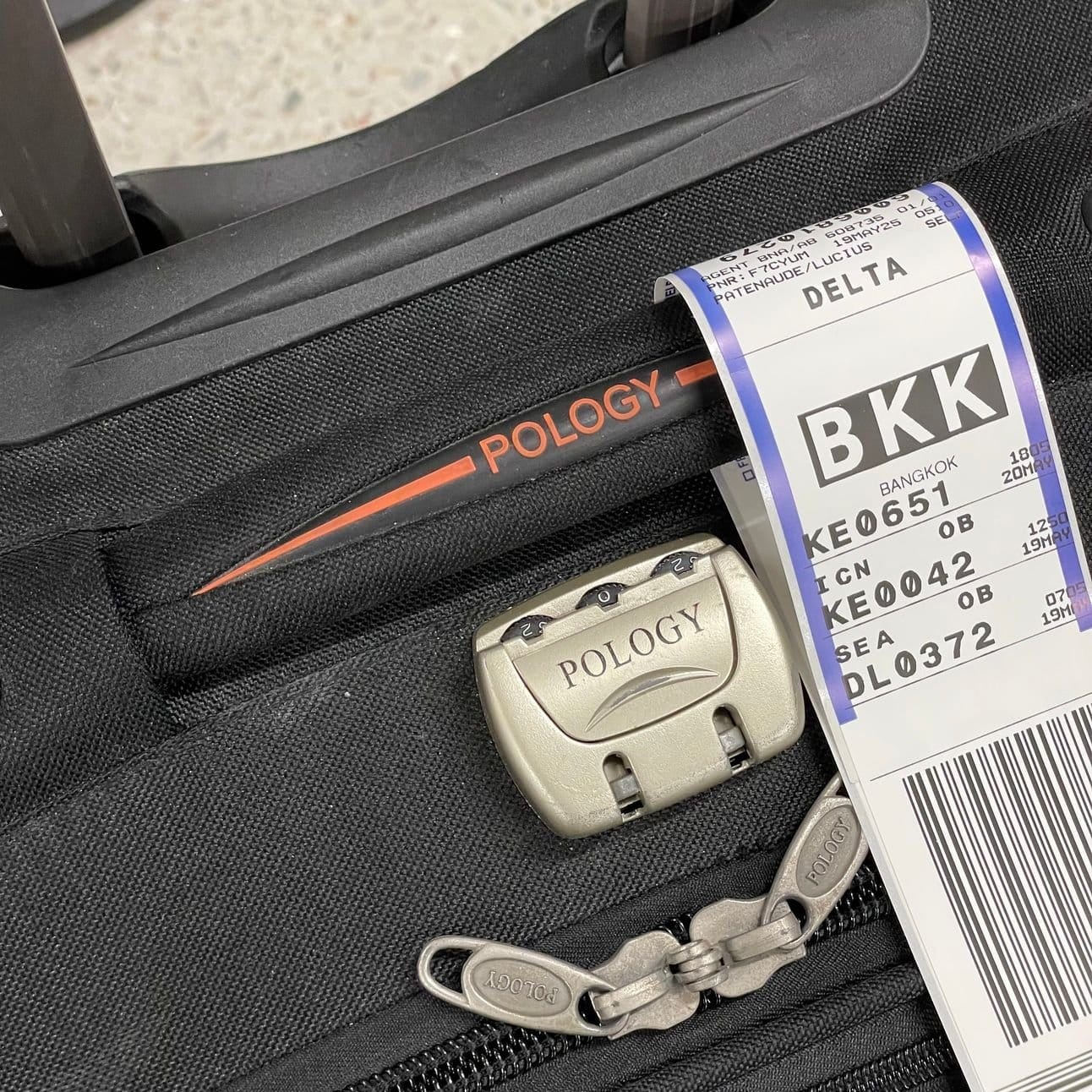
We start boarding. My first stop is Seattle. A first for me. We typically began our Pacific crossings from LAX. But then it’s on to Incheon, an airport I’ve flown through more times than I care to count.
July 20, 2025
05.20.25 | SEA>ICN>BKK
Sleep is also impossible in the air. I try. Earnestly. The most I manage is three hours skimming the unconscious. Not enough for over 24 hours of total travel time. Movies transport me instead. I don’t know the number of movies I have watched flying over the Pacific. It’s an opportunity to catch up on things missed and take chances on things I’d never consider. I remember watching Lars and the Real Girl and being moved despite the odd premise. I remember being baffled and annoyed by The Tree of Life and nearly writing it off until I saw it again on a proper screen.
My parents dedicated precious space in the crate to a box of VHS tapes when they moved us to Thailand. The Aristocats, Toy Story, piecemeal recorded episodes of Star Trek: The Next Generation. We wore these tapes out and mourned their passing once the humidity inevitably allowed mold to grow. The library of tapes would be replaced and grown with each visit to the States. Then converted to a new format--first to VCD, then to DVD.
Movies were family time. They wound the day down. We would crowd into one of the few rooms with air-conditioning, usually our parents’ bedroom, with plates of dinner and watch a movie we’d seen tens of times over on a small CRT TV. Often, there would be an intermission for bowls of ice cream.
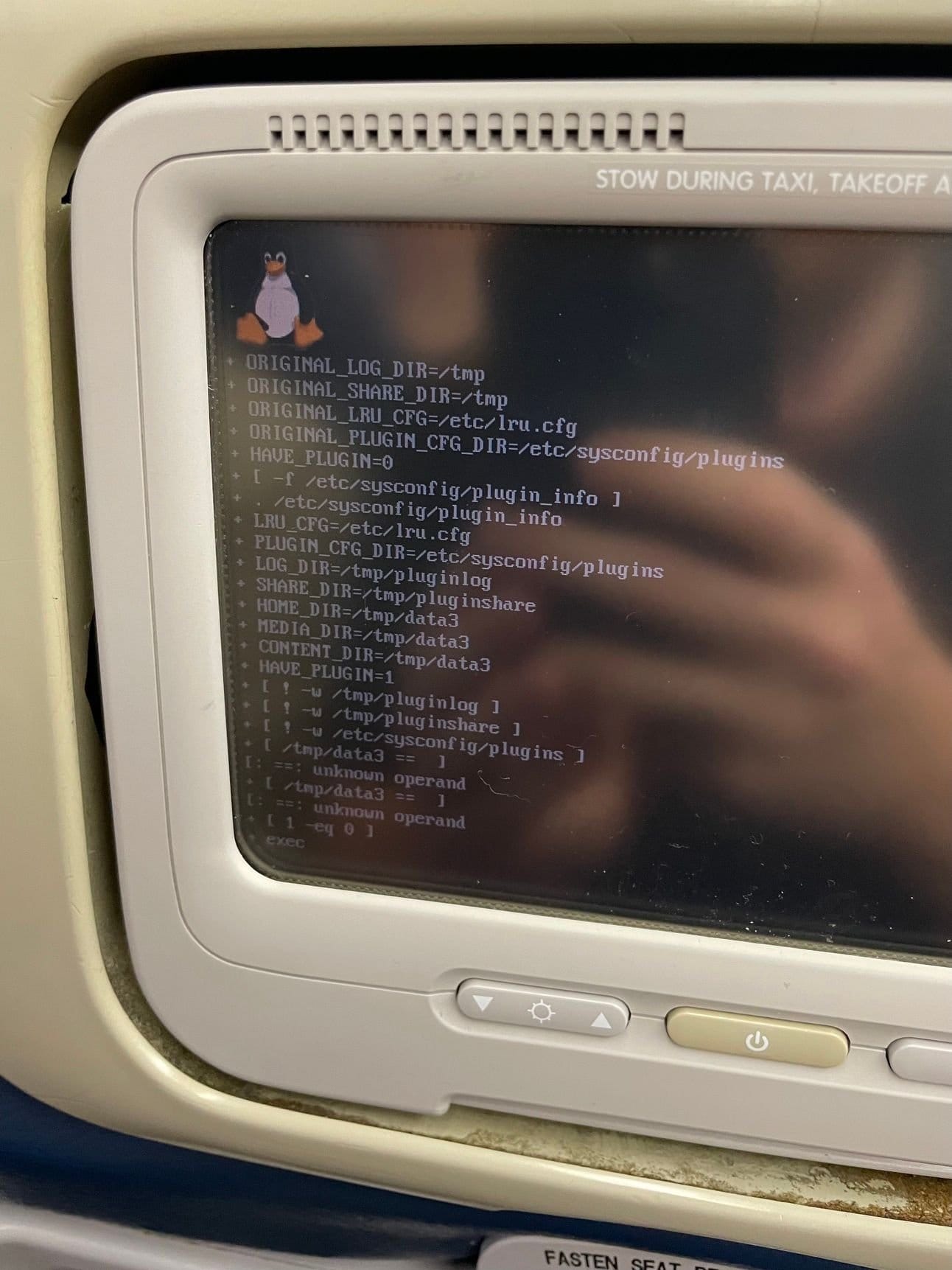
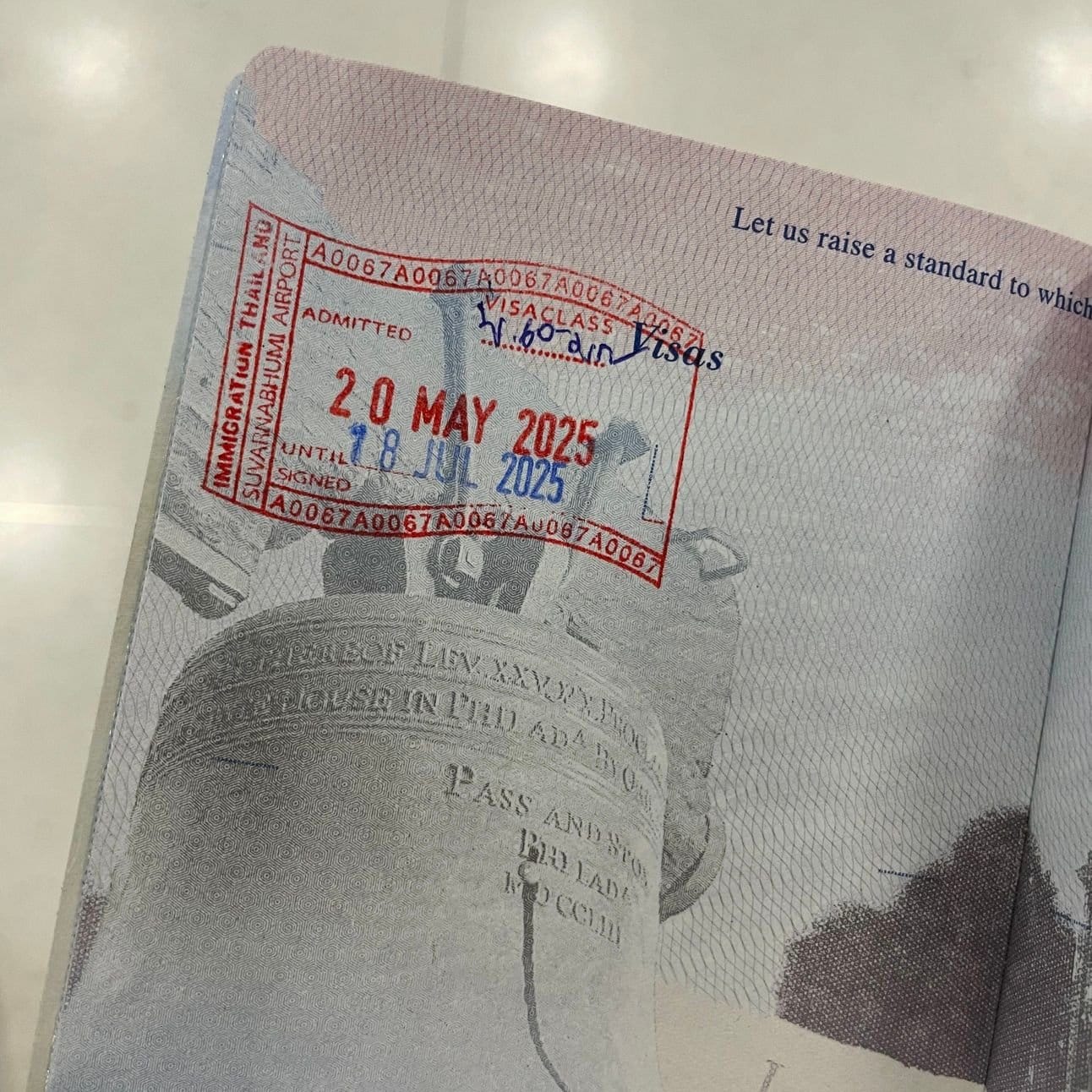
The flight to Thailand is a spiral of new movies, futile sleep, and bibimbap--unfortunately protracted when I learned at the baggage claim in Bangkok my luggage was delayed. My suitcase was put on the flight behind mine. Then there is the hour-long taxi ride to the north side of the city. And finally, well past midnight on Wednesday, May 21st, I am able to shower and crawl into a real bed.
July 21, 2025
05.21.25 | DMK>HKT
Thailand greets me with rain in the morning. The reality that I have returned to the country of my childhood has not struck me until this moment. My father kindly booked me a hotel directly across the street from the domestic airport. I simply walk over a skybridge to catch my morning flight to Phuket.
I feel the humidity embrace me as soon as I leave the hotel. It’s a broad, weighty warmth. Too early and cool to be sticky yet so I only feel the thickness. This is what I always notice first arriving in another country. The first breath. When I visited Texas as a child, the air tasted sharp, cold, thin, fresh. I found it exciting, invigorating. Now I drink in this heavy, warm, vegetal, musty air and feel the same excitement.
I check my bags and as I stow my boarding pass a torrent begins to fall outside. Earlier, the sky had been covered with a creamy down. Calm, and non-threatening. The sidewalks were dry and dusty. Now the vaults of heaven are open and thunder against the ground in undulating curtains of rain. This releases in a moment, without warning. And it will be gone just as swiftly. This is rainy season.
I laugh at how my Weather app attempts to explain the climate. It perpetually displays a severe weather warning, predicts 100% chance of rain, and forecasts temperatures and humidity ranging from the low to high 80s throughout the week. The forecast is useless. It will be dry and clear until the sky lets out an almighty sneeze drenching everything under it and this silly little app can’t say when except it can happen at any moment.
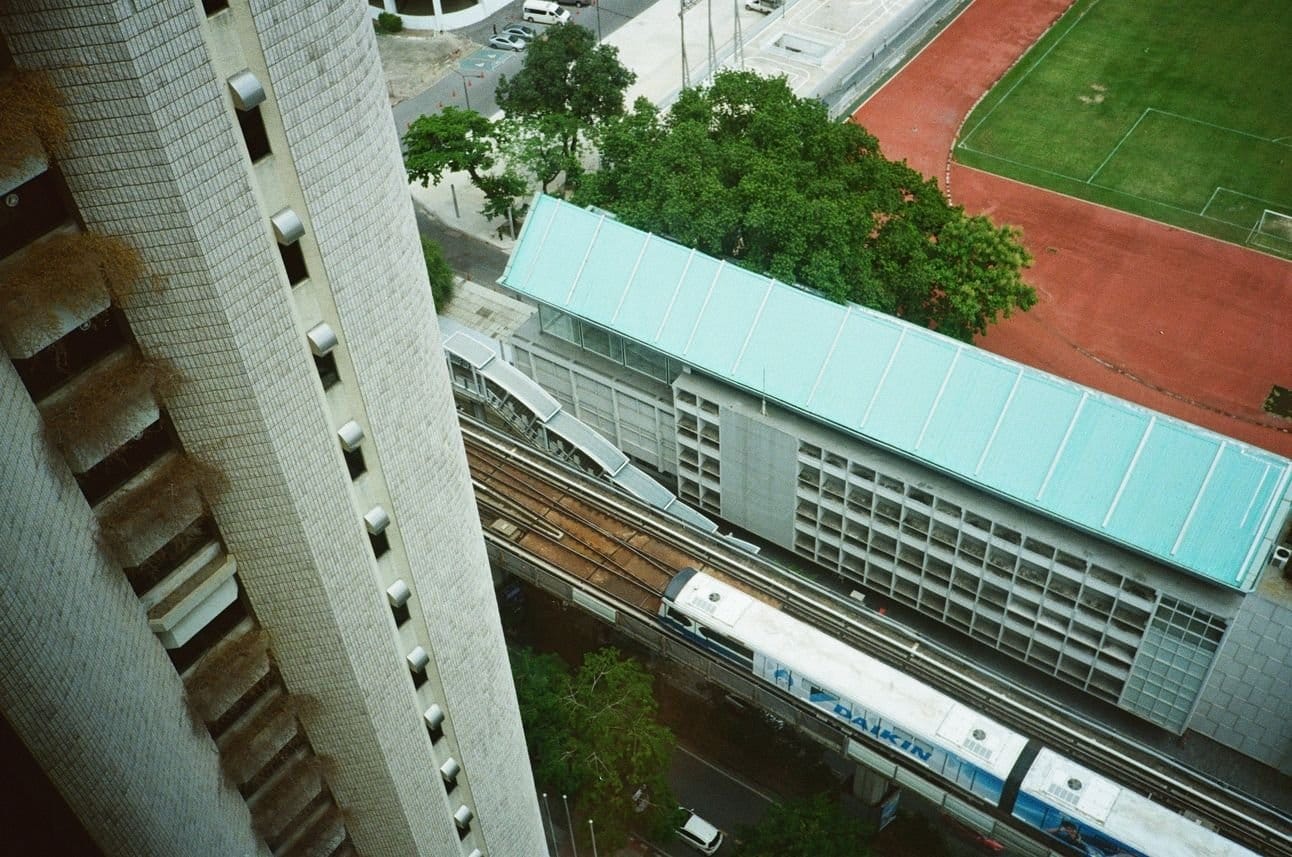
This is reflected in the culture. Unless one has an important appointment, you don’t bring an umbrella along. When it rains, people simply step under an awning, a tree, or inside a building and wait for the rain to pass. Here they yield to the weather.
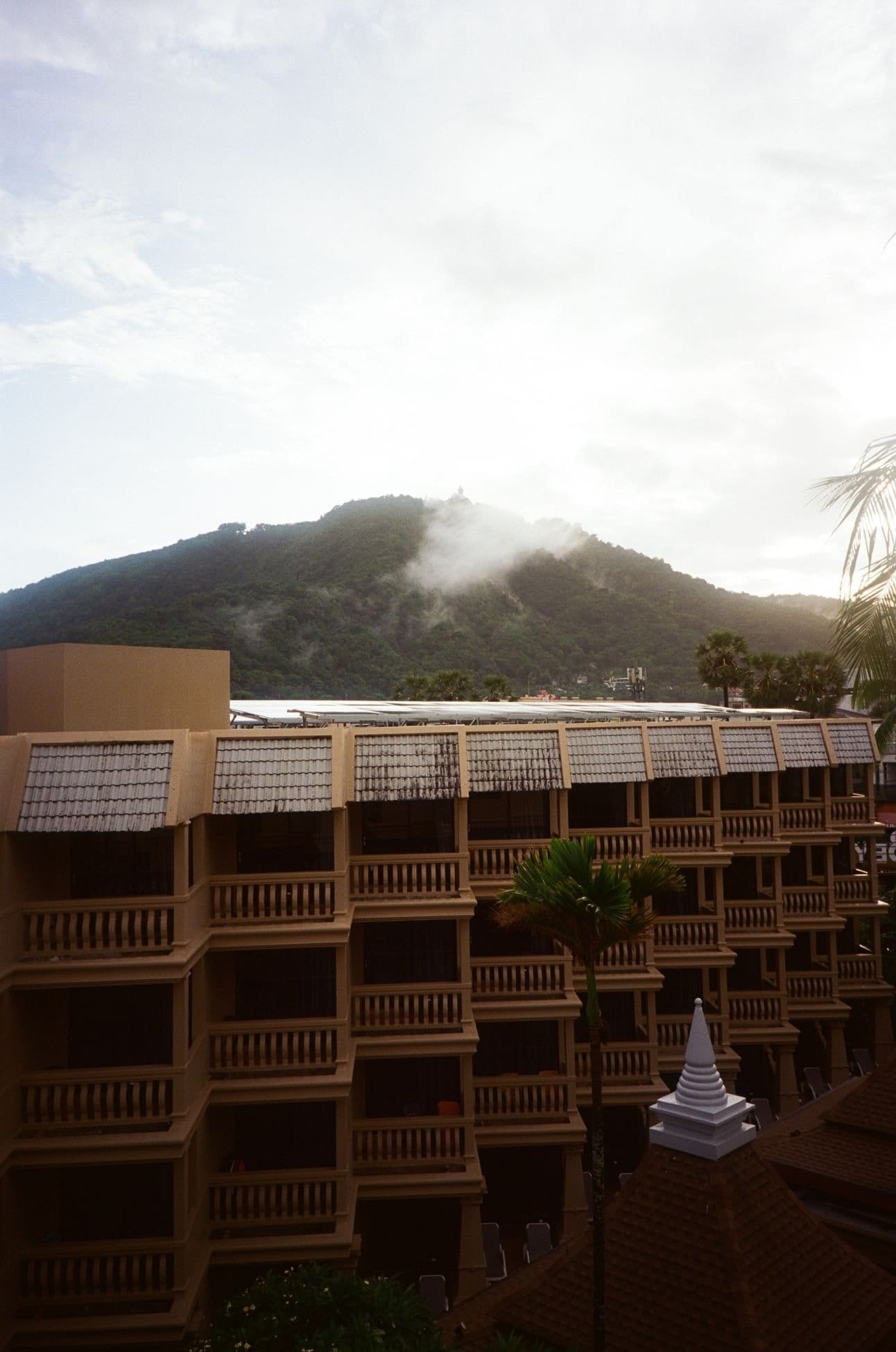
The flight to Phuket is uneventful, as is the long taxi ride to Kata beach. And finally I am reunited with my parents and little brother. They wait for me in the resort lobby and embrace me the moment I leave the car.
July 22, 2025
05.22.25 | Phuket
The primary reasons to visit Thailand are the food and fruit. When Dad was planning the trip, he asked me if there was anything I wanted to do specifically. My response was, “to be there, and eat.”
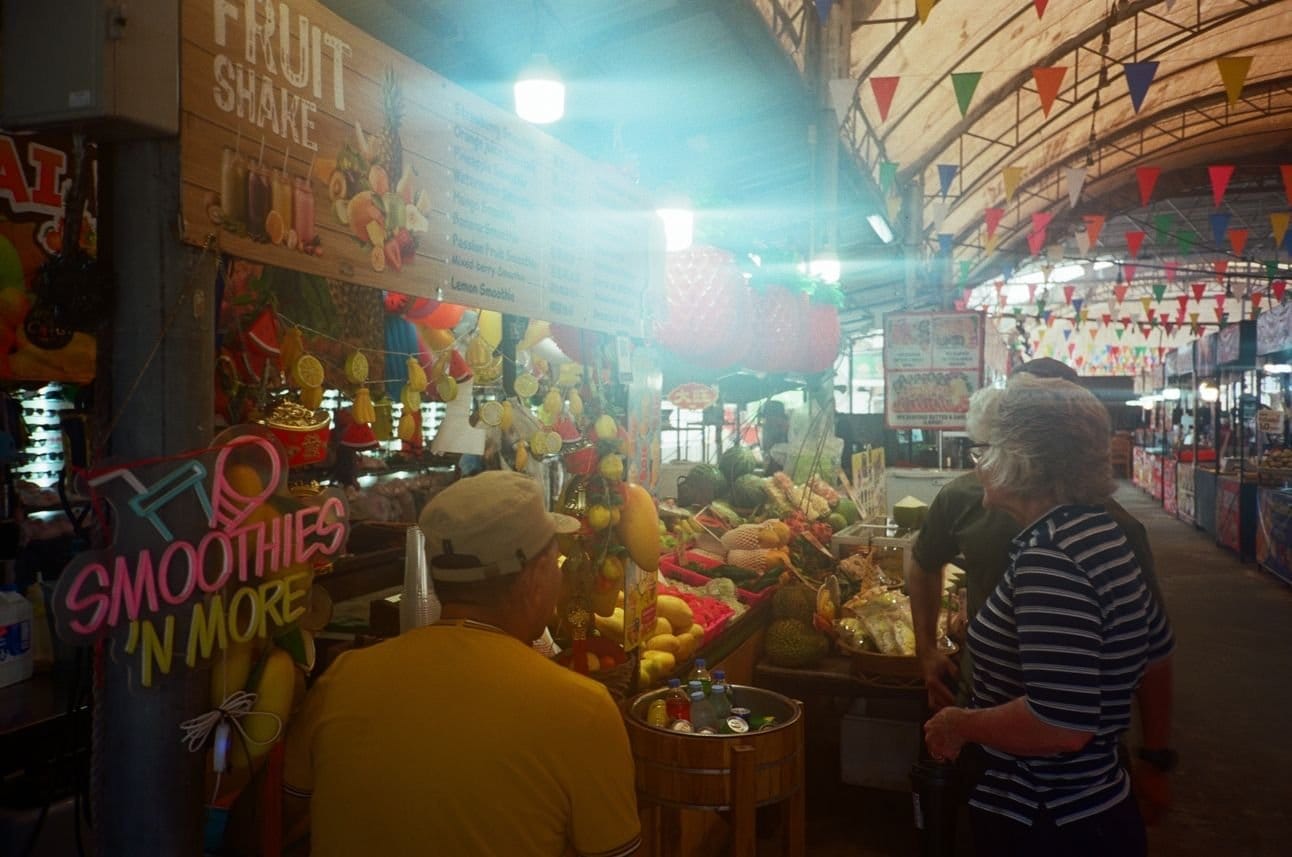
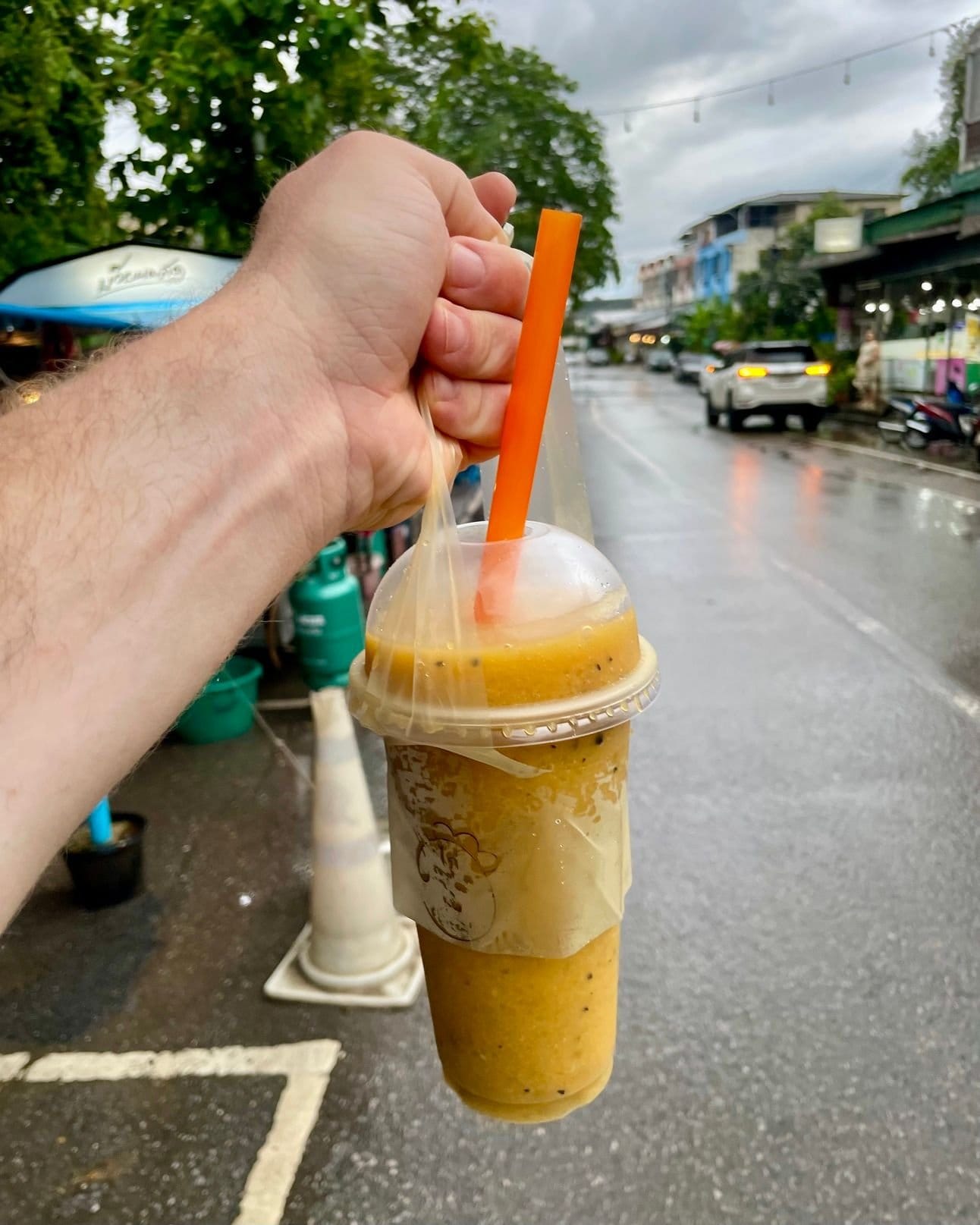
My parents and little brother immediately took me to dinner when I arrived at the resort yesterday evening. We went to an open-air food court and ate fresh fried spring rolls, garlic fried rice, Khai Jiao (friend omelette), Pak Boong Fai Dang (stir-fried morning glory), Kaeng Khiao Wan (green curry), and rice. Sweet, sweet Jasmine rice. I ate to burst. Then topped it off with a Nam Bpan, a fruit smoothie, which is simply fresh fruit and ice thrown into a blender. Nothing else is needed. I chose the ambrosiac combination of passion fruit and mango.
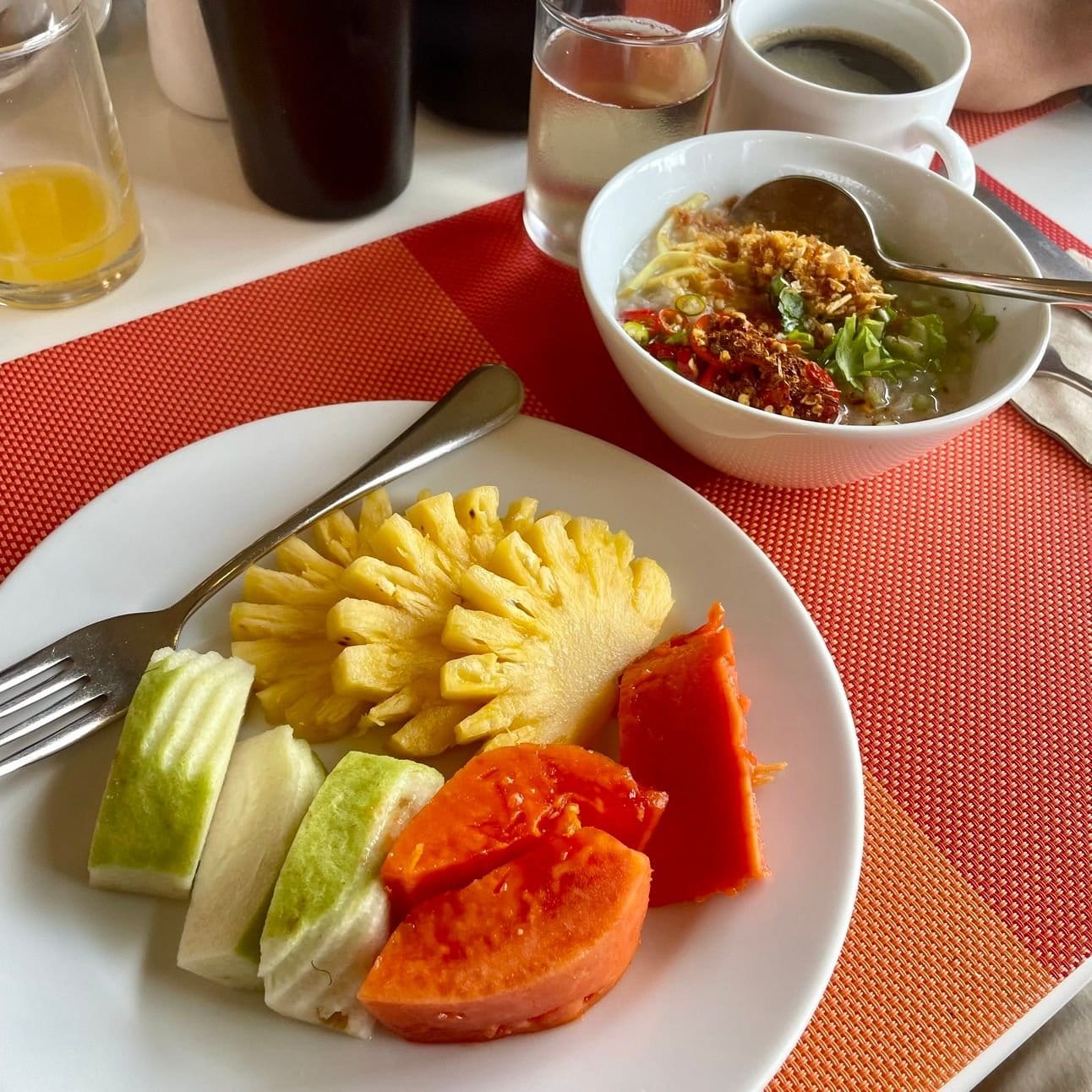
Jet lag wakes us up early my first full day at the resort. We take our coffee at the breakfast buffet as soon as it opens. When ready for food, I browse the broad selection slowly: fresh fruits, Southeast Asian dishes, European pastries and sausages. My plate begins as cacophonous collage of cuisines but simplifies each successive morning until it is only a small saucer of papaya and pineapple.
We wander to the beach while it’s still sleepy to play in the waves. Kata beach has low, languid surf typically. Gentle, unexcitable swells. But rainy season changes the tides. The waves reach above our heads. Energetically pull us into their curling crests. And gleefully dunk us and drag us across the seabed if we are not vigilant. Perfect conditions for bodysurfing, an activity I haven’t enjoyed in over a decade. Wading out to where the waves break, catching a crest at the right moment, and riding the rush all the way back to shore--it’s an exhilarating playfulness I have not felt in a long, long time.
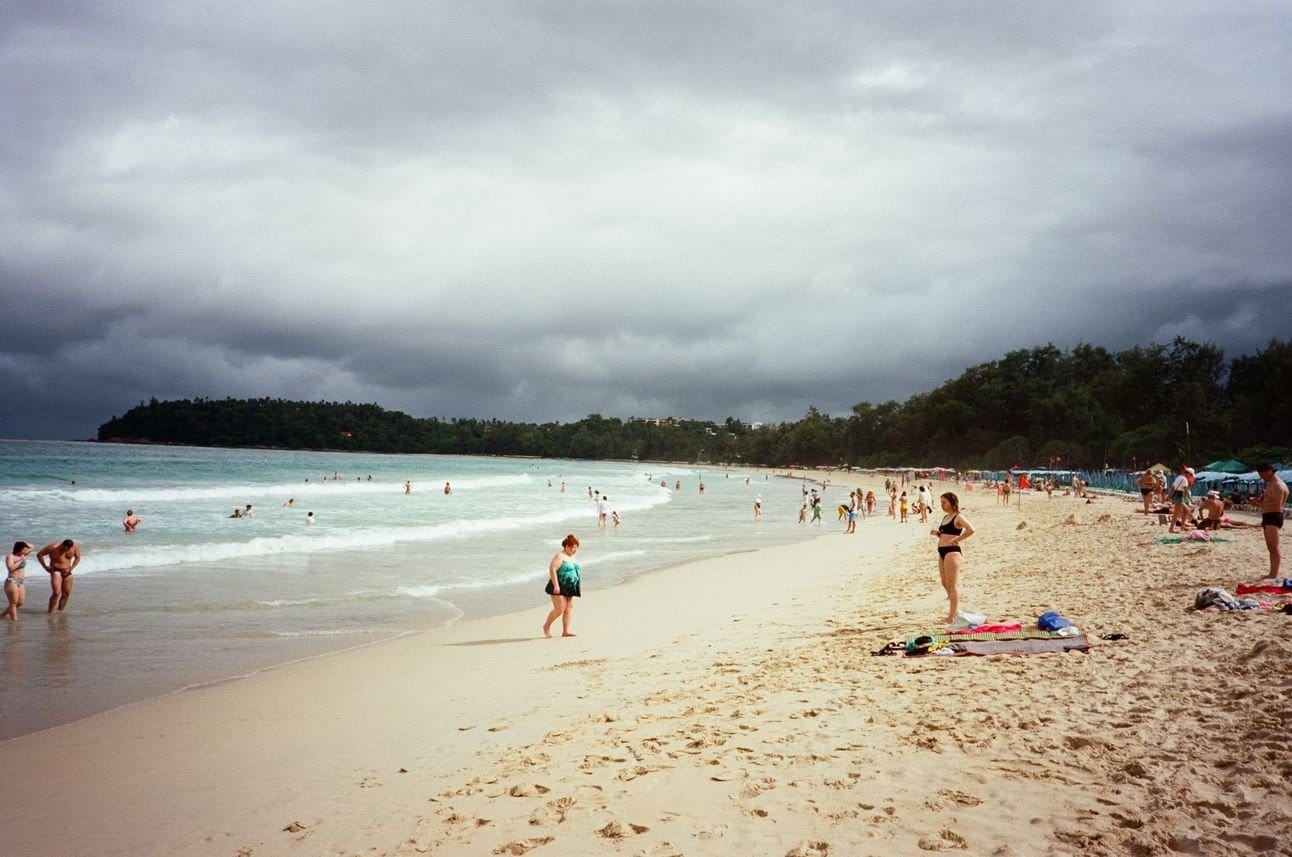
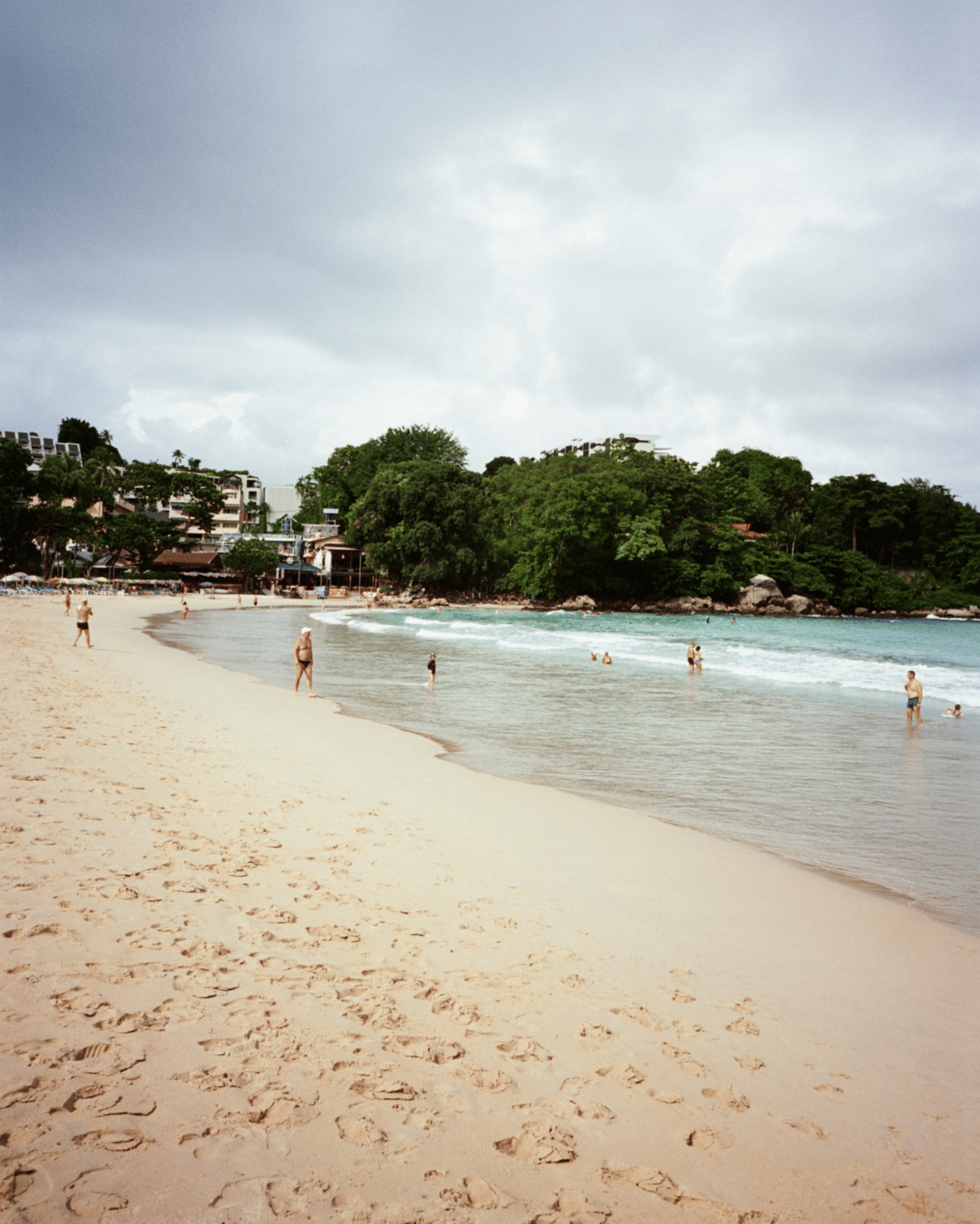
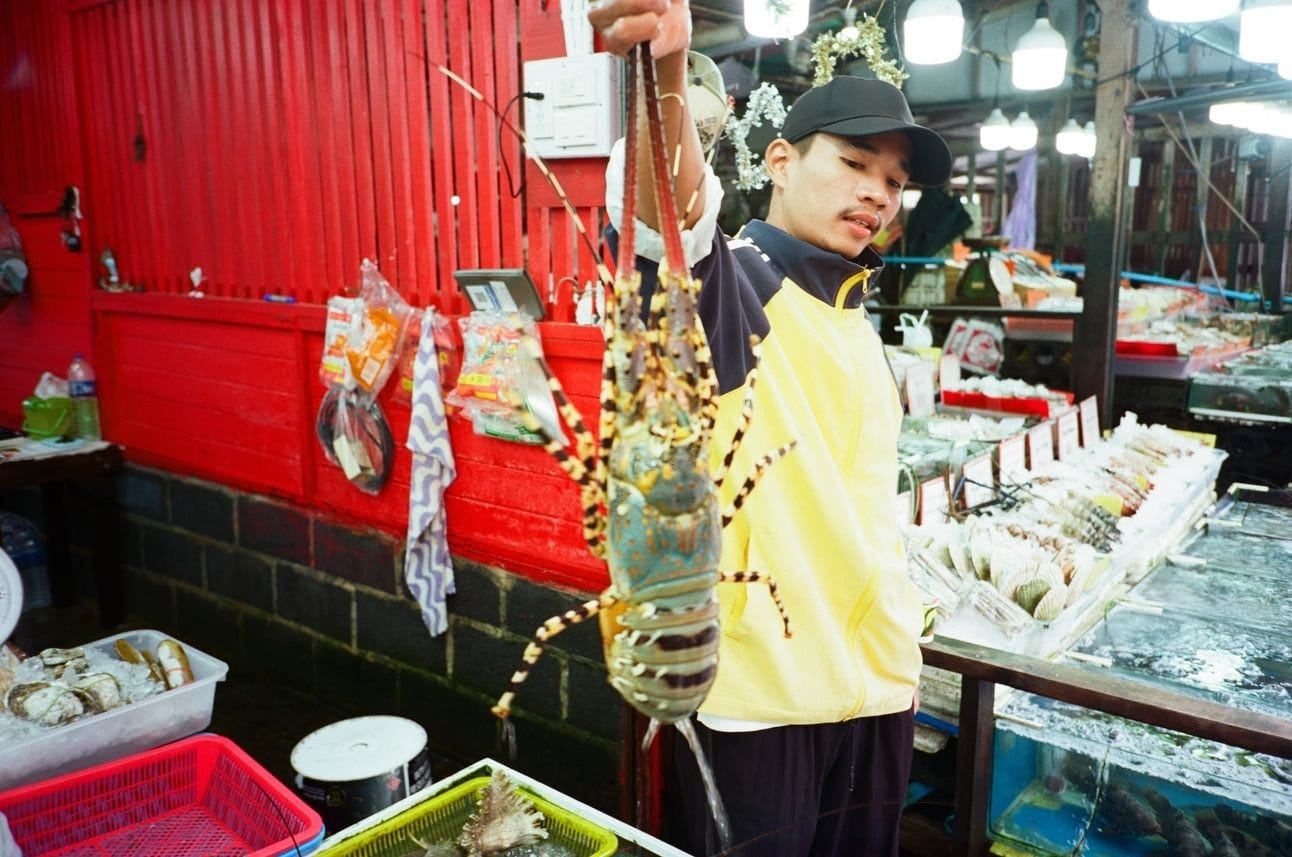
By the time the sun strengthens and the beach crowds, we’ve had our fill of the sea and leave hungrily seeking an early lunch. Something simple. Kuai Tiao Tom Yum (noodle soup Tom Yum) and a Singha beer. On another day, lunch will be more elaborate. A trip to the fresh seafood market for a feast: whole steamed fish seasoned with lime, chilies, and garlic, yellow curried crab, garlic shrimp, Tom Yum Bla (fish), stir-fried Chinese broccoli, and rice.
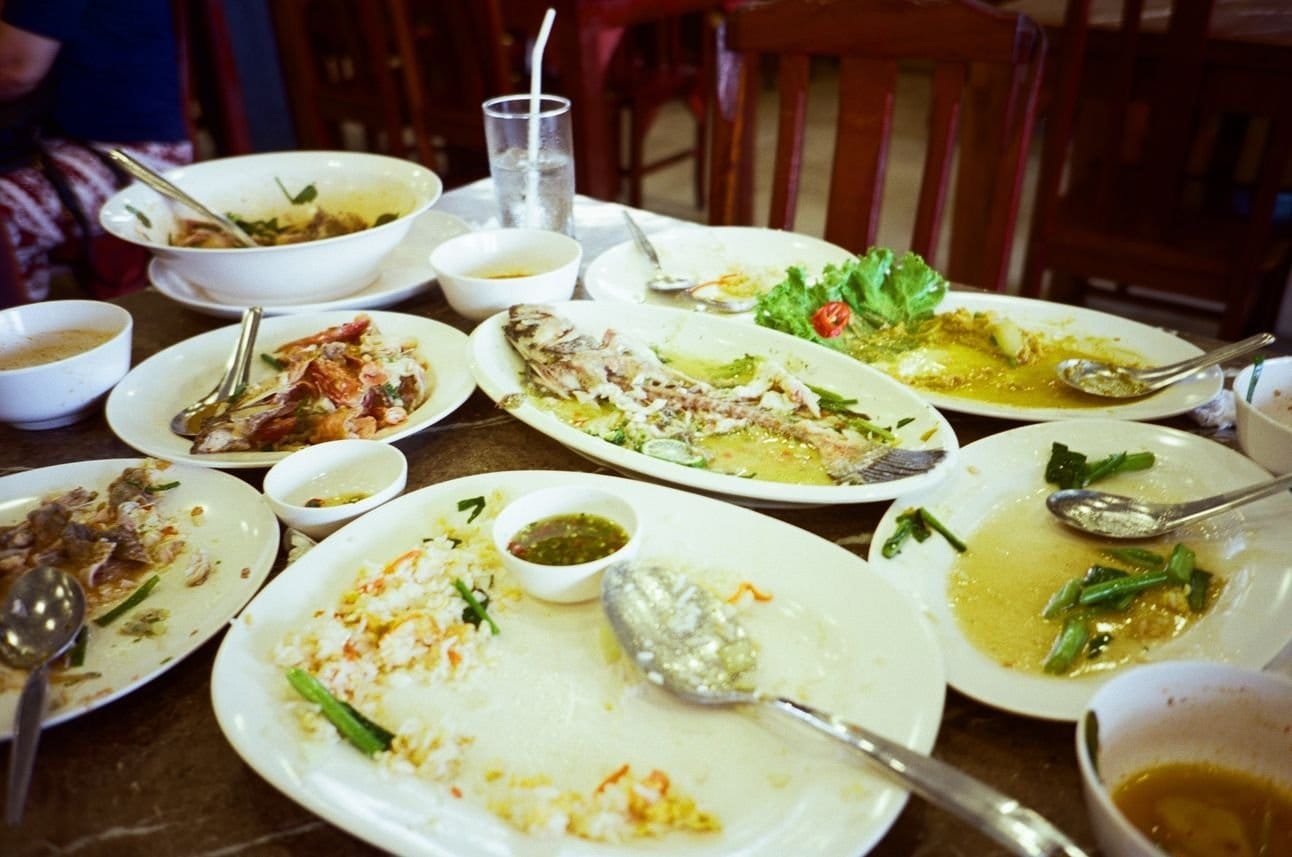
The afternoons are for small adventures. Walking the beach, exploring snacks at the convenience stores, card games, naps...Then it’s time to eat again, despite feeling overstuffed--how could we pass any opportunity to partake in this food we yearned for--and tuck into Gai Pad Med Mamuang (cashew chicken), Tom Kha Gai (Chicken Coconut Soup), Phat Graprao sai khai dao (Basil stir-fry with fried egg on top), and banana roti drizzled with sweetened condensed milk.
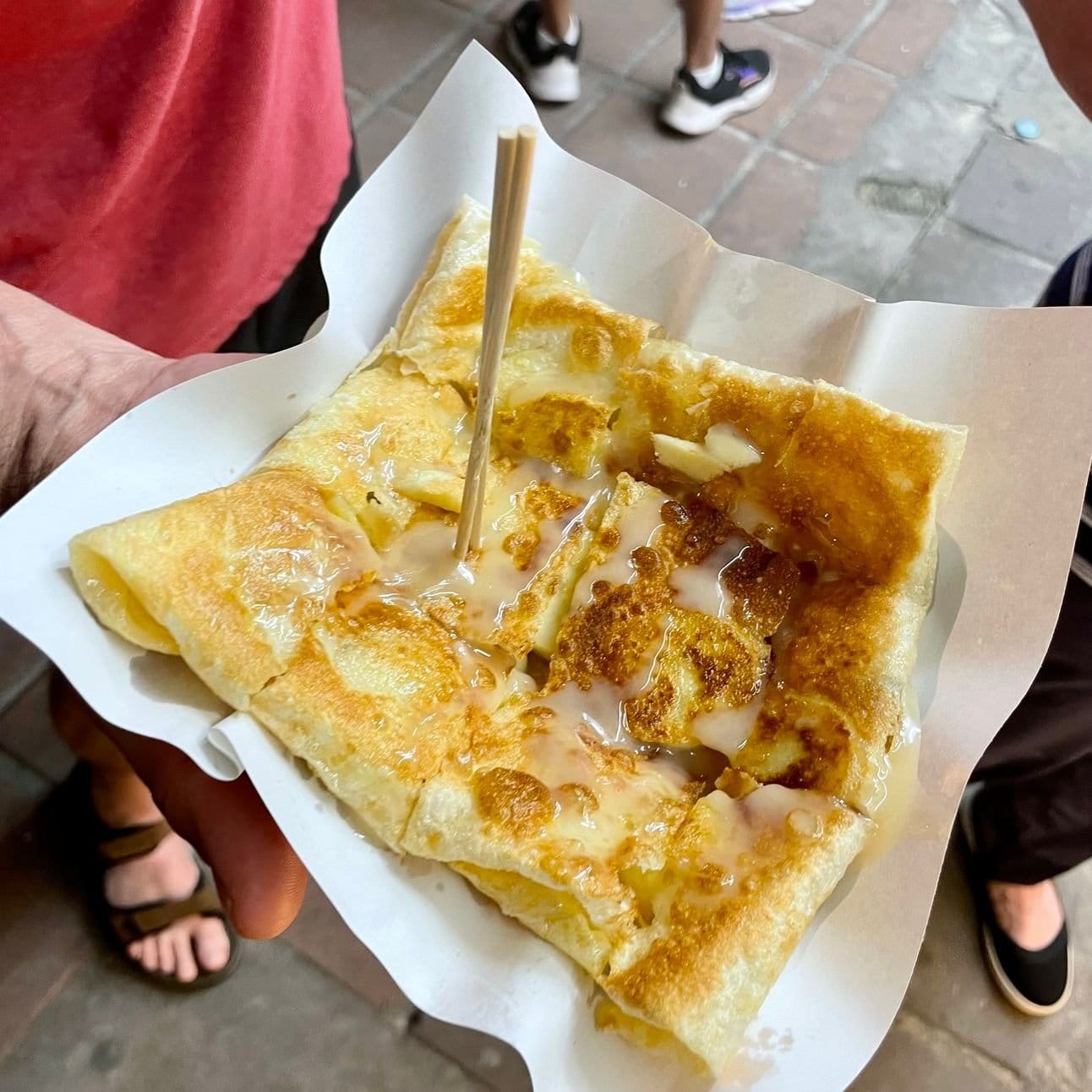
Finally, it is early to bed. Our reward for not surrendering to the lull of jet lag in the afternoon and resisting our pillows until the sun sets.
July 23, 2025
05.23.25 | Phuket
I sleep soundly, but the jet lag has me up at five or six again. I tough it out until just before seven and give up. We go to the sea after a light breakfast. The waves are taller today. Too strong for Mom’s knee. So she and Dad decide to walk the beach instead.
My brother and I fight the waves. Trying to wade out far enough to catch a big one and bodysurf it back to shore. We have little success. Most forward progress is nullified by the ocean’s disinterested shrugs. Diving under or jumping over the froth of oncoming waves is equally inefficient. One tackles you backward, the other tumbles you into the seabed. We enjoy the strife. And the few good rides. But I also enjoy the silent swells. The sea rises from my waist to chest to neck. A cerulean summit blocks the horizon and I leap weightless as a dandelion seed--up, up, and over--until my feet feel sand again.
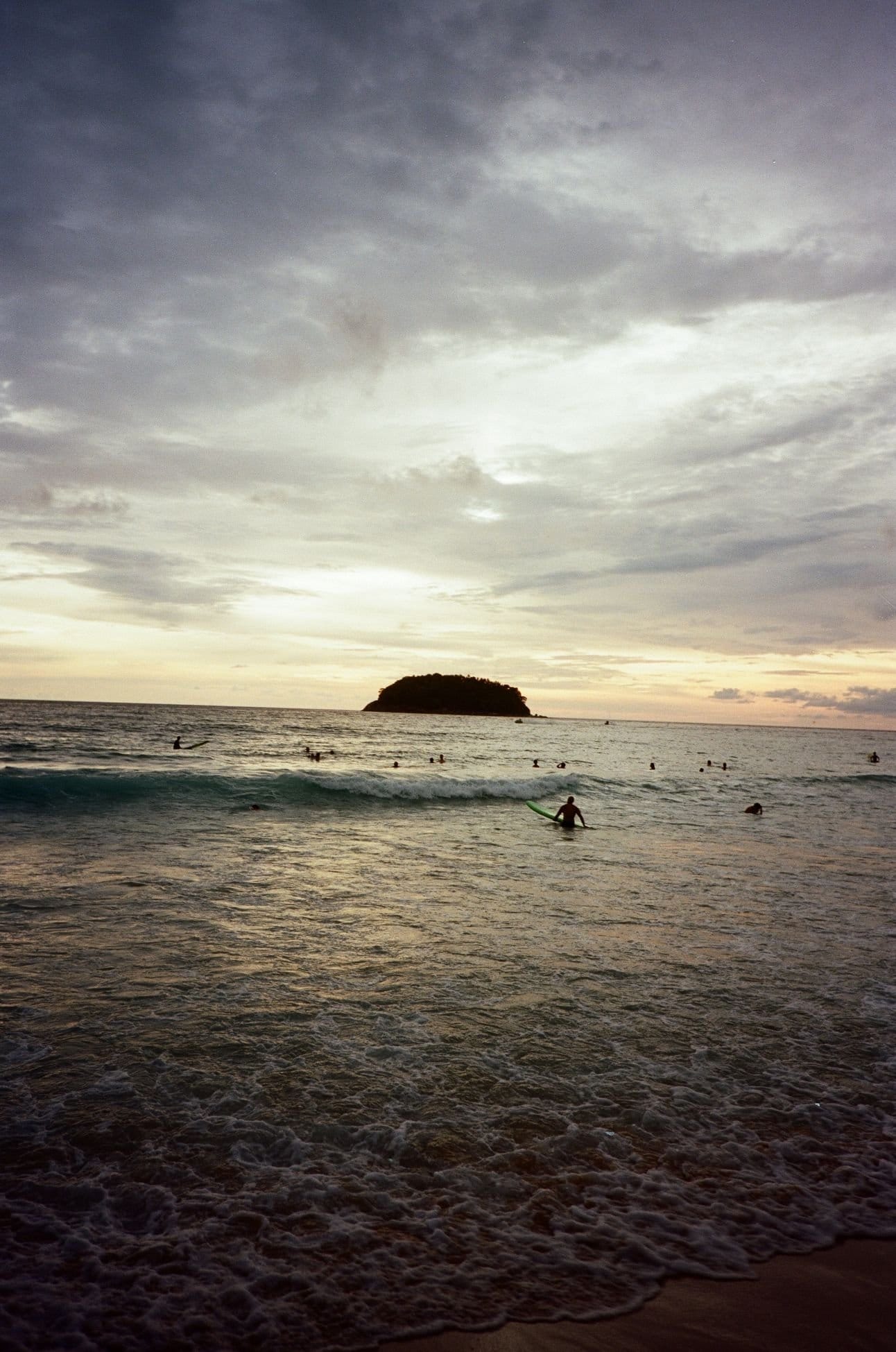
We decide to walk the beach as well once the surf beats us into submission. A drizzle started while we were in the water. The flat gray clouds cleared. The sun appeared for the first time that morning and turned the waves from navy to teal, and the rain fell amber. We are far down the crescent of the beach when the clouds return, darker. The rain begins to pelt. I forgot it could sting.
We meet Mom and Dad on their way back to the resort to move our bags and towels. My brother decides to return with them, but I want to see the end of the beach. The rain waxes and wanes as I walk. Old eastern europeans sit under umbrellas and trees. Surfers take advantage of the storm-fueled swells. The waves roll a barnacled log up and down the beach. I can’t tell if they are playing or arguing. A tourist taking a surfing lesson rides a meager wave and stays up on the board all the way to shore. I’m impressed.
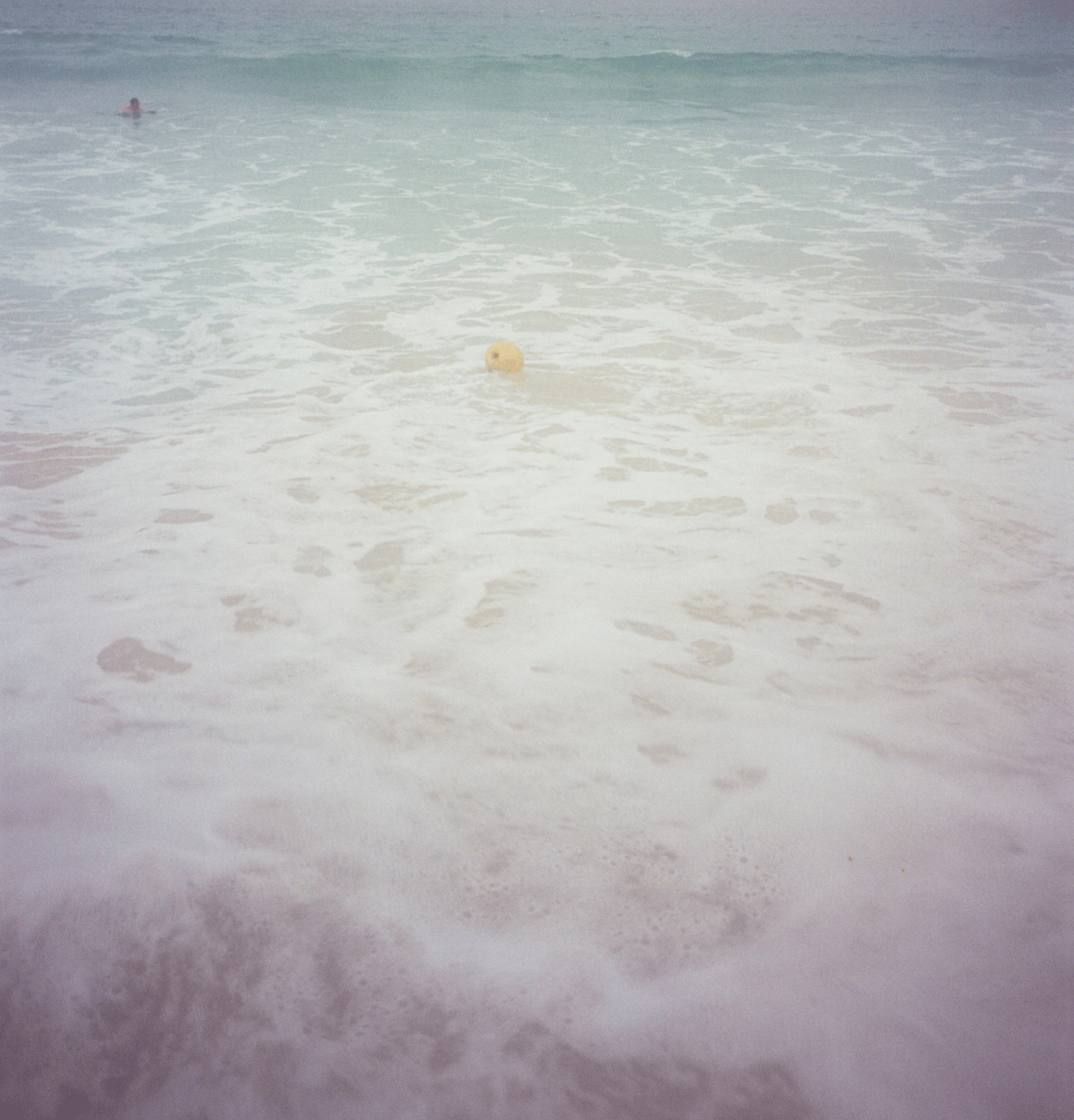
I reach the end of the cove--a wall of tropical greenery and a canal that leads inland into town. I turn around and follow my footprints back that have begun to fade like watercolor. I begin to compose this entry in my head. Wondering if there is a theme or message for this moment. A poignant conclusion. And decide there isn’t. I went for a walk and enjoyed the peace of it.
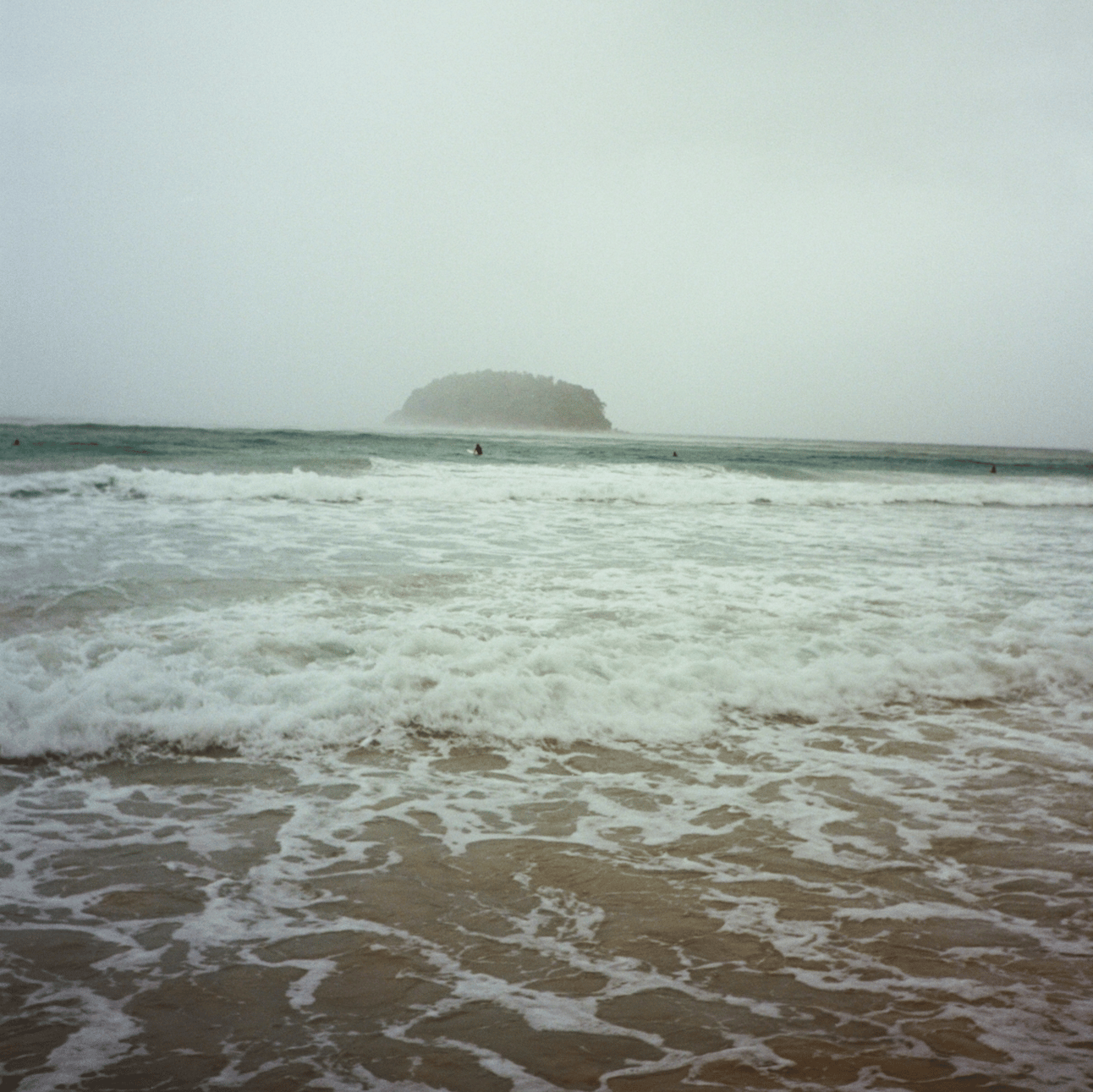
Maybe someday in the future--a month, a year, another decade--my subconscious will take the pieces of this memory and draw lines of association to other notions and present me with an epiphany. But that won’t be rushed. My mind wanders. I think of how I walked with my family and now I walk on alone. I think of how the rain came and went without care. And I keep walking.
July 24, 2025
05.24.25 | HKT>CNX
We leave the beach and fly to Chiang Mai today. An uneventful flight. We comment on how efficient it is to fly in any other country except the U.S. Thailand, a particularly rural country, has more technology easing the security check and boarding process, at airpots big and small, than I’d ever seen in the States. U.S. airports seem to be designed to actively sabotage travel.
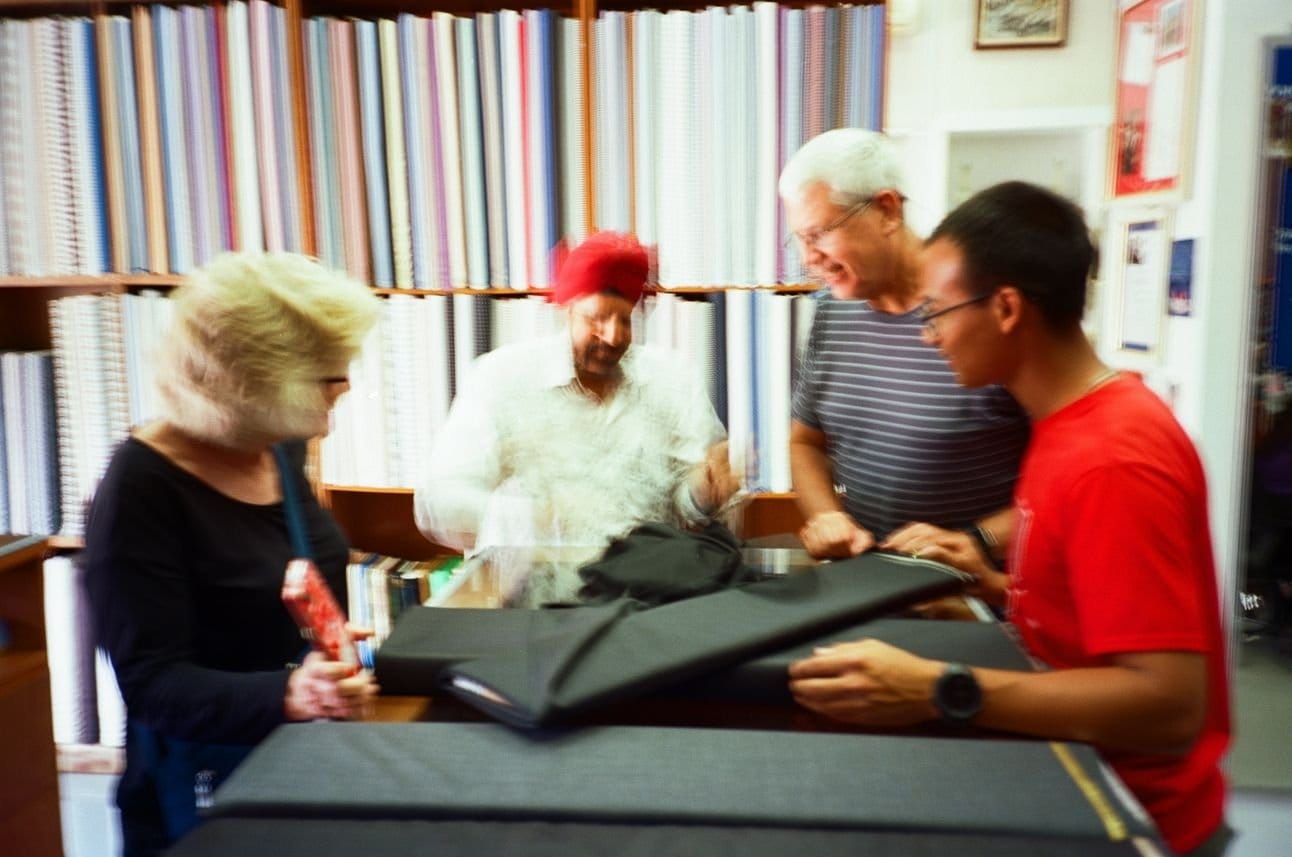
Our first order of business in Chiang Mai is to visit the tailor. My brother wants a couple suits made. I decide to order a few dress shirts as well. As we are measured, the personable Indian couple that own the store offer us chai and biscuits. One cookie is infused with cumin and sprinkled with toasted cumin seeds on top. The flavors are surprising and delicious. We are told to return later that evening for the first fitting and decide to fill our time by exploring Chiang Mai on foot.
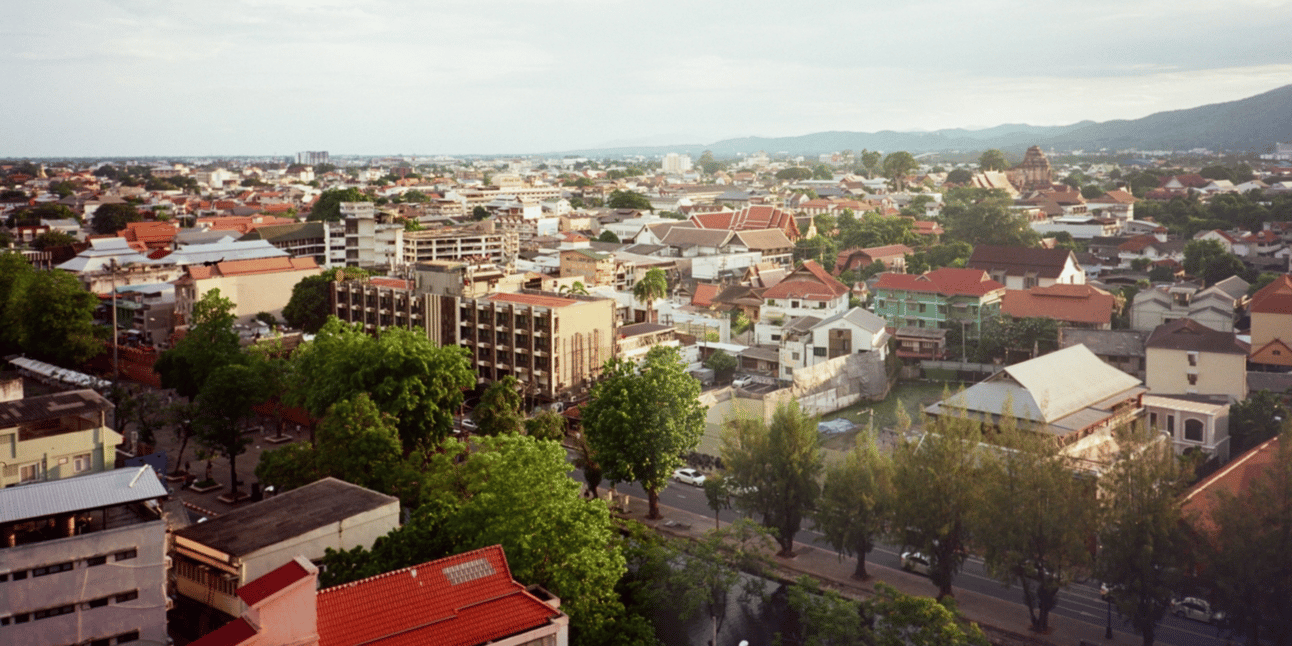
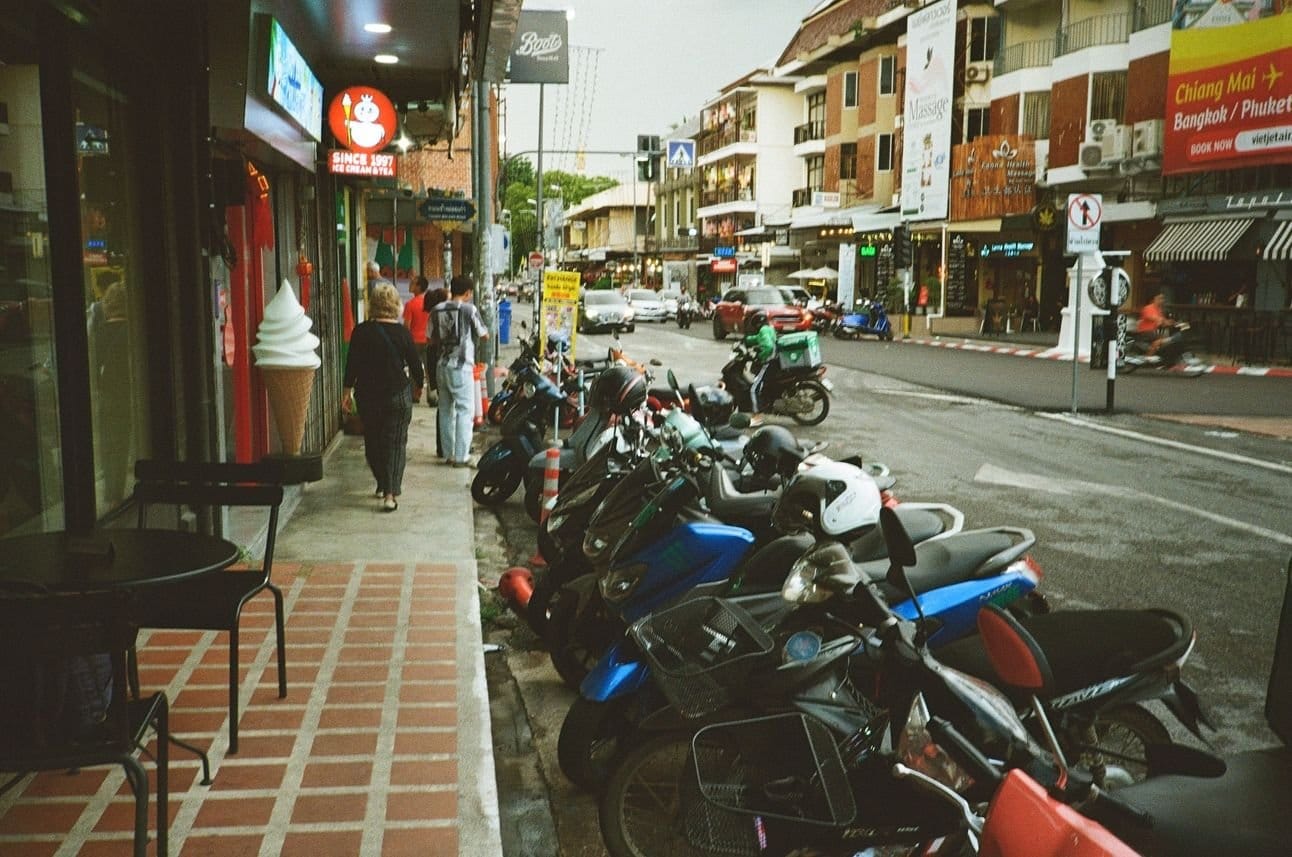
The city feels small to me now. Even the airport was smaller than I remembered when we landed earlier that day. But strolling the sidewalks is familiar, as are the preserved ruins of the city wall. I am unpleasantly surprised to discover a Taco Bell. The jolt of purple and “Live Mas” slogan feel wrong and out of place in this city known for artists and in a culture characterized by the fresh and handmade. A hypocritical reaction since KFC, Dairy Queen, Pizza Hut, McDonalds and Burger King have all been part of the landscape for decades. Regardless, the Bell feels like a bridge too far.
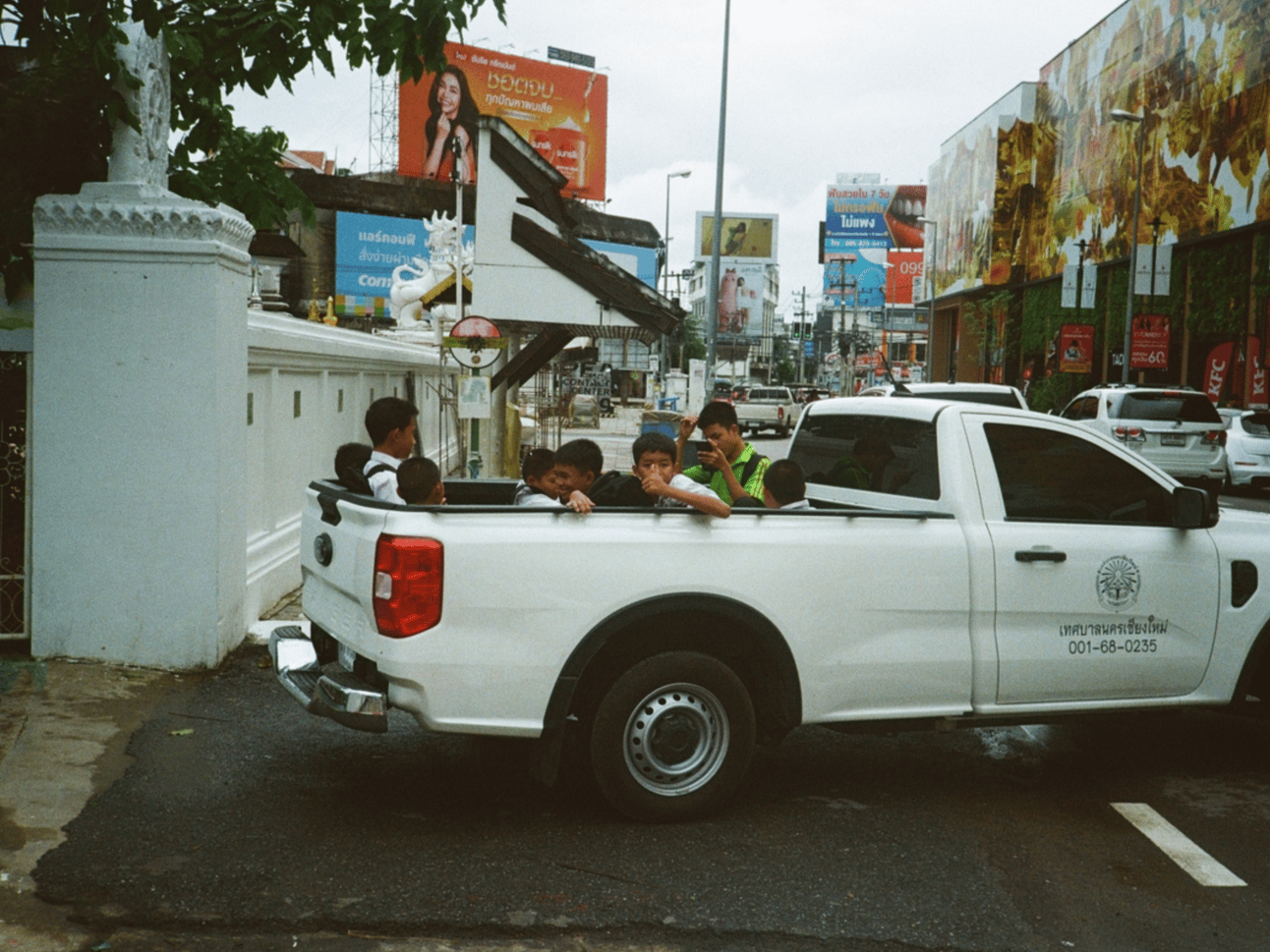
My friends, half a globe away, are sending me photos of their adventures at a Lao Wat (Buddhist temple) in Tennessee where Pi Mai (New Year) is being celebrated over Memorial Day weekend. Lao Pi Mai is nearly identical to Thailand’s Songkran celebration, both traditionally observed in April. When I learned the Lao Wat held a Pi Mai in May so celebrants could take advantage of the three day weekend, I was ecstatic to be able to attend a festival from my childhood in the States. And I invited all my friends to experience the traditional music and food. It became an annual event for us.
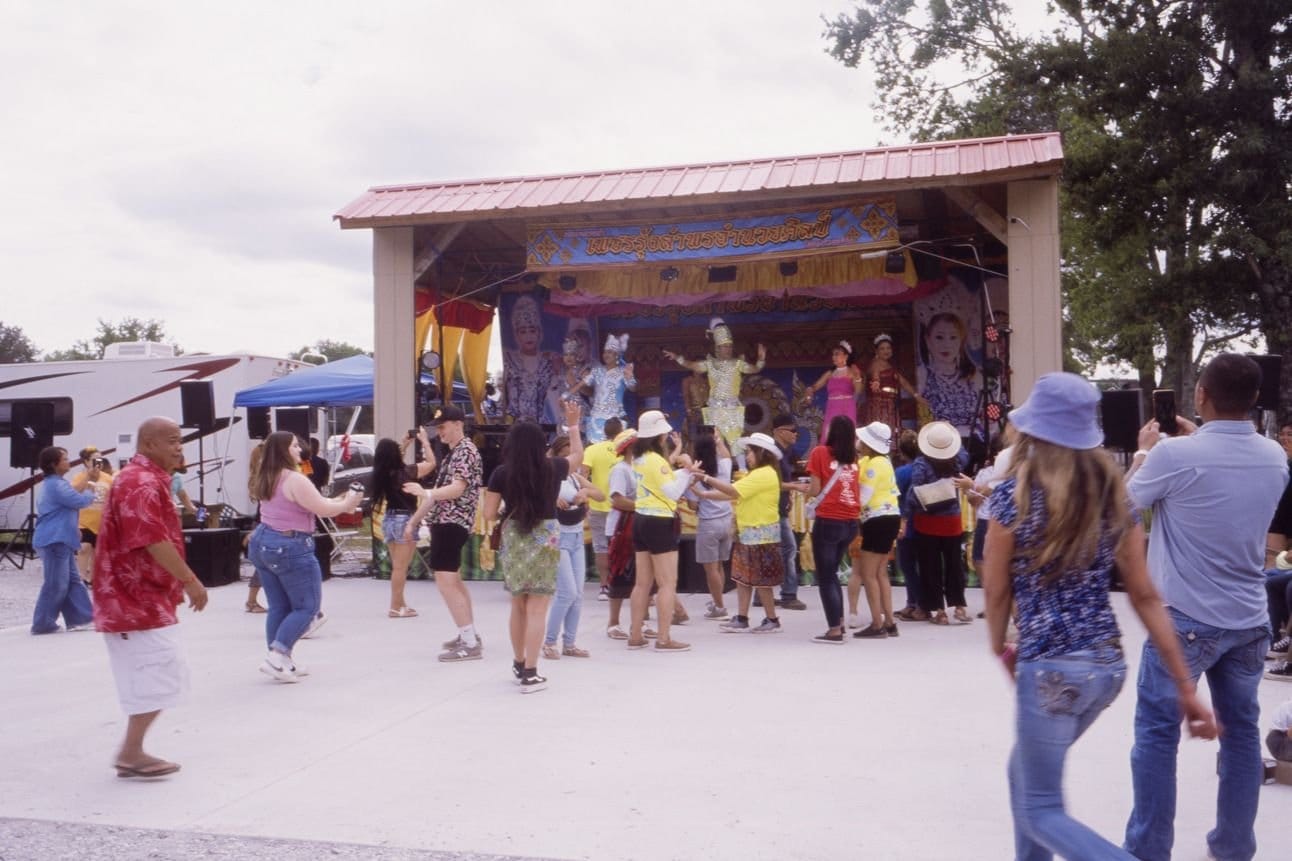
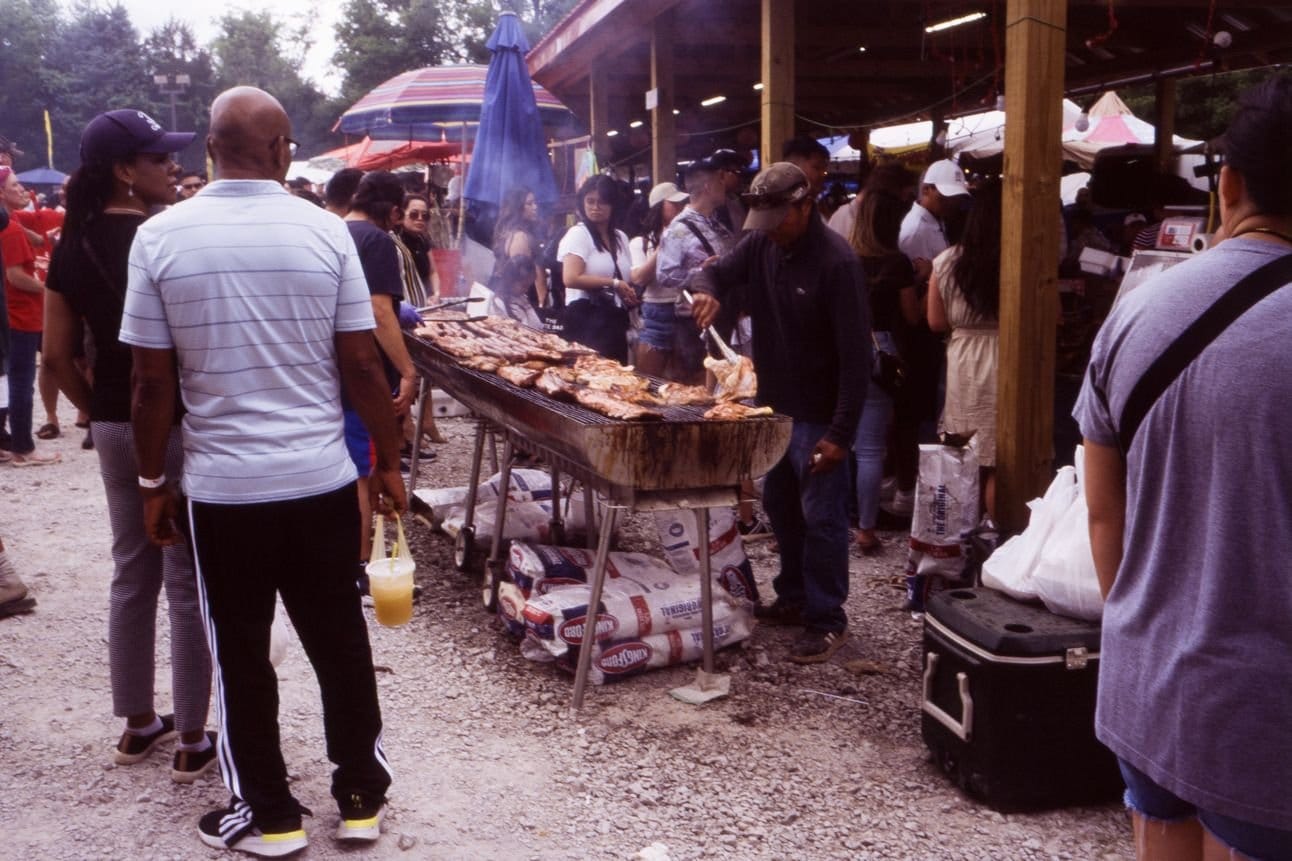
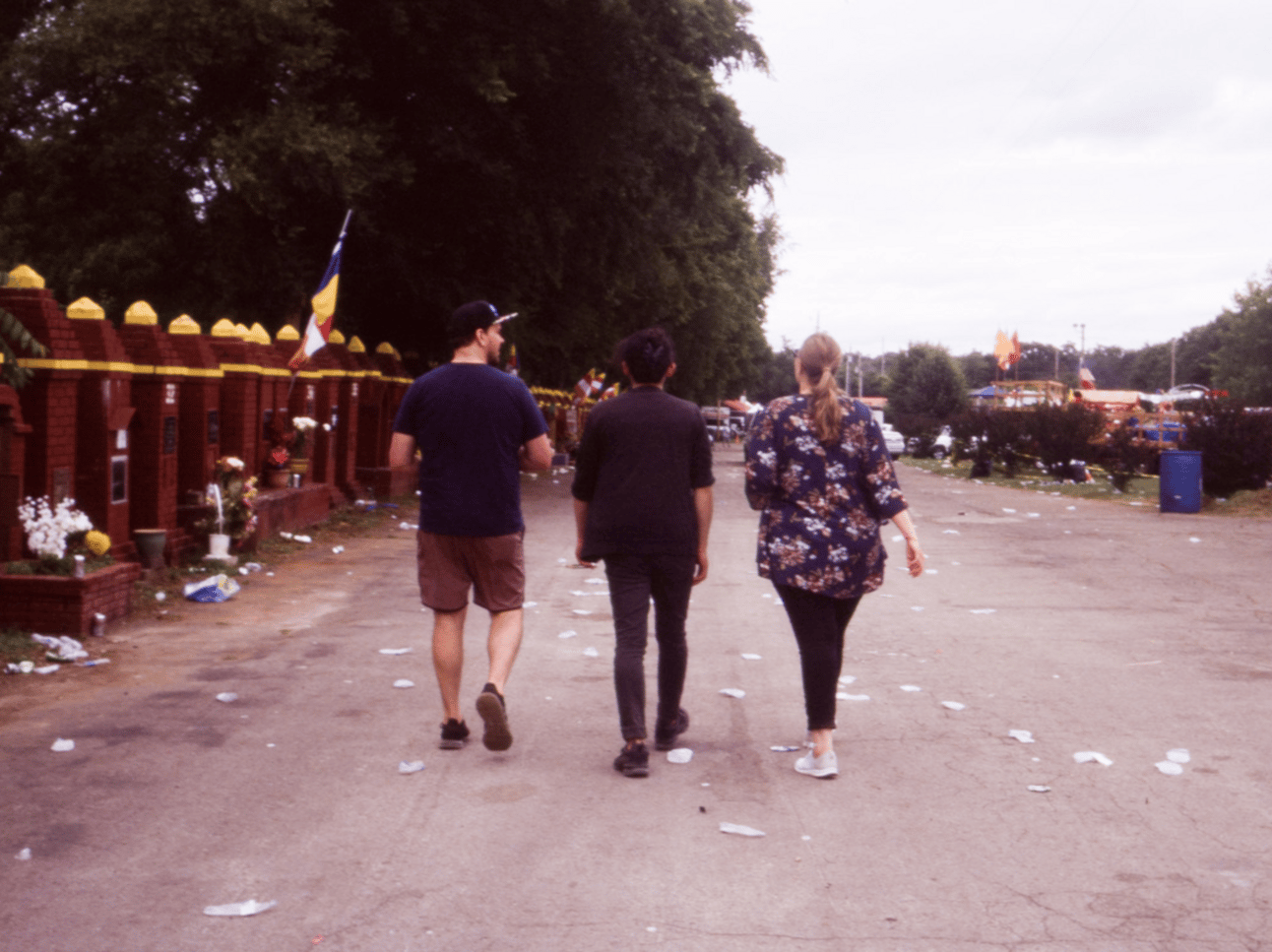
I was sad to miss the festivities this year--strange since I am currently immersed in the home culture. But I feel so glad in this moment. My friends didn’t need me to chaperone them. They went on their own without hesitation. They love what I love.
July 25, 2025
05.25.25 | Lampang
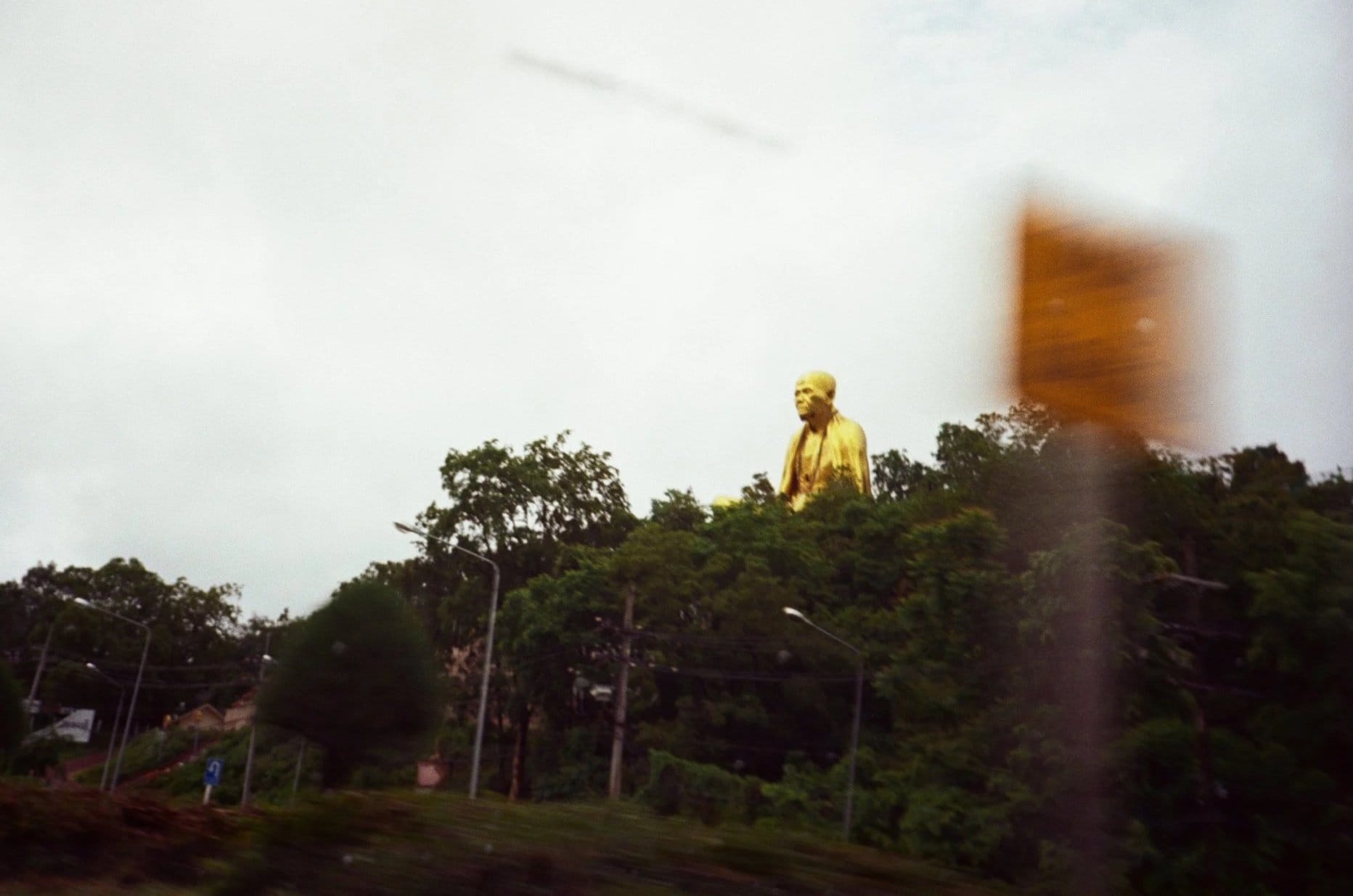
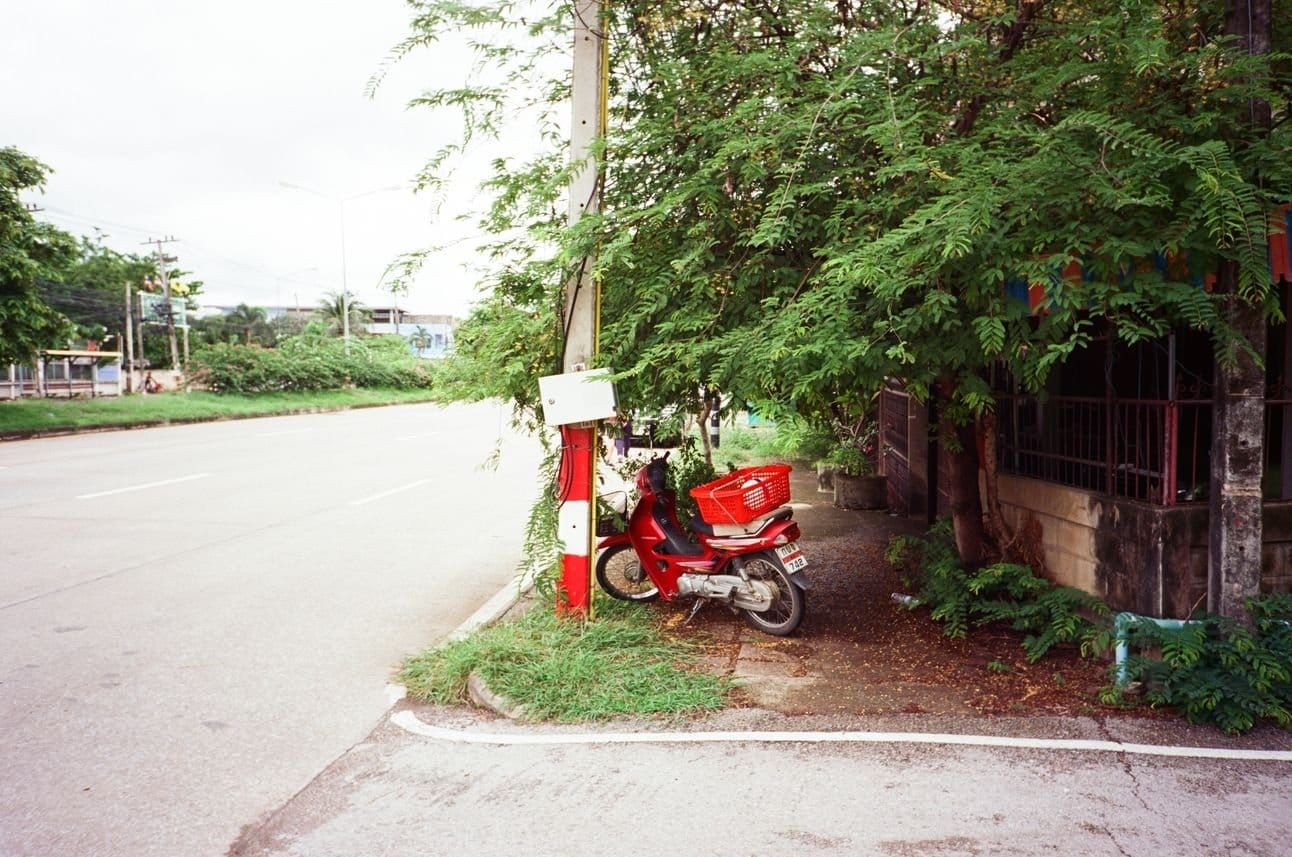
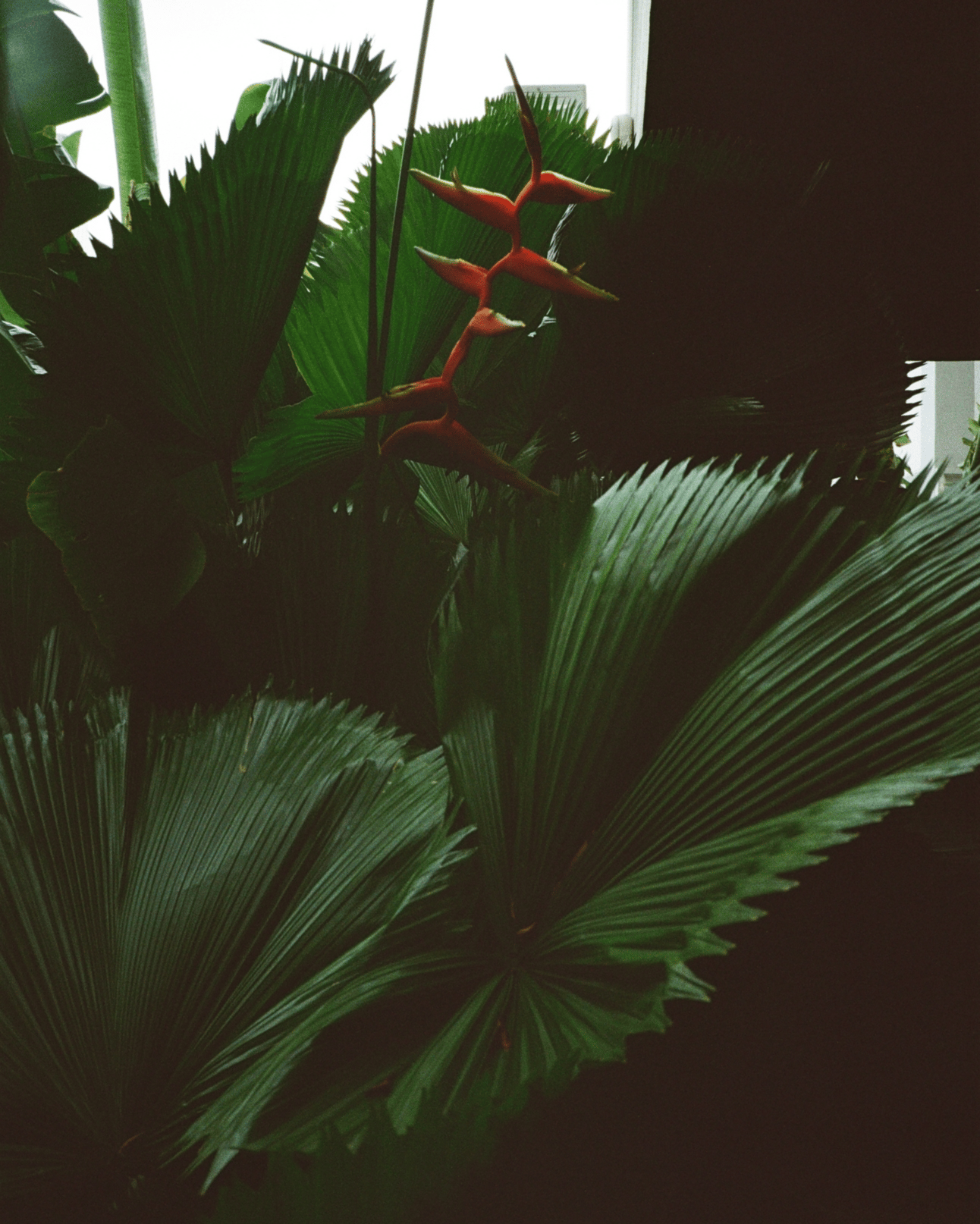
We drive to Lampang this morning, out of the city and through the mountains. We are going to attend a church led by longtime friends of my parents. As we wind the narrow roads up the mountains, my thoughts drift to the overflow of vegetation in Thailand. I often compliment Nashville, my current home, for its greenery despite it being a substantial city. Trees are abundant. There’s a wealth of parks. Hiking trails are short drives away. You can leave the urban quickly. But this can’t compare to Thailand. I am reminded you don’t go to nature here. It’s entwined with everything.
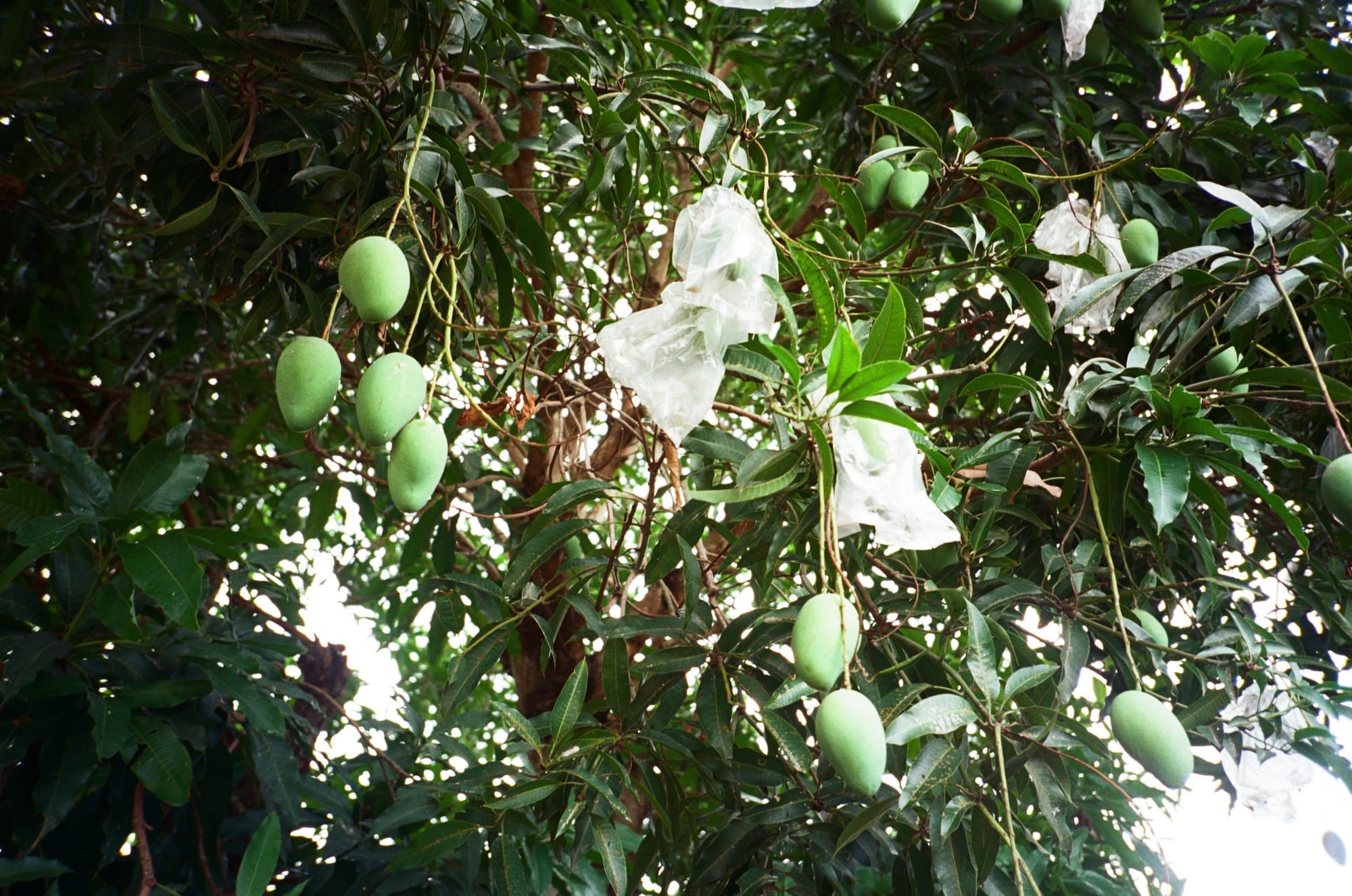
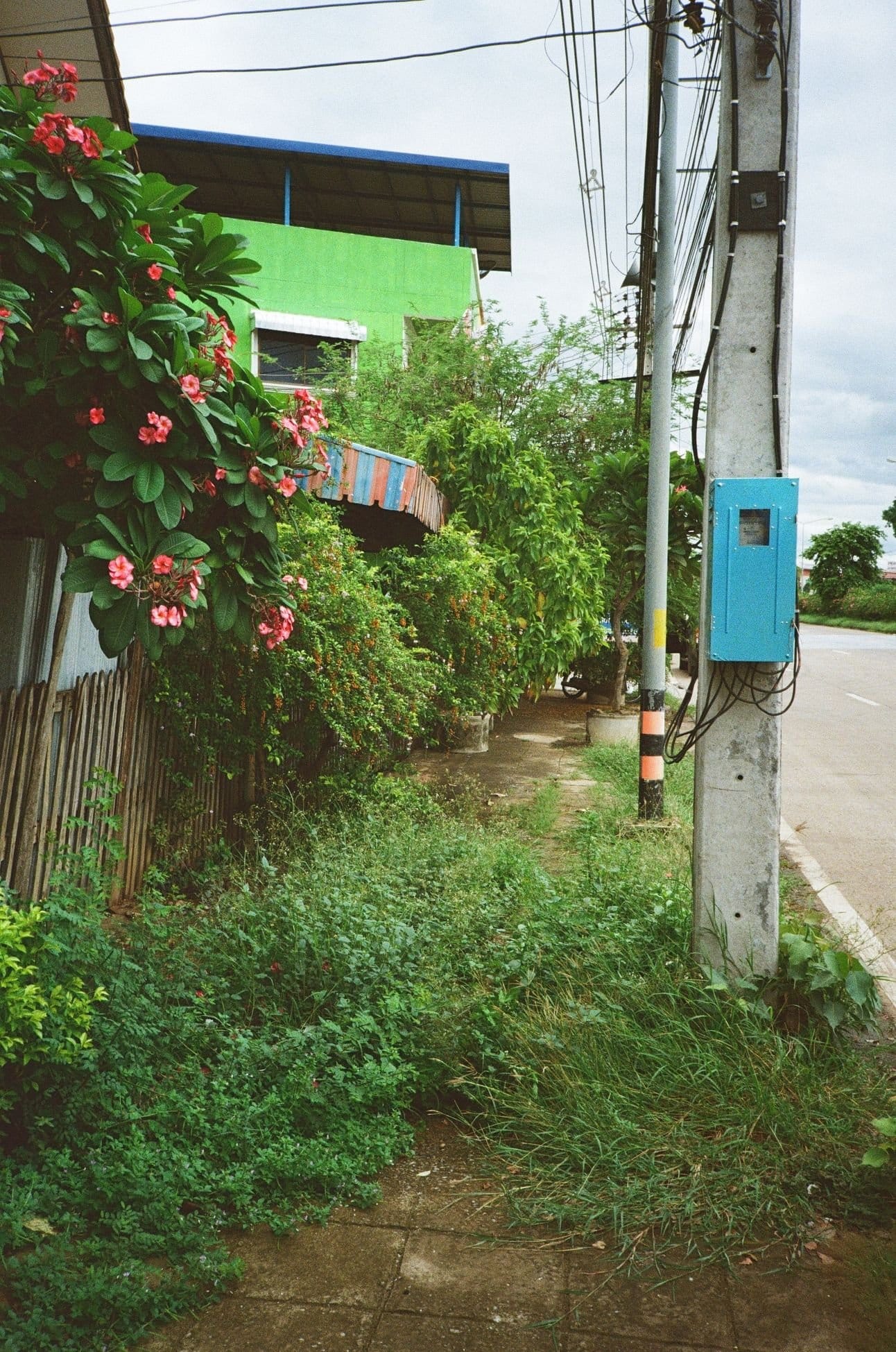
Vegetation in the States is allowed in prescribed areas and carefully policed. In Thailand, space is granted to the artificial. Humans carve little nooks for their buildings and roads, and then they are quickly engulfed by overgrowth. Grass sprouts through sidewalks, vines climb walls, trees cover roofs. The plants are left alone to grow as they please. People let them take up space. They don’t trim or shape them. They shape themselves to the flora. It looks messy, unkept to the western eye. Here, I imagine, the thought is why try to control what gives so much? Most homes, especially in the country, have multiple fruit trees. And they produce abundantly. What a family can’t eat, they give away to their neighbors.
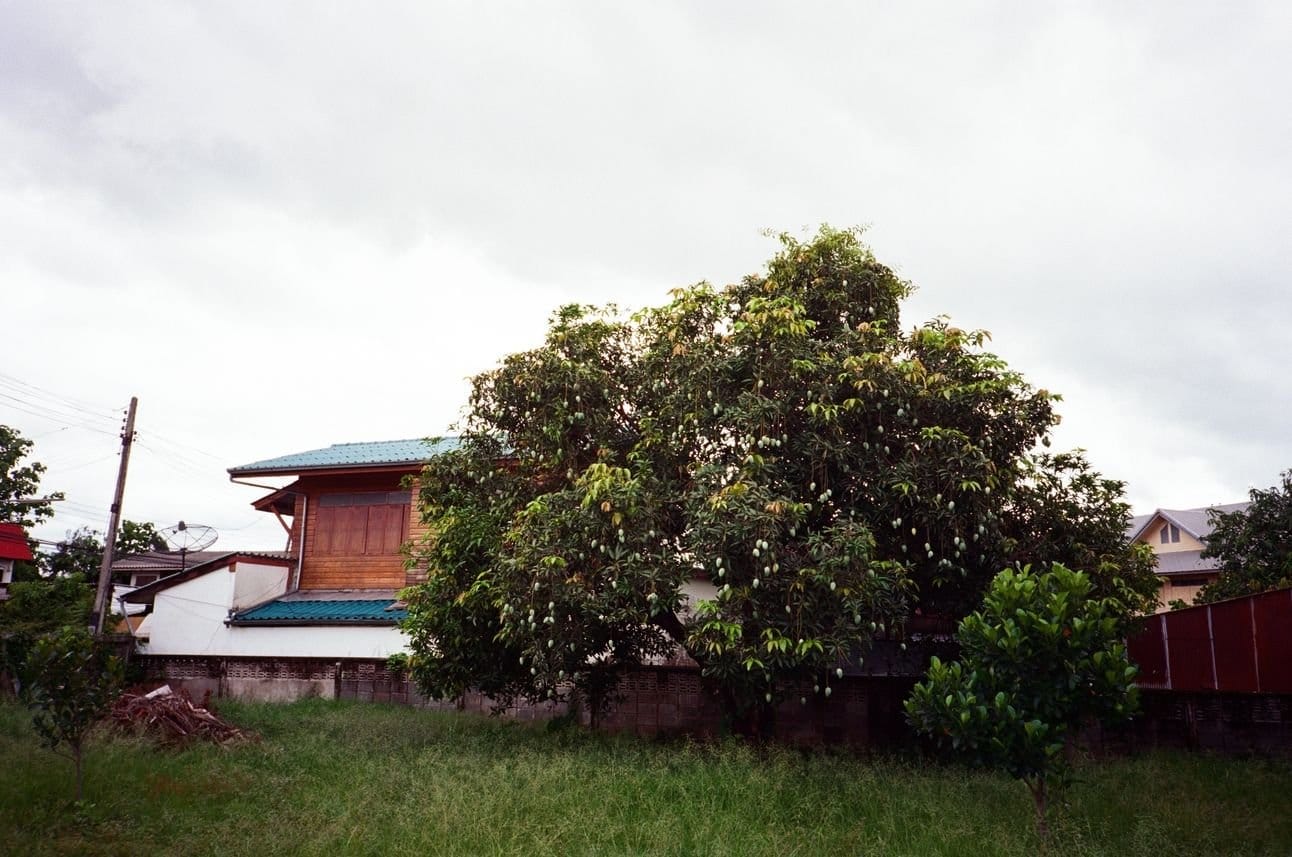
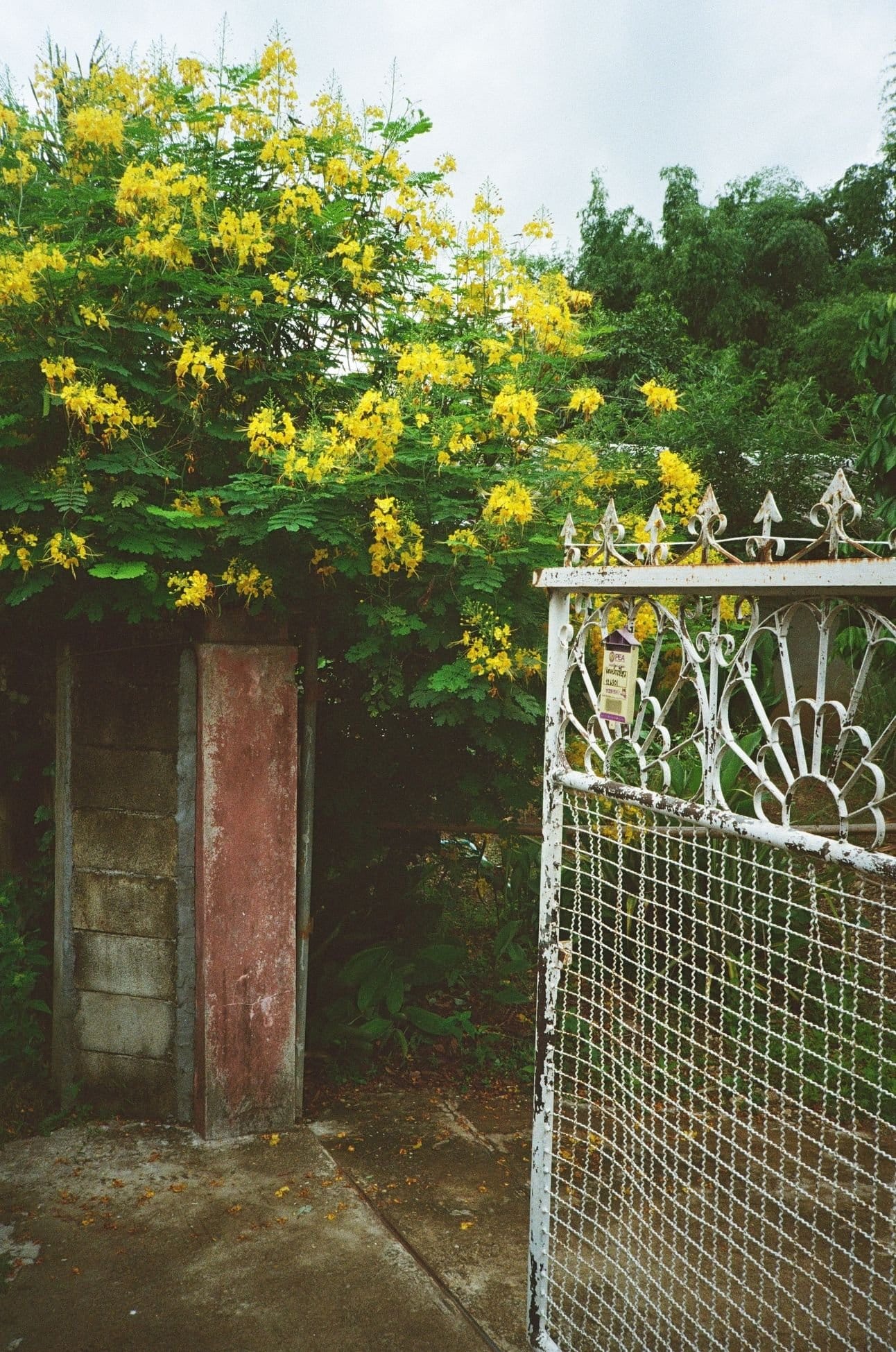
The green is a different quality here. It’s a subtle shift in shade compared to the hues I see in the States. I can’t articulate it. But I see it. It’s unconsciously distinct. The texture of these forested mountains is different too. Shaggy. Like a giant raked up great mounds of fresh leaves. They seem like they could be blown away in a great whirl with one brisk gust of wind.
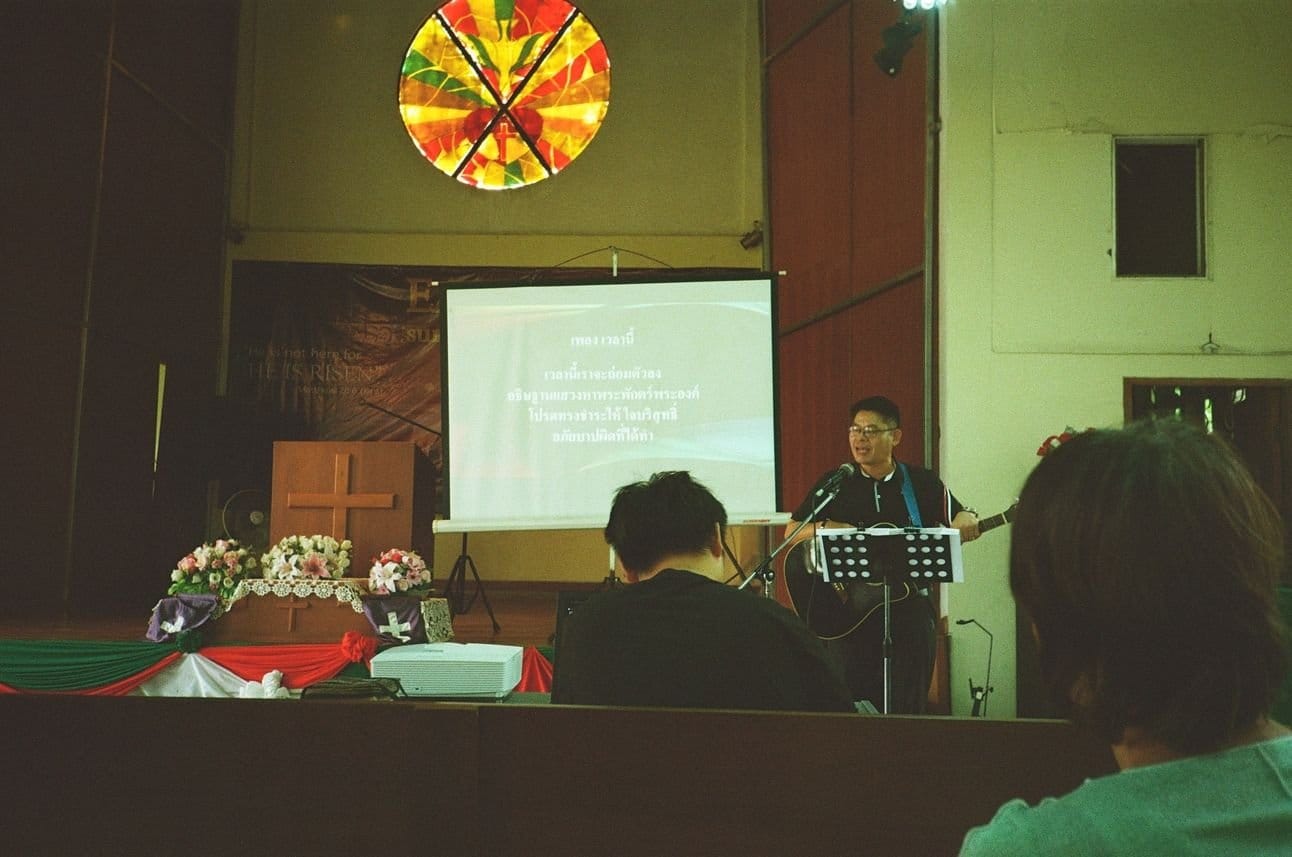
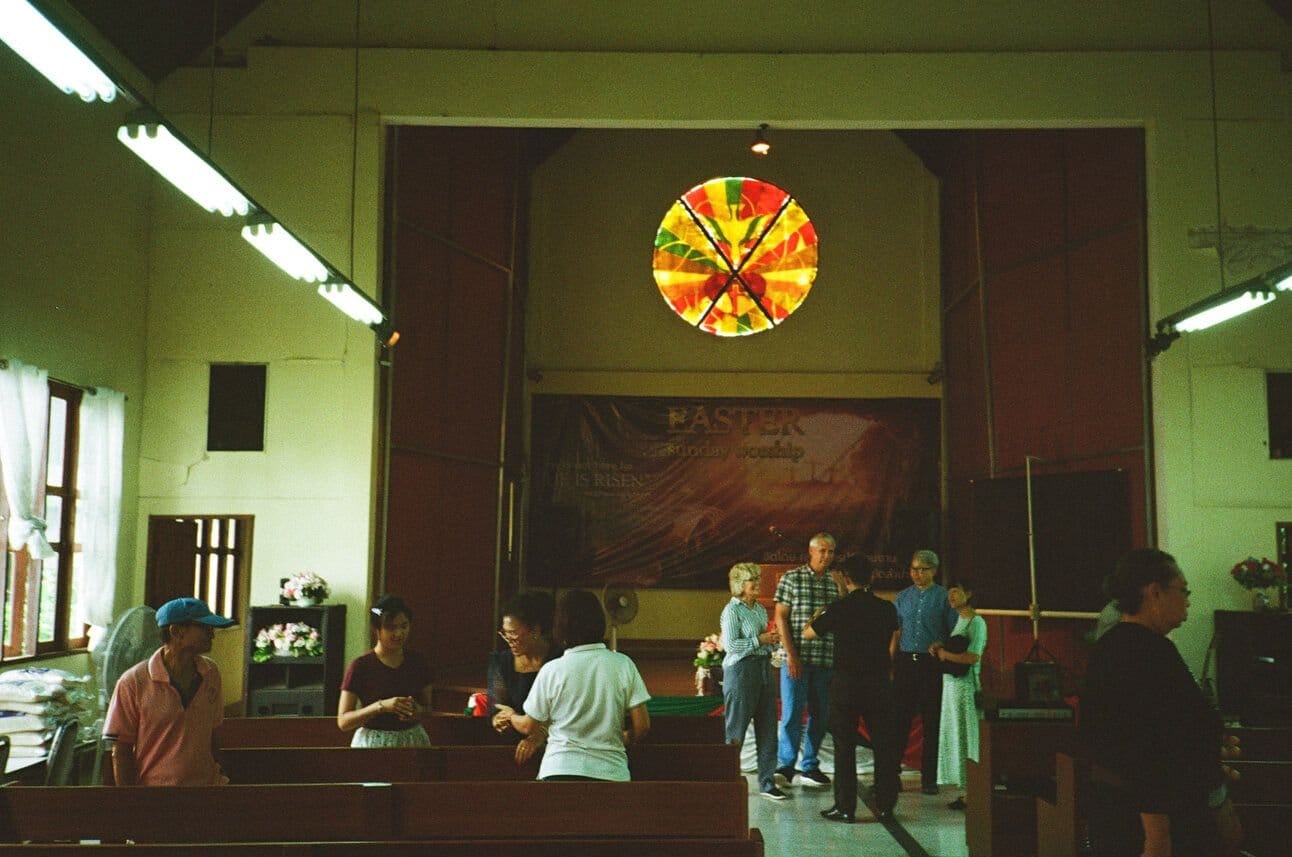
We stop at a fruit stand on the side of the highway and buy four kilograms of the fattest, rosiest Lychee as a gift for our friends at the church. When we arrive, they welcome us enthusiastically. The congregation is barely a dozen, adults and children. They ask Dad to speak before the service. Worship opens with notes on a guitar and a poorly played piano. They sing traditional Christian hymns translated into Thai. The English versions are foreign to me. I soak up the tones of the Thai lyrics.
July 26, 2025
05.26.25 | Phrae
My parents’ friends let us stay in their cute hotel in Phrae. They try to convince Mom and Dad to relocate to their new property, a stand of bungalows surround by rice paddies, but we are content with the accommodations close to town. There is more country than town in Phrae anyway. One wrong turn and you can trip into a canal used to flood the rice fields beside it.
We want Jok for breakfast--Thailand’s version of congee or rice porridge--and decide to go to my family’s favorite spot. But we arrive too late. They’re sold out. Restaurants like this are common out here. Shops open only for breakfast, lunch, or dinner--specialize in one dish--and when the food is gone, it’s gone. Sorry, please come back tomorrow.
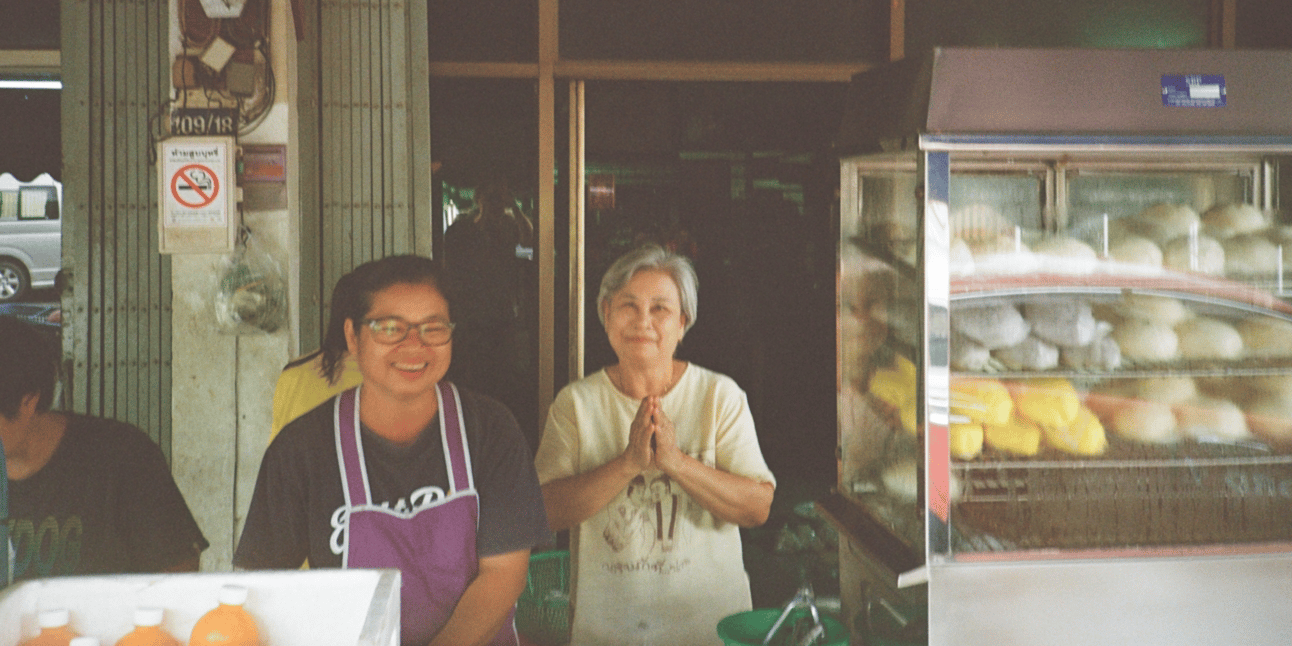
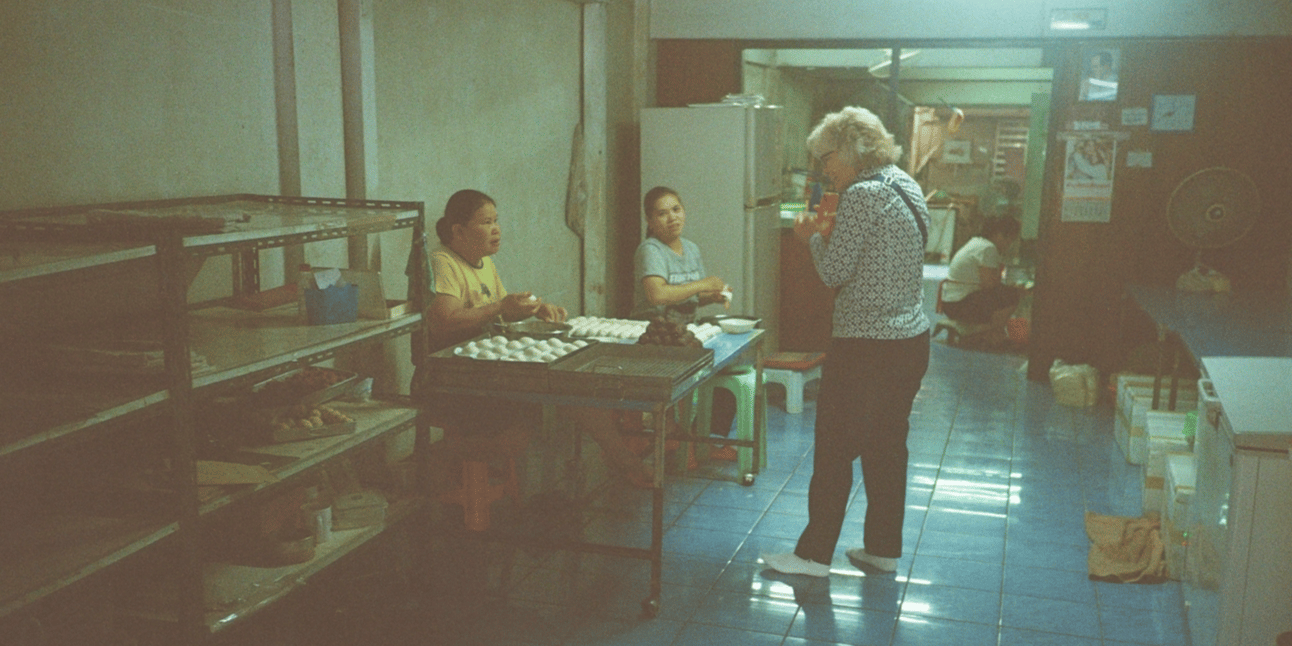
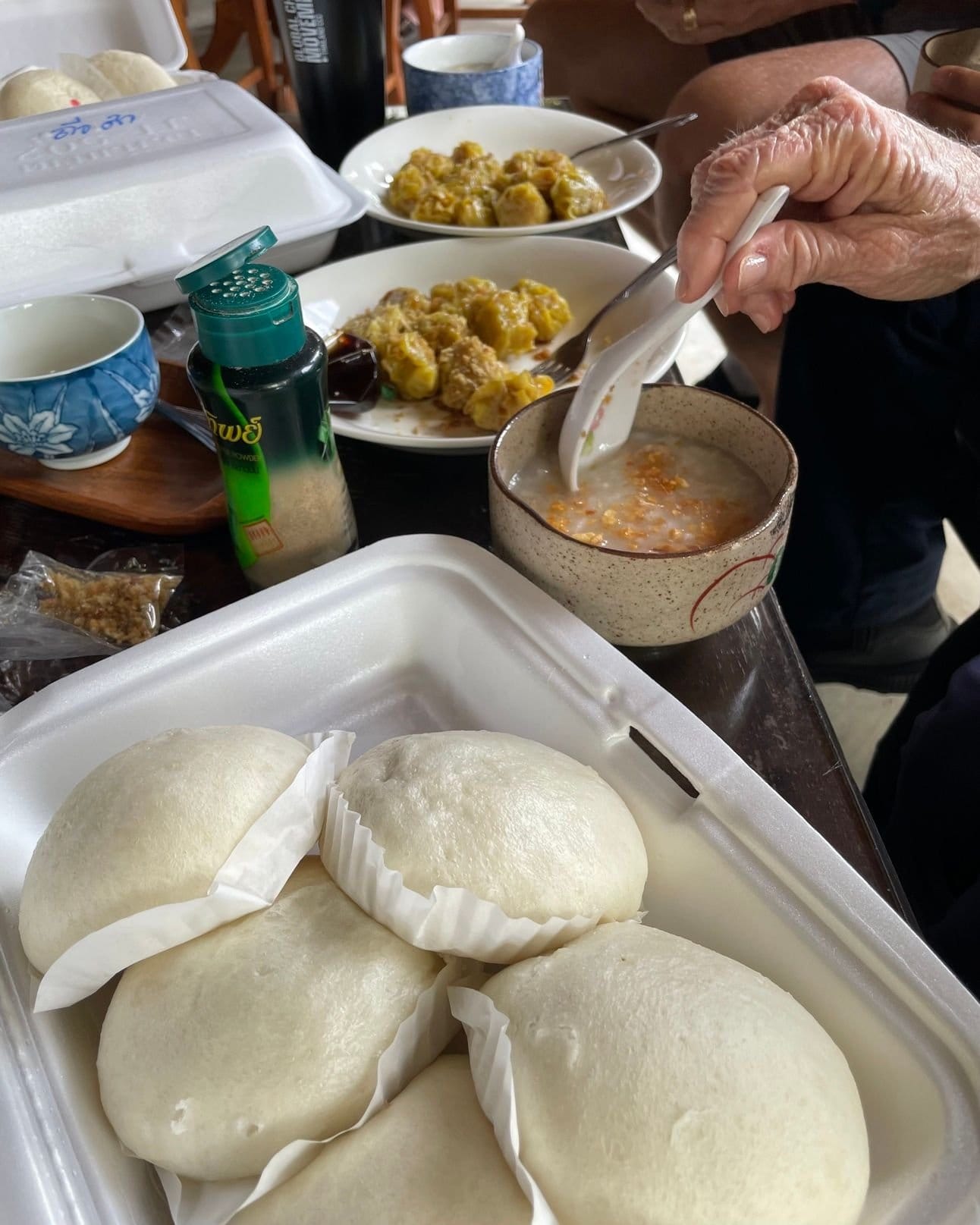
We pick up Salapao and Kanom Jeeb instead, Thai steamed buns and dumplings. Mom chats with the ladies making the buns by hand in the back. We eat our breakfast at our friends’ rice paddy bungalows so they can show us the new property. The view is beautiful. The paddies are being prepared to be flooded. Water buffalo roam the plowed but still dry fields. Mountains ring the horizon. The morning air is filled with the calls of birds I had forgotten I missed.
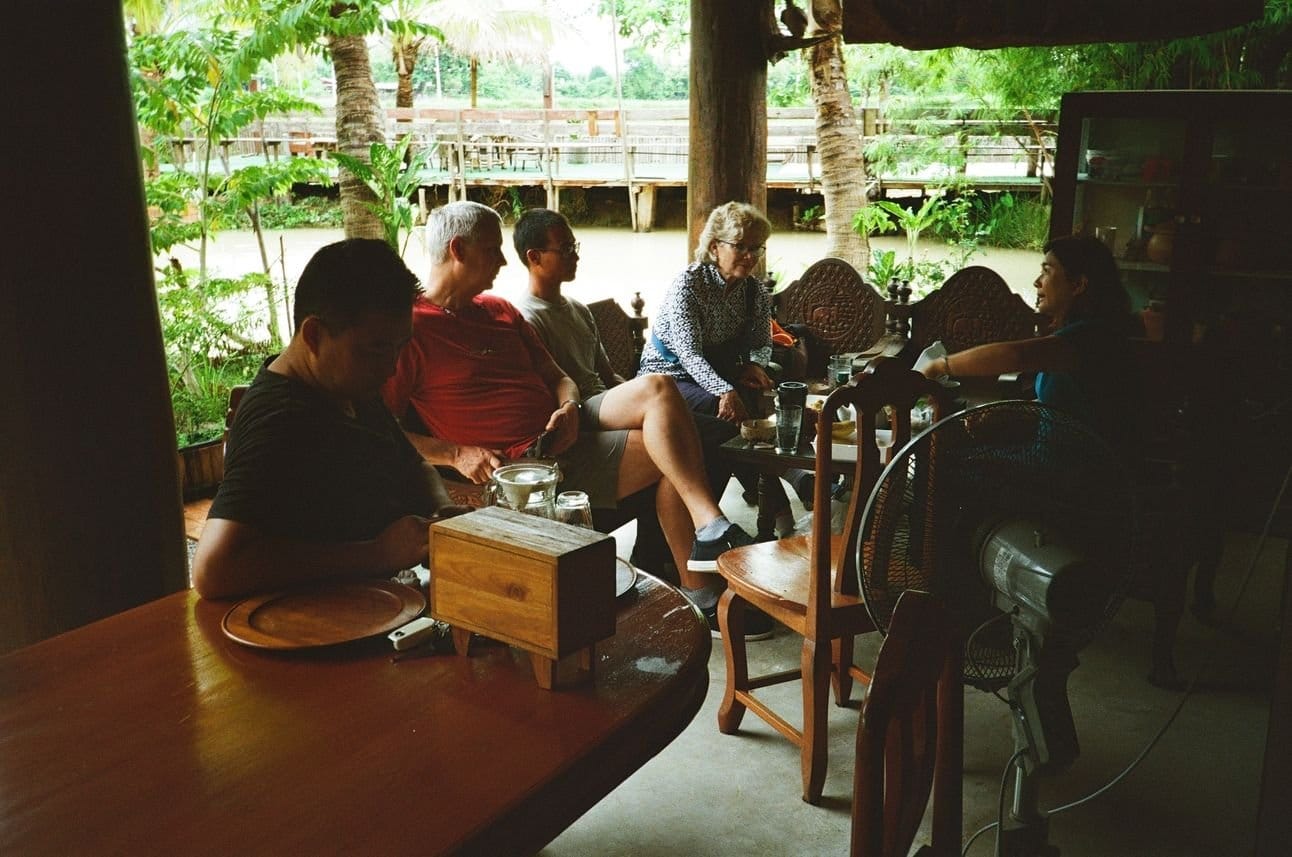
We meet with an American Christian missionary family new to the area for lunch at a supermarket called Big C. The food court is a cornucopia of Thai cuisine. I eat Khao Soi and Satay while my parents encourage the young couple with three children. The kids spoon rice into their mouths like natives--like they aren’t an ocean away from the culture they were born in. That was me once.
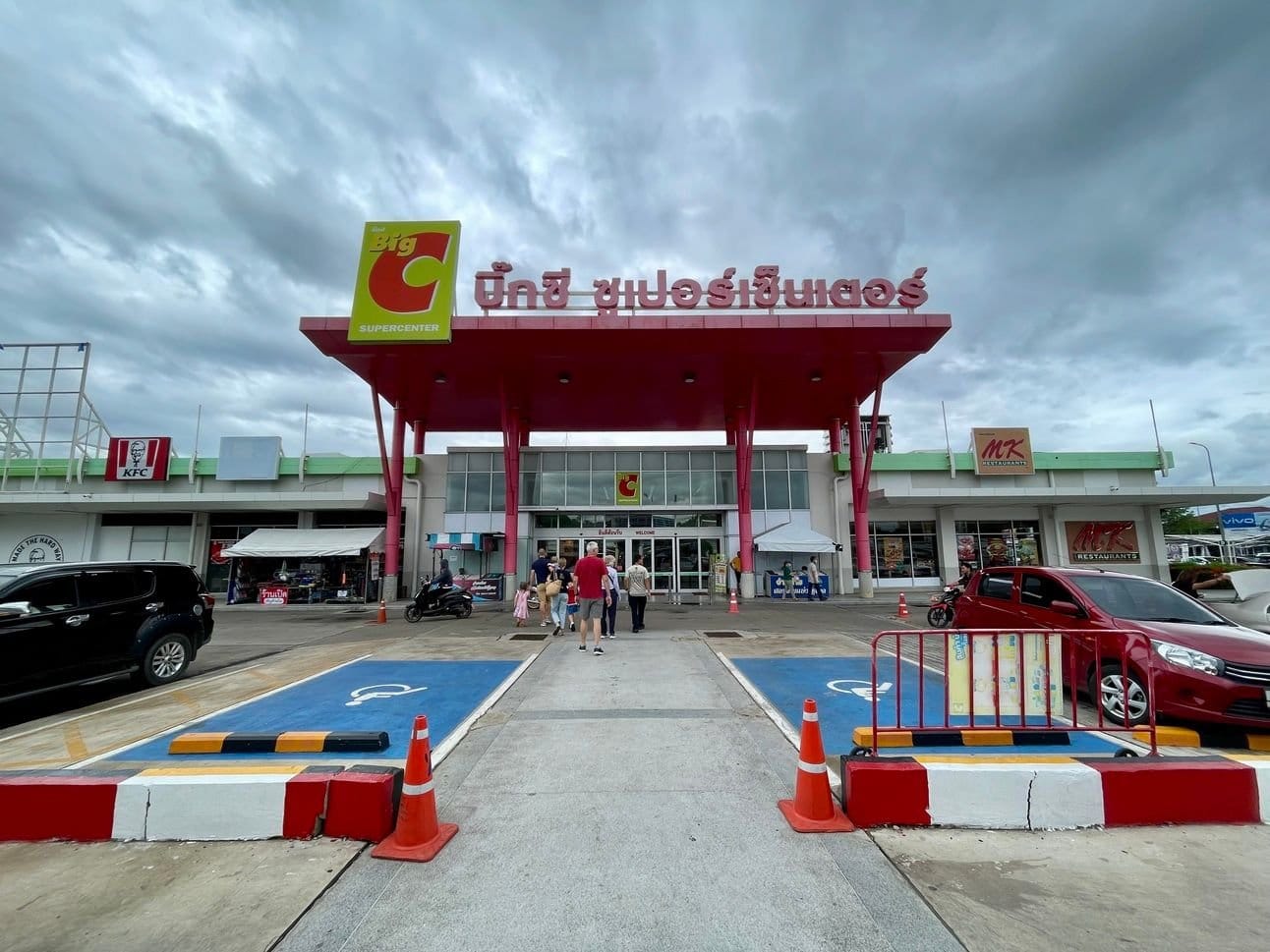
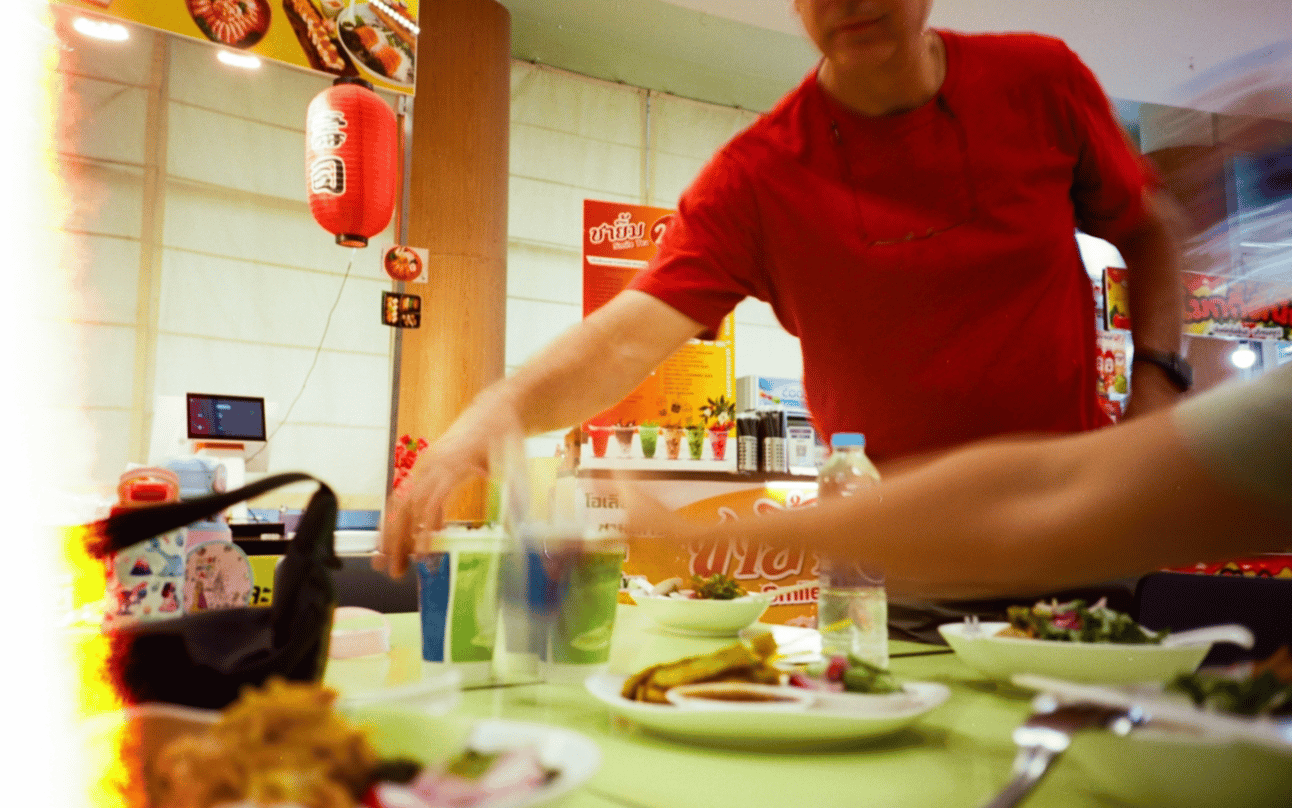
A Big C is like a Walmart or Target but with a strip mall tacked on the front. A variety of small shops, cellphone stores, and food chains supplement the main department store. This one has the ubiquitous KFC, Mister Donut, and Dairy Queen. I get a blizzard. The first in years. The mini size--barely a cup of soft serve. I only need a taste.
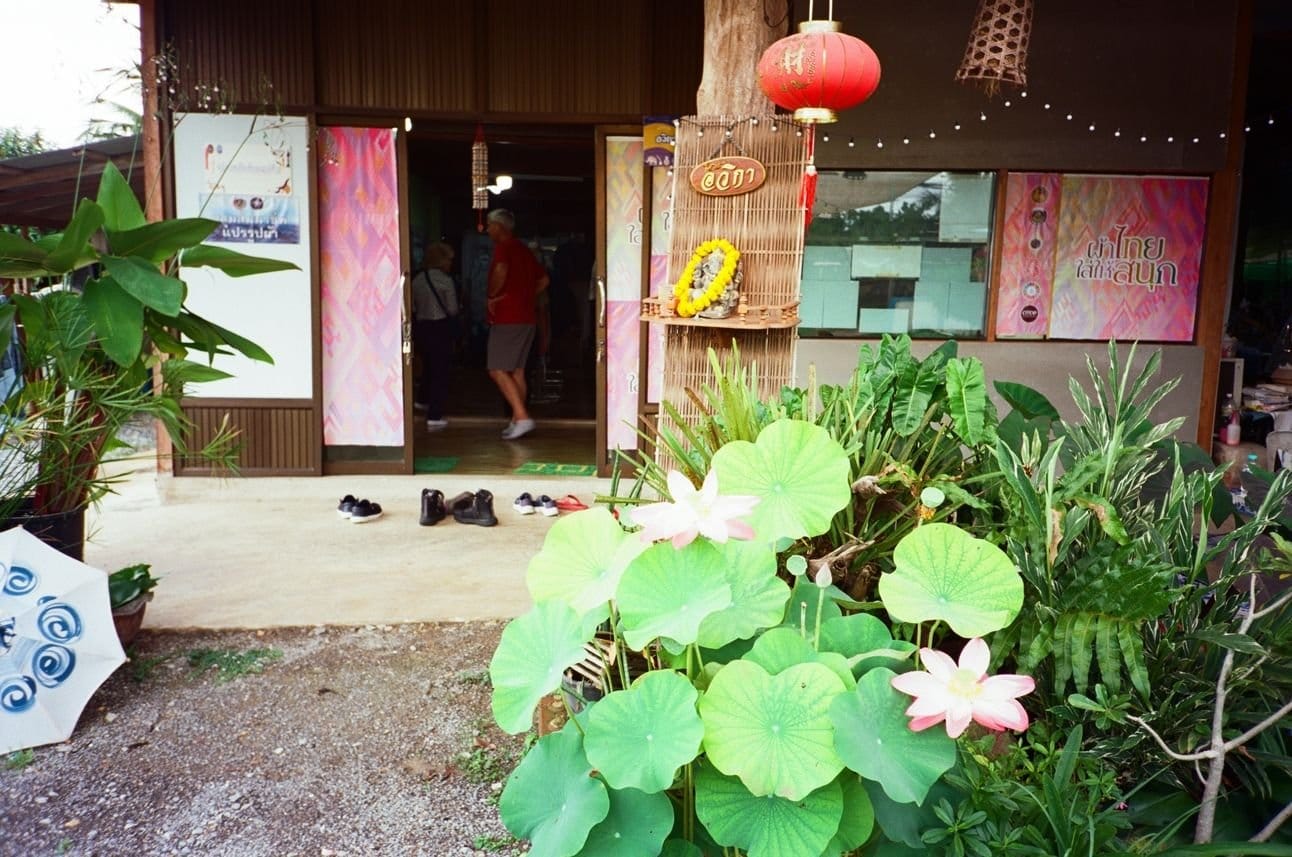
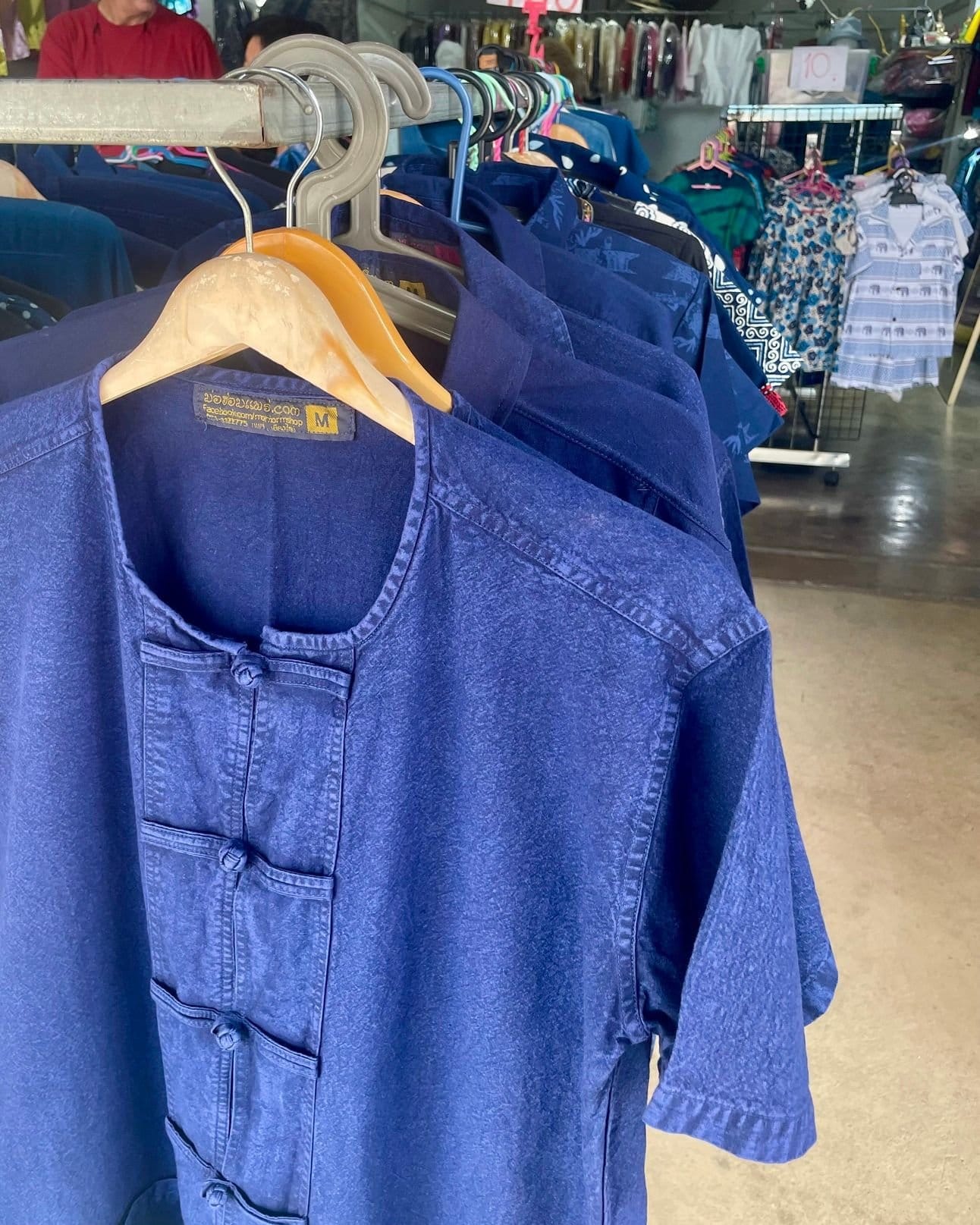
We shop for Pha Mo Hom after--a traditional fabric and work shirt. The materials grown, woven, and dyed by the community. The work shirt has cloth buttons, a Chinese collar, and large front pockets all sewn from indigo dyed cotton. It’s like wearing a sturdy denim shirt. The fabric is no longer dedicated to field work. More decorative shirts, bags, hats, purses, other home goods are made--it’s even found its way into high fashion--and they are dyed with intricate patterns of elephants, village scenes, and floral designs.
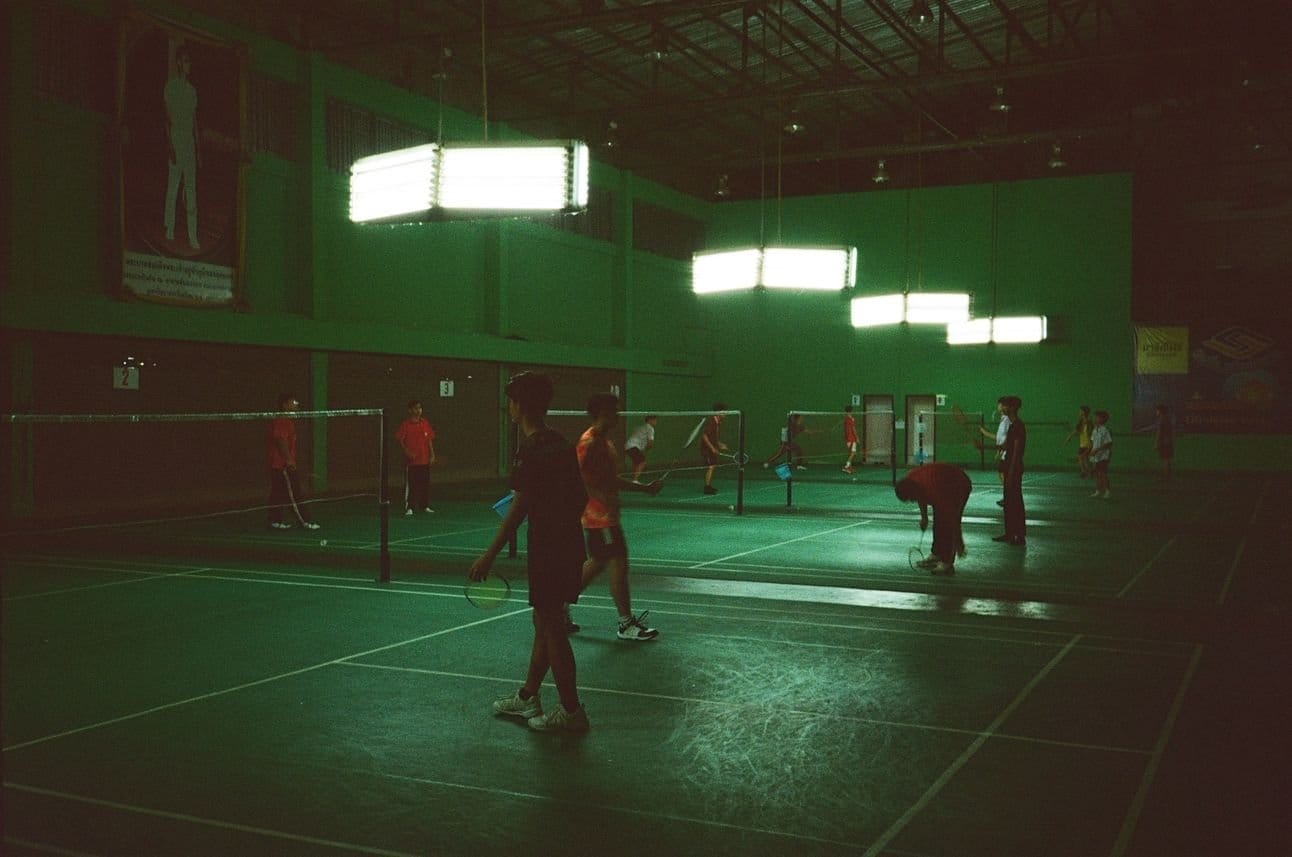
We play badminton at the municipal gymnasium in the late afternoon. We are lucky to find an open court. Students play casually with friends in the unconditioned building. Others train for competition. And a coach teaches a group of children. I work up a sweat rallying the birdie back and forth with my parents and brother.
We need to wash some clothes and look for a laundromat that evening. Food stalls line the roads serving noodle soup, stir-fry, and other treats. Students finished with their afterschool activities eat with their friends at folding tables seated on plastic stools. Clouds of flying termites swarm the florescent lights, coaxed from the ground by the rains. Jing-joks, small adorable geckos, cling to the walls under the bulbs and feast.
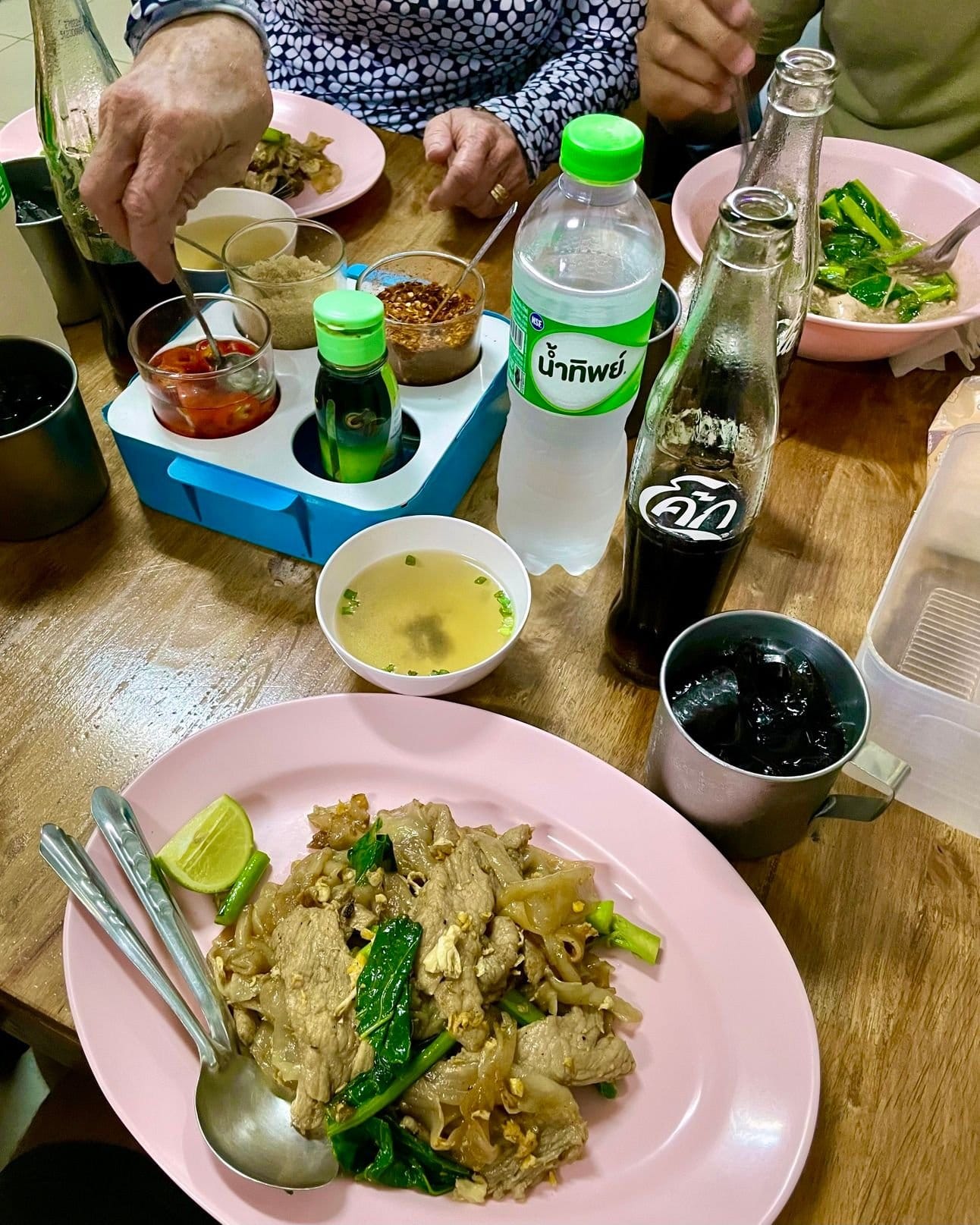
We feast on Rad Na and Pad See Ew.
July 27, 2025
05.27.25 | Phrae
When I see the tree that stands amidst the rice paddies in front of my childhood home, I feel it does not know me. I lived in this village for six years--middle school to high school. I watched this tree change with the seasons. Boughs reflected in the flooded paddies waiting to be planted with young sprouts of rice. Its large leaves becoming flushed with the youthful green of new growth as the juvenile rice flourishes around it. Its vegetation darkening as the rice matures, heads bowed with grain. Then the paddies dry, yellow, and are harvested leaving rough brown squares scattered with straw. And we would fly kites by the tree on the cool wind that came down from the mountains.
And the tree had forgotten me.
I had not been recognized throughout the trip. At the church, my parents’ friends greeted Mom, Dad, and my little brother with enthusiasm and fondness. Their gaze slid over me in confusion. I was a baby-faced college student, or recent graduate, the last time they saw me with my perennial cropped haircut. Now they saw a 30-year-old man with a full beard and long curly hair. My parents had to introduce me. “This is our oldest.”
I felt ashamed. I felt ashamed I’d been gone so long. Ashamed of my broken Thai. Ashamed I was unrecognizable.
Too much had changed.
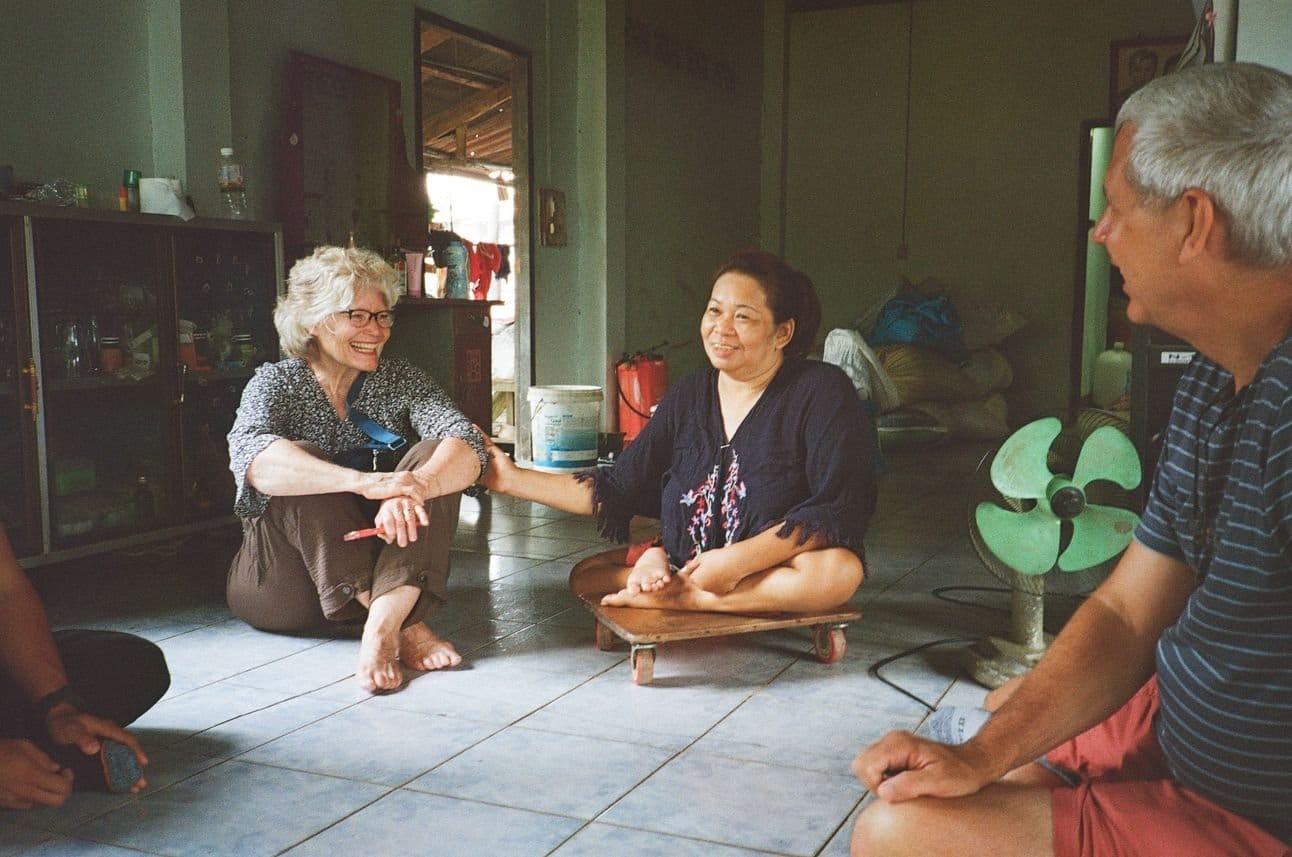
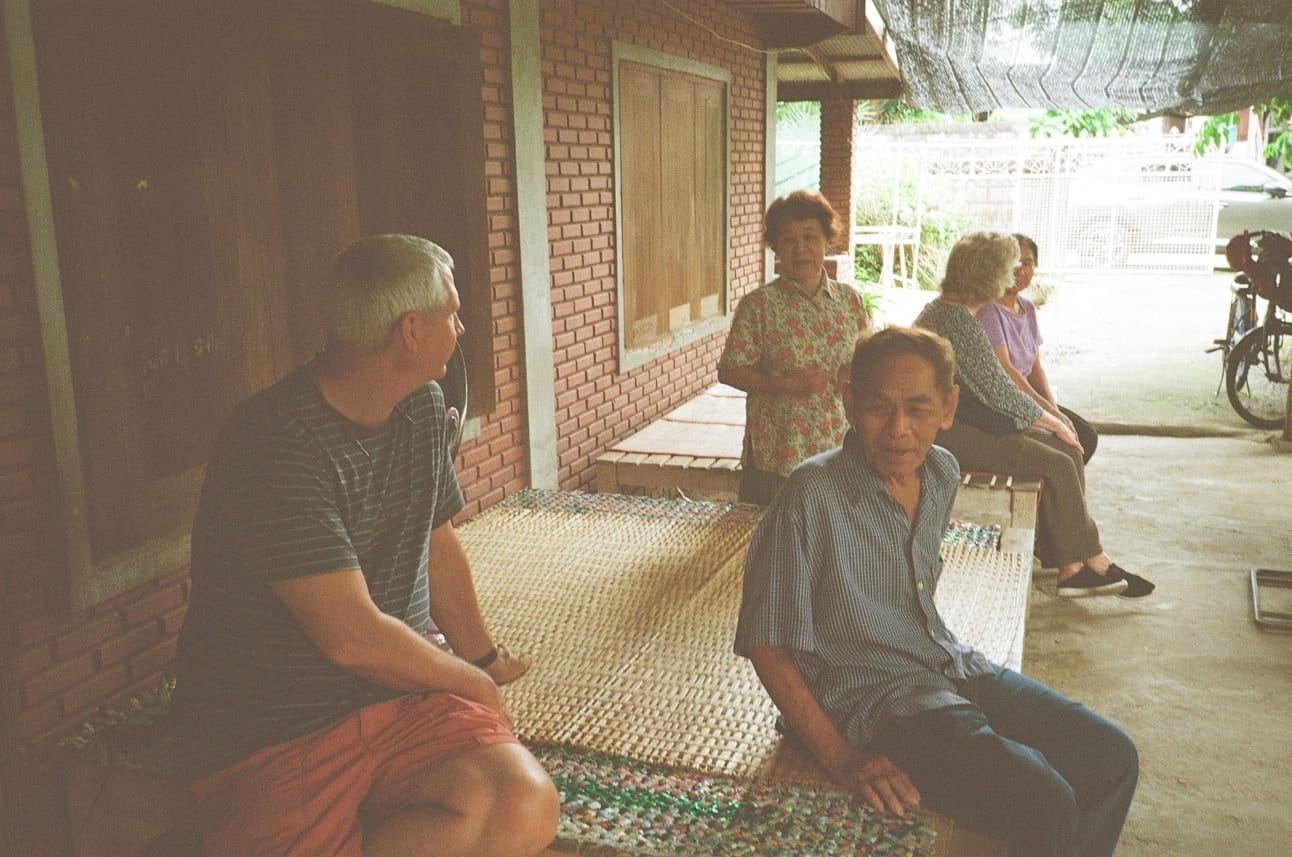
But then they hugged me. Faces alight with surprise and joy because they had known me then. And they were glad to know me now. Hugs are not common in Thailand. They are reserved for those you have great affection for.
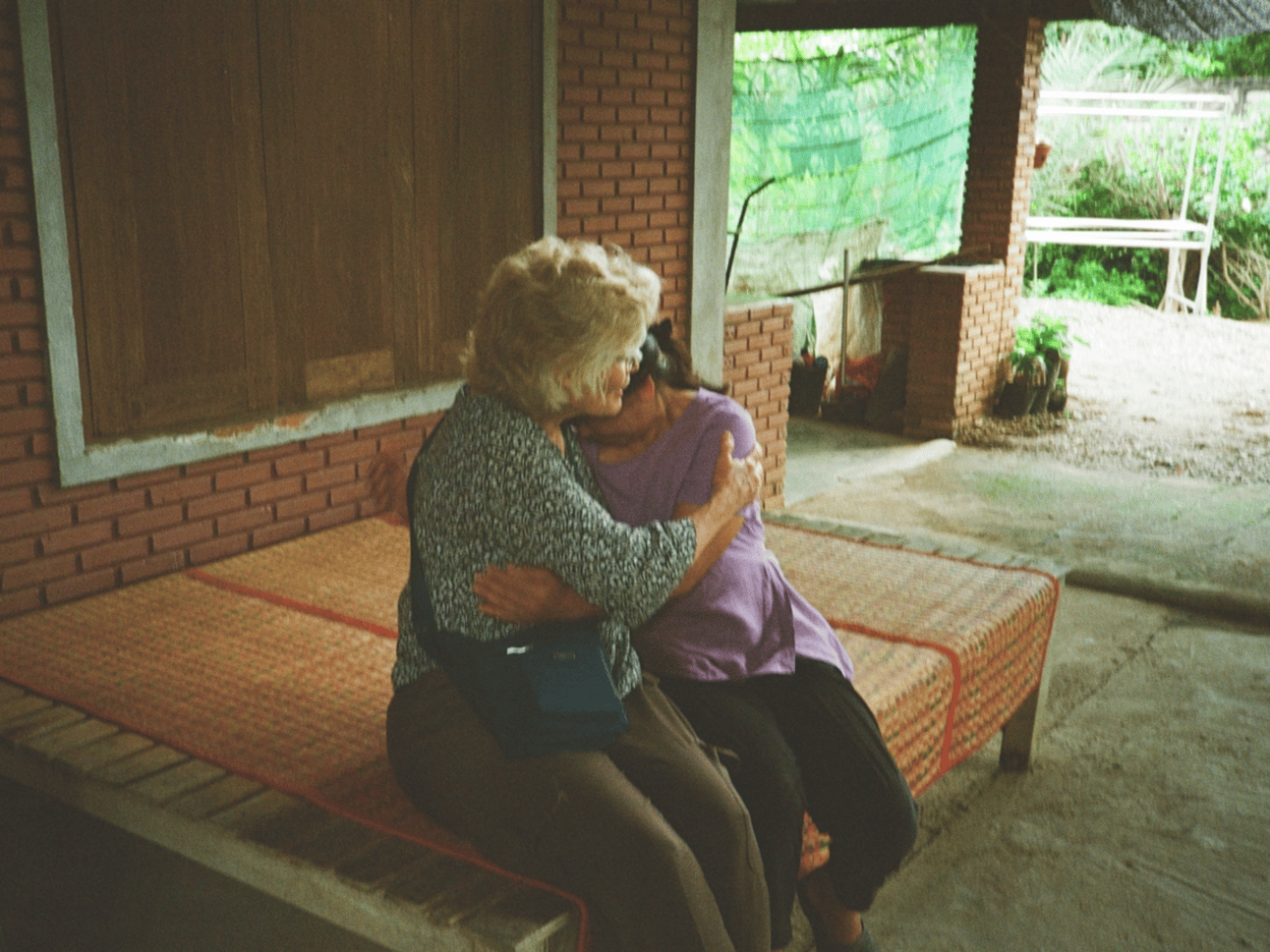
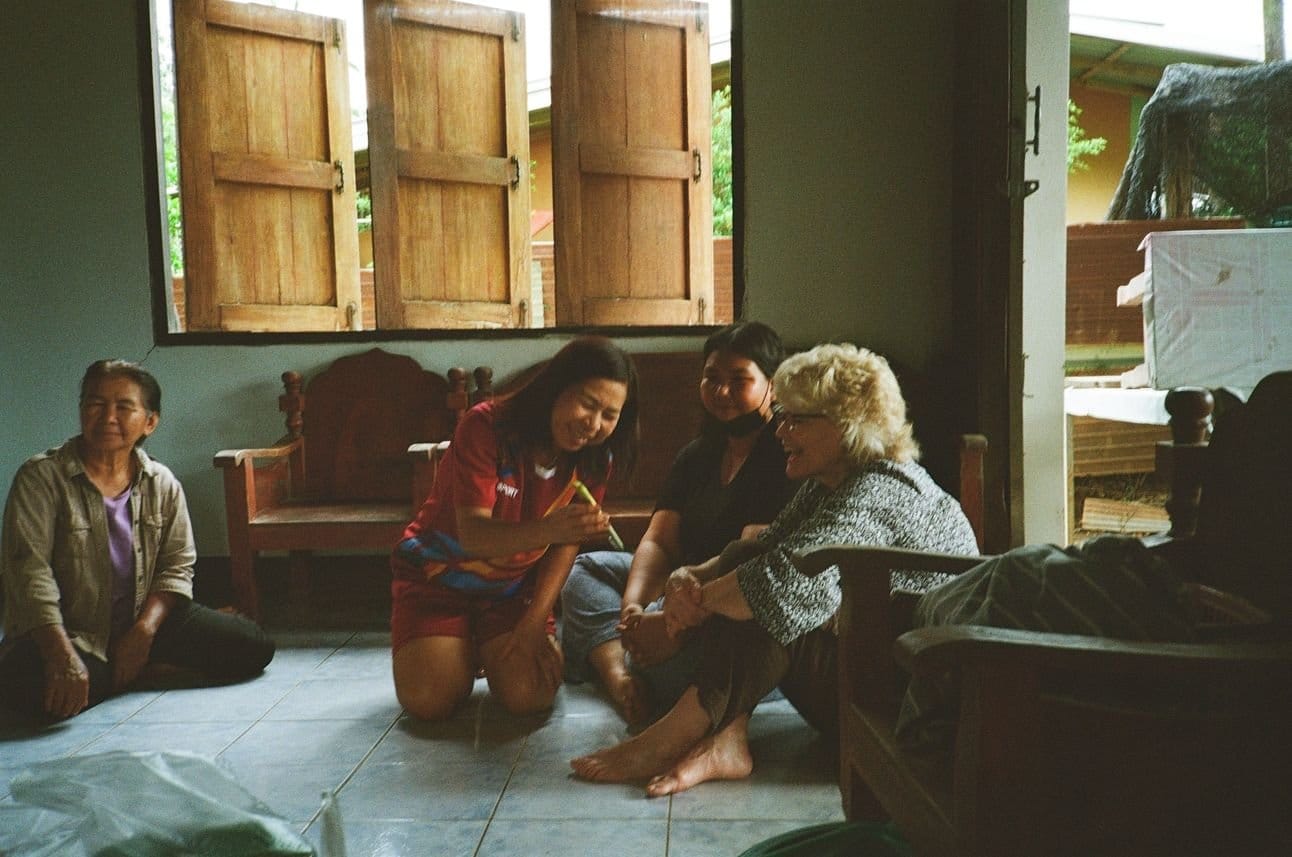
This scene repeats in Rong Fong, the village of the tree. Celebration of my parents’ and brother’s return, my reintroduction, and hugs. One friend weeps. She loves us dearly and missed us. Her daughter, Nam-pung (Honey), played often at our house. Now she has a child. A neighbor video calls her son, Sam, an old playmate and friend. He is at work teaching at a school. And he smiles when we are handed her phone and sees us. My parents pepper him with questions: how are you, what do you teach, do you have a girlfriend?
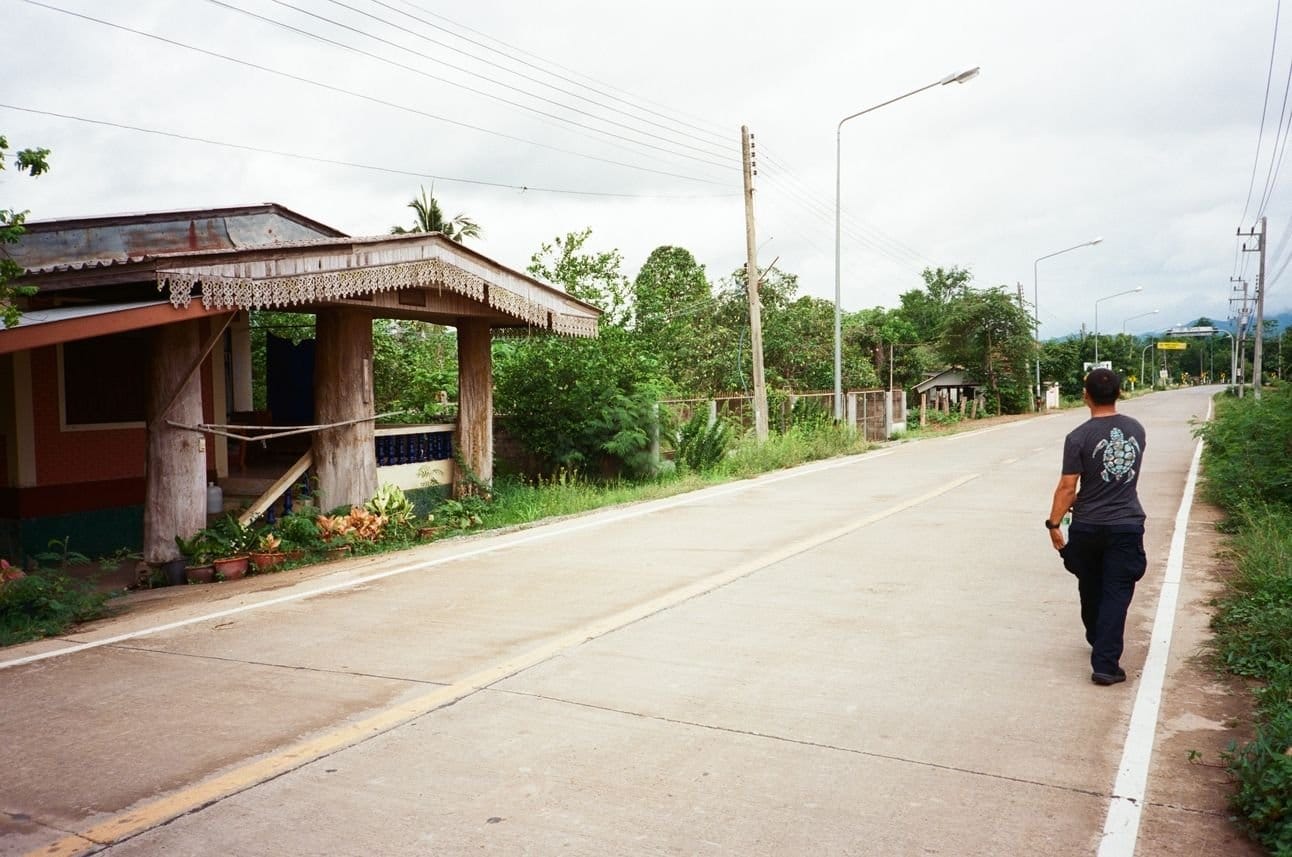
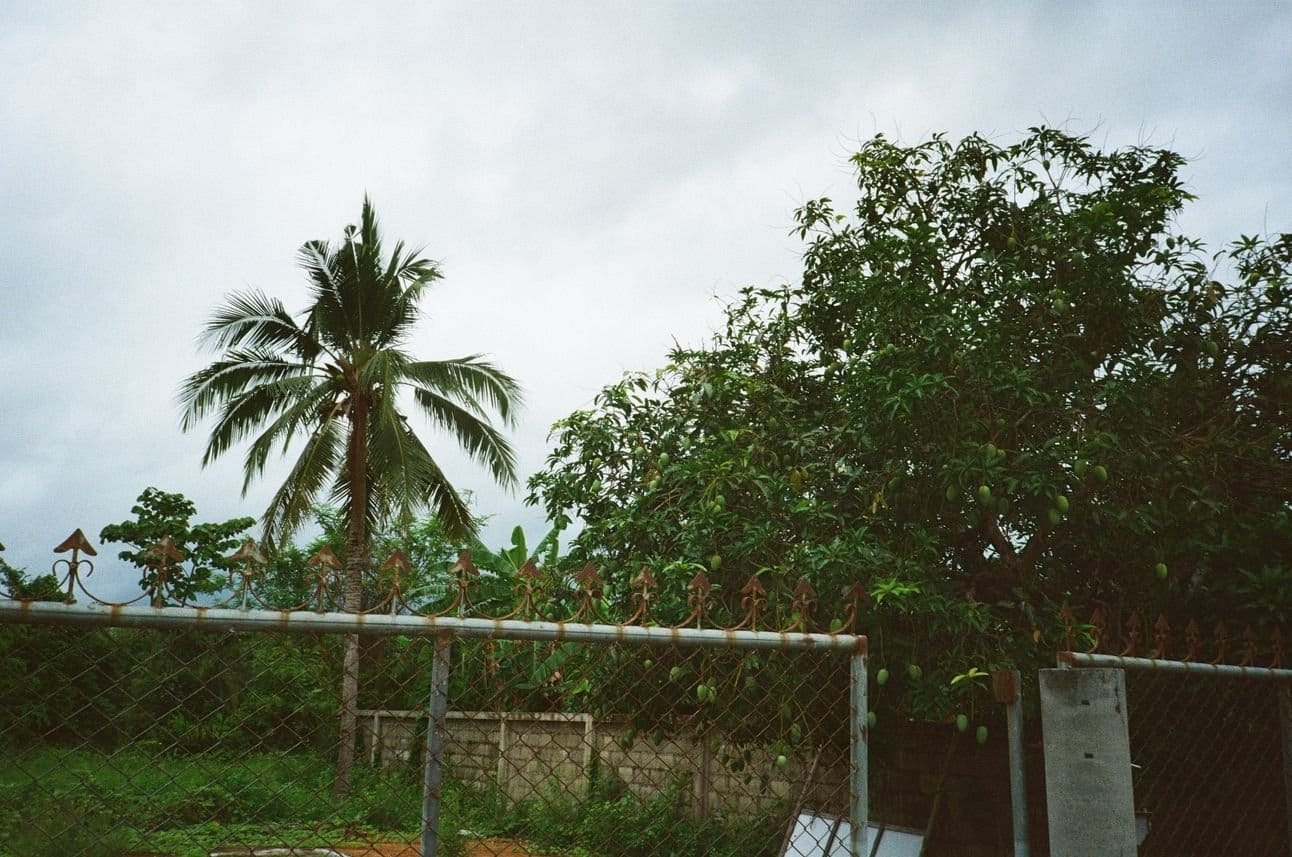
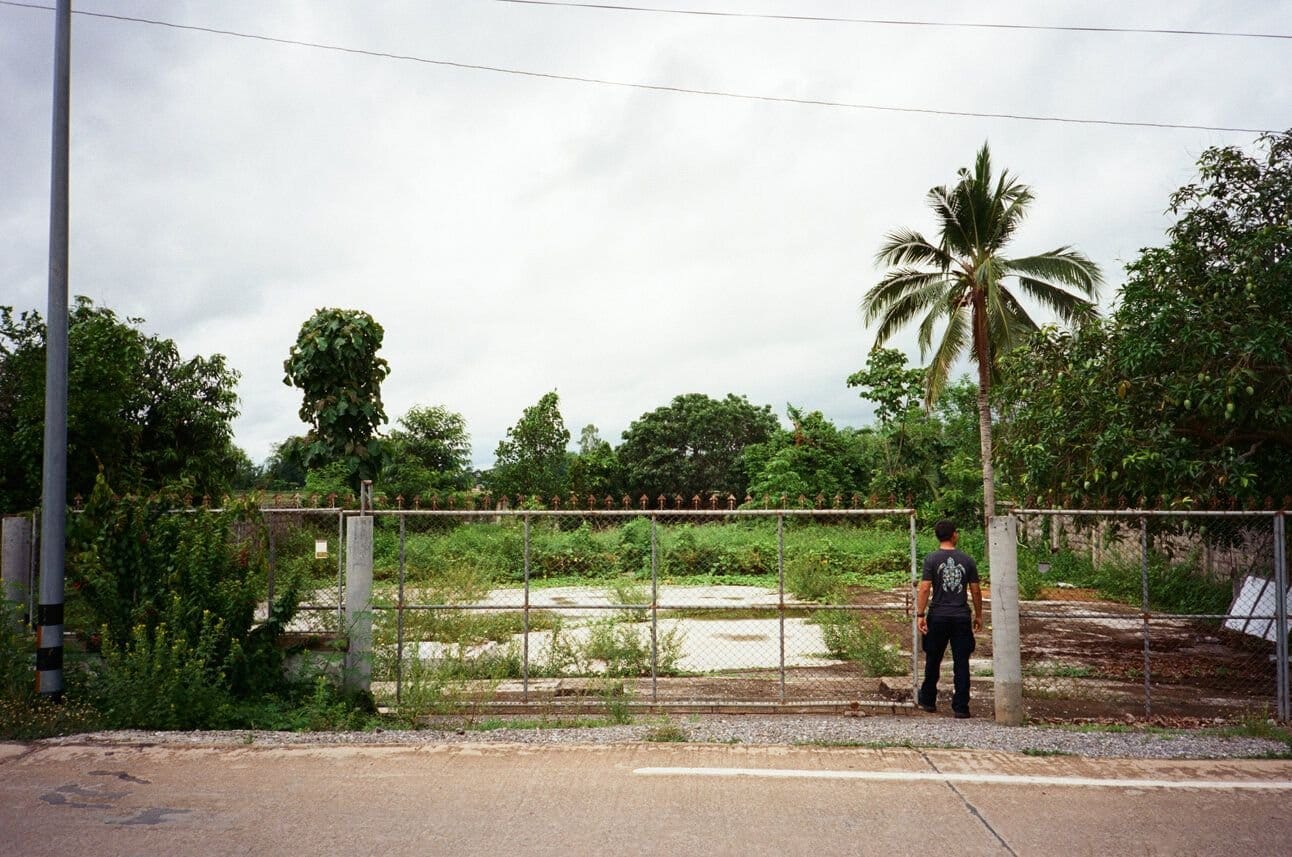
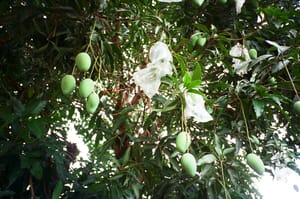
We can’t find our house when we first arrive. We see the tree, aloof, the crematorium where we attended buddhist funerals, and the tractor turning the soil of the rice paddies--our view for six years. There are new houses on the street. The trees have grown taller and wilder. So we assume we missed it. We search. And find a familiar fence. With a familiar mango tree laden with fruit. A familiar coconut tree that towers. And a patch of grass we certainly played badminton on with the village children. But no house.
Only an empty concrete pad where it once stood.
July 28, 2025
05.28.25 | Phrae
Minat and Geelawan don’t recognize me either. But exclaim “Luka!” and hug me tight when they learn who I am. They are old ministry partners my parents mentored. Our families were close when we lived in Phrae city. We meet at the house I lived in the last couple of years in Thailand. This one had not been destroyed, but had transformed.
It’s now a café called Sugar Bites. Our former living room holds a grand wooden coffee bar covered with mugs, glasses, and chromed espresso machines and grinders. The room where we homeschooled is now a bright sunroom filled with café tables and chairs. And the concrete slab that separated the main house from an auxiliary building--which used to accommodate our kitchen, a storage room, and my bedroom--is now a garden courtyard. It’s beautiful, cozy. The coffee is delicious. And they have honey toast.
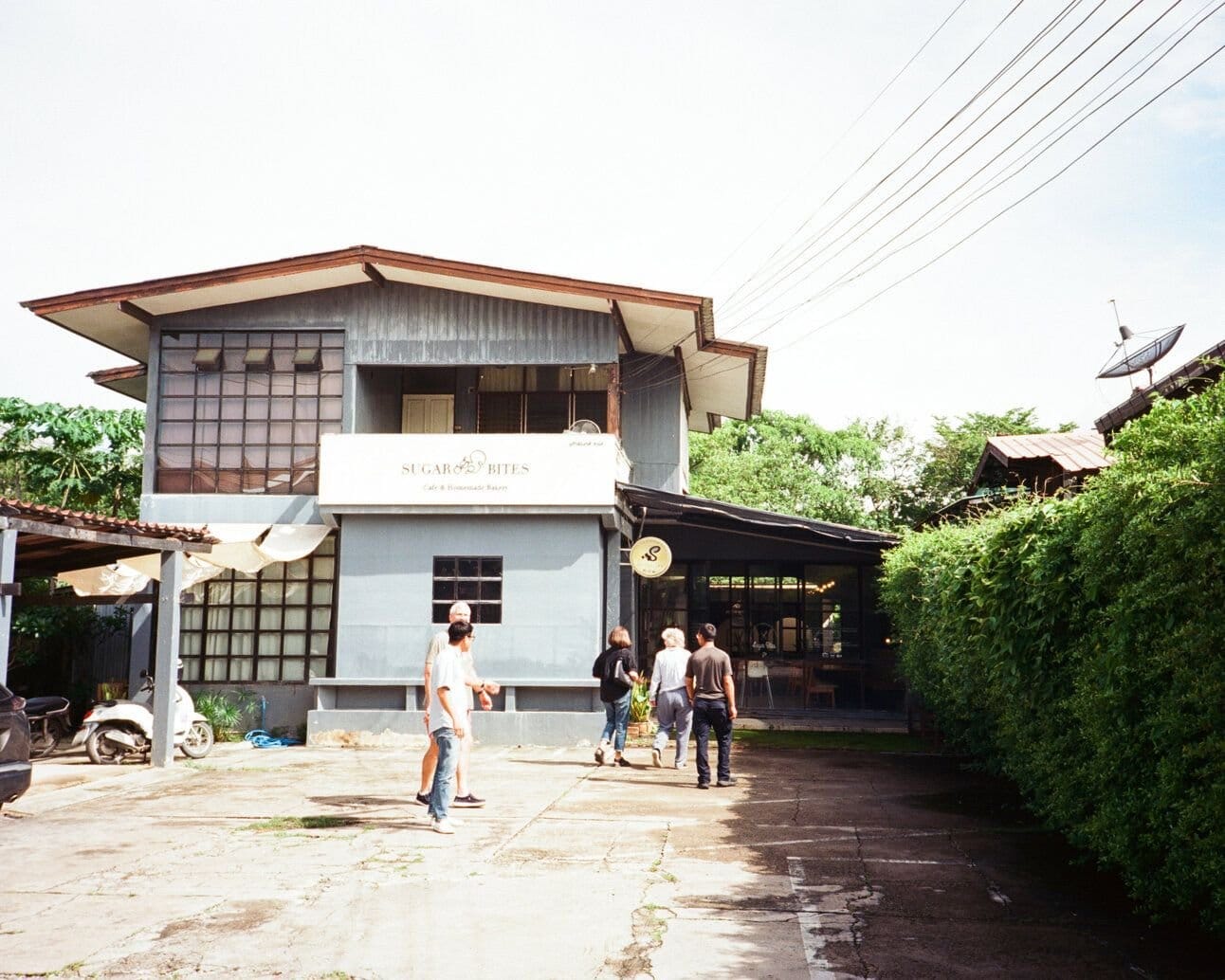
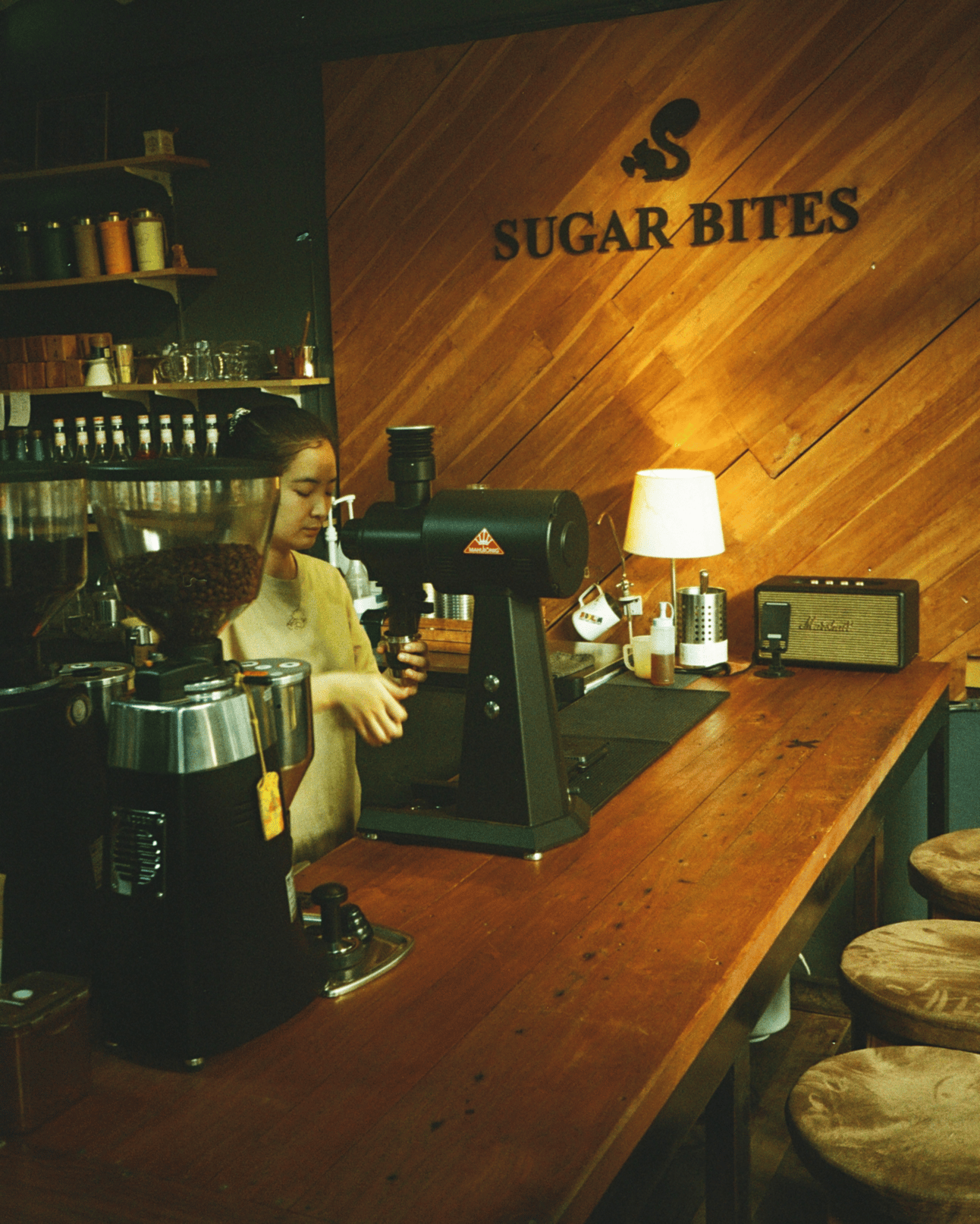
I tell Gee I lost my Thai, “Luem puat passaa Thai.” And her response is simply, “Puat chat.” You speak clearly. This isn’t the first time my pronunciation has been affirmed. A new, to me, family friend was startled when I spoke to her with the few phrases I was confident in and exclaimed, “Puat chat!” I had to ask my parents to translate the second word. Grammar and vocabulary may be slipping through my fingers, but I cling to the thought that pronunciation is like riding a bike and can’t be lost.
As we leave the valley of my hometown, driving back to Chiang Mai, my eyes take in what had been blinded by regularity. The sky decorated with a diverse improvisation of clouds transforming at the whim of rainy season. There the sun shining against the blue, there Toy Story clouds, there a grey felt sheet casting a great soft shadow on the fields, there a dark mass skirted by a blur of rain. All this weather can be seen all at once in the wide valley surrounded by its constant crown of mountains--ornamenting their peaks with clouds, draping mist about their shoulders, or standing sentry unadorned except for the haint of distance. These mountains were my horizon as a child. There was my house, our street, the rice paddies, the Yom river, the surrounding village and towns, and the mountains that hemmed us in.
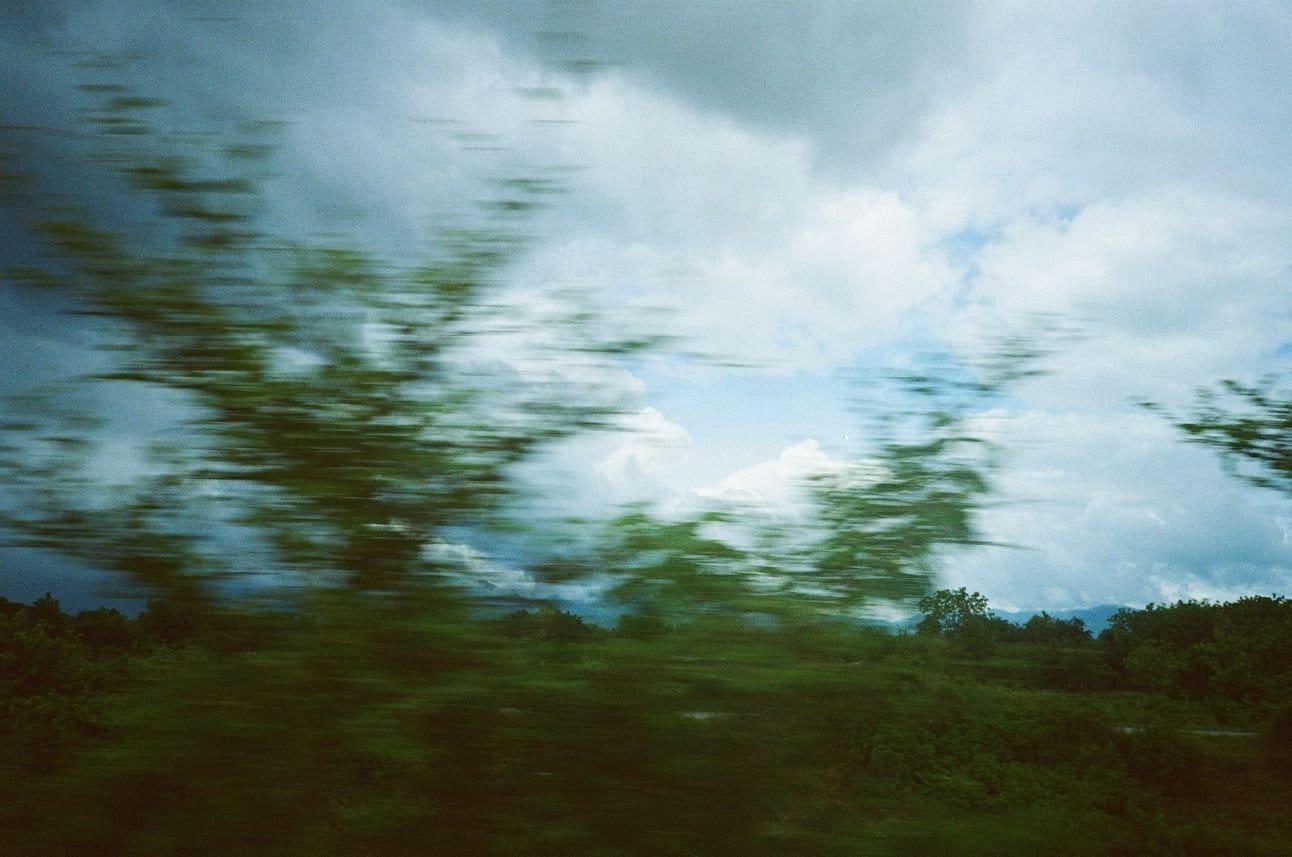
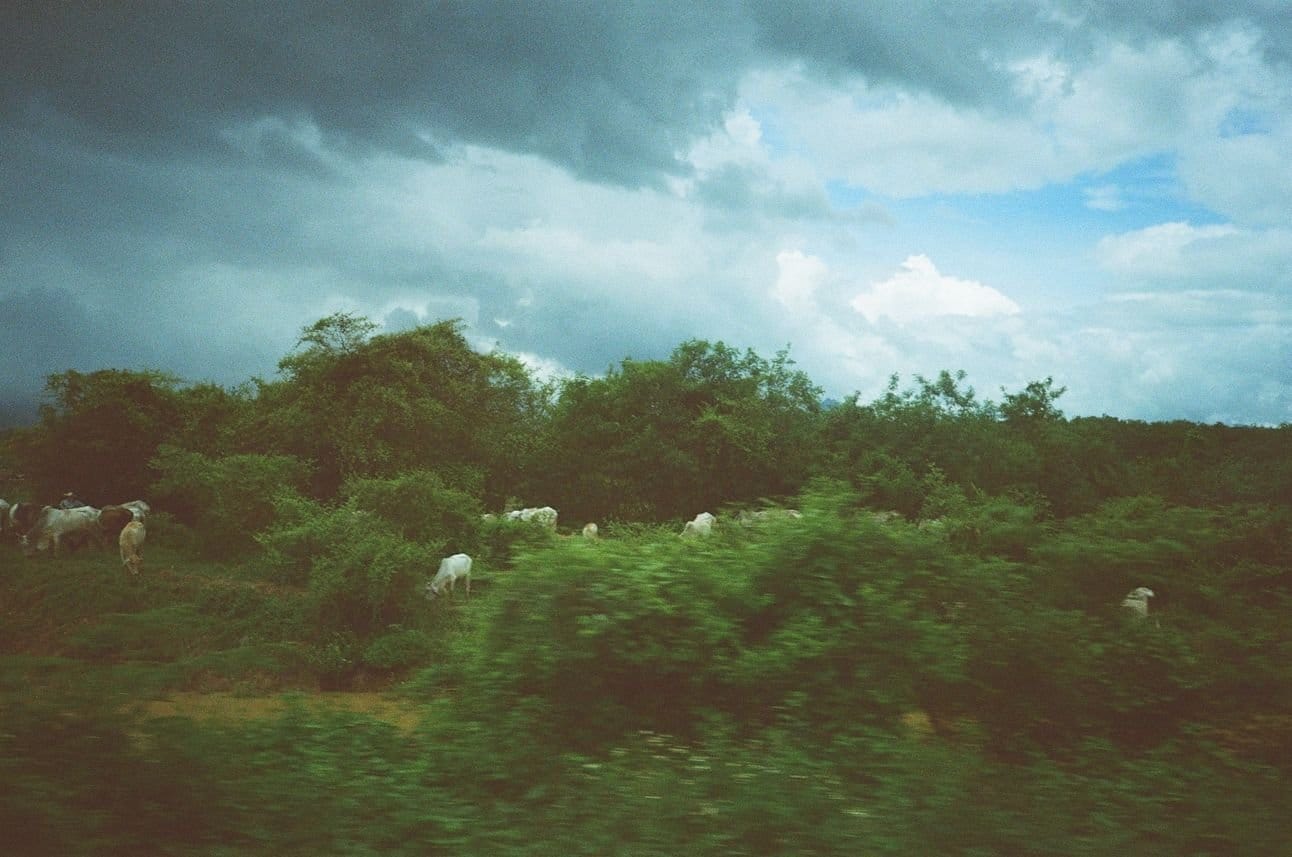
The scenery unearths a forgotten ache.
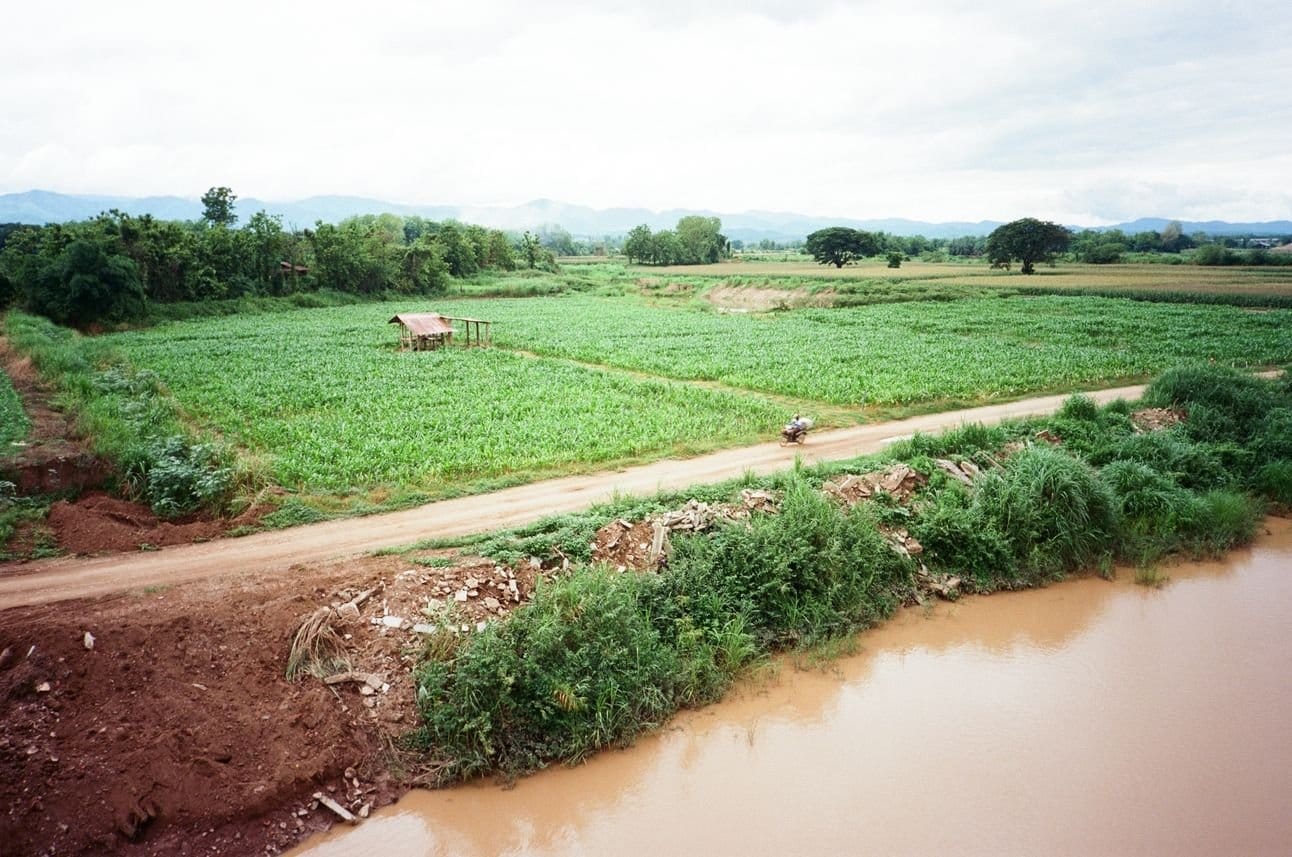
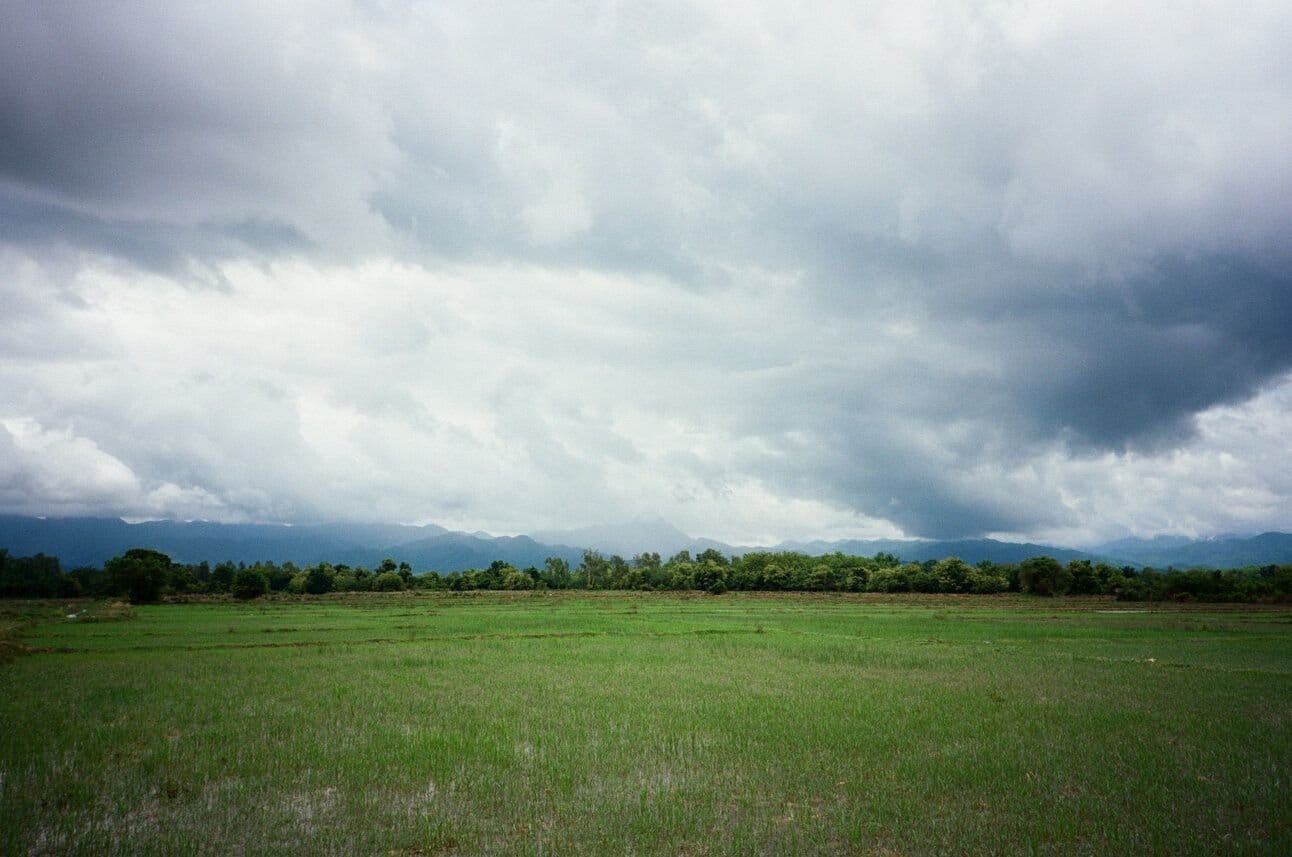
Texas was a wonder to me as a child because of the horizon’s brutal simplicity out on the plains. You could see the curve of the world there. My current horizon is a jumble of tall concrete buildings and hills in an urban area that can’t decide if it wants to be a city or a town. I miss the clarity of the valley and the comforting hug of mountains.
July 29, 2025
05.29.25 | Chiang Mai
Our second pass through Chiang Mai is a flurry of food, fittings, and supplemental souvenir shopping. The famous Night Bazaar still sells the usual tourist trash, but the quality seems to have improved. Absent are the bootleg DVDs, eliminated by streaming. I have fond memories buying disks by the dozen, a dollar each, and playing the roulette at home to see which played or not. There are other changes, too. An extensive subterranean mall with nicer artisanal shops, a favorite spot for my family, had flooded and now lay vacant. And new plazas and side streets had opened with open-air food courts and shops and stalls selling handmade items. Pha Mo Hom cloth from my hometown is being sold with an eye-watering markup.
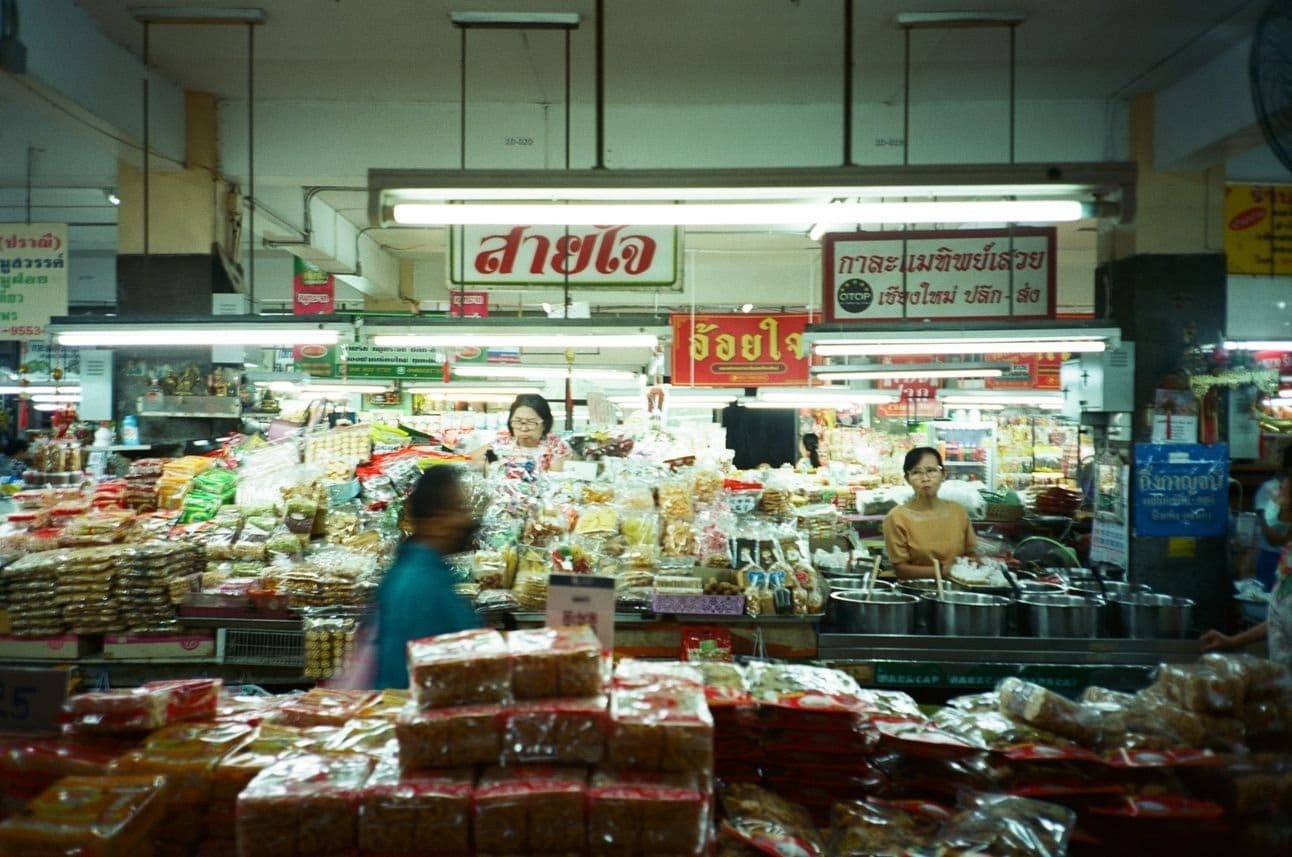
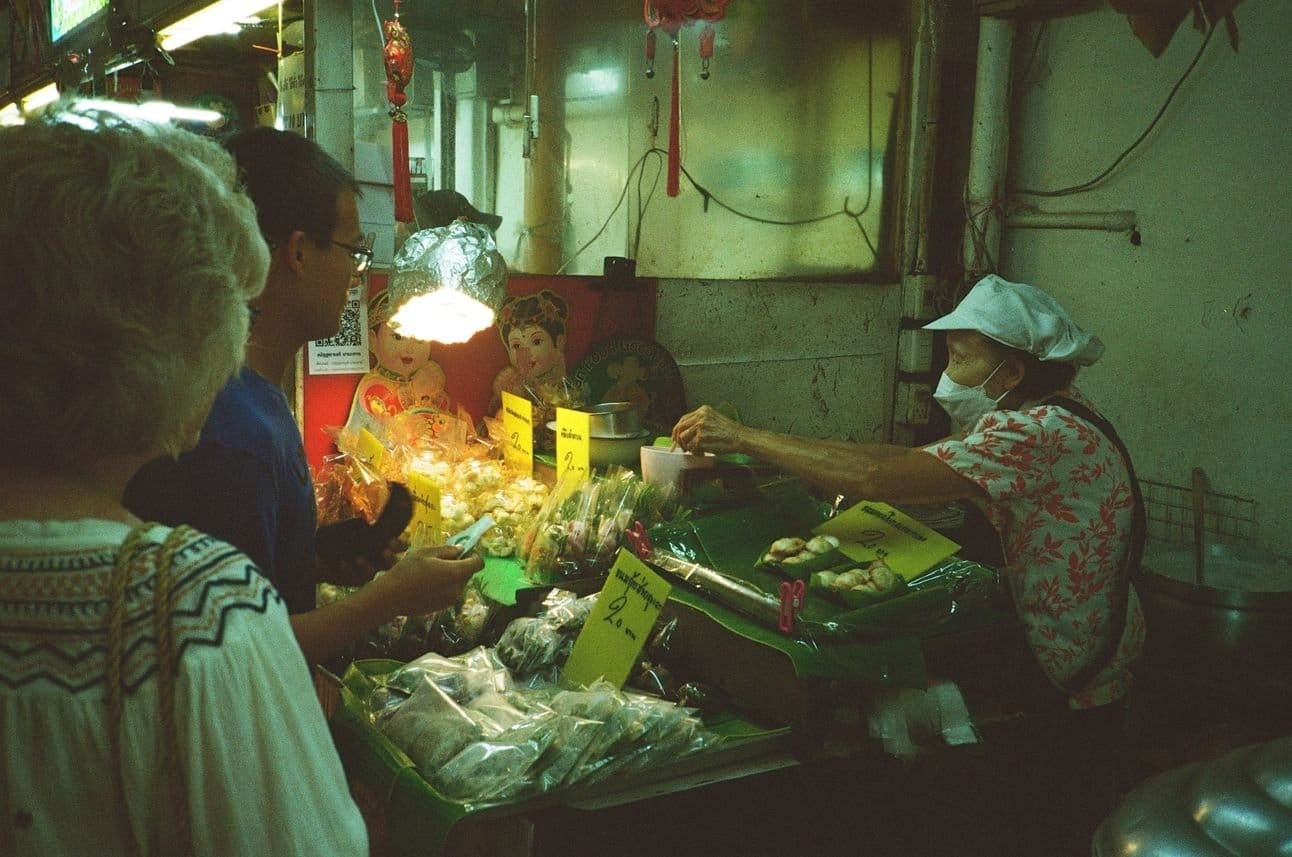
We prefer Warorot Market. This is where Thais on tiao--a visit or trip--go for souvenirs to bring back to their friends and family. The market is stuffed full of dried fruits, locally grown tea and coffee, and handmade crafts from communities all over the country.
We eat at our two favorite farang (foreign) restaurants: Duke’s and Butter is Better. Duke’s, started by a Chicagoan, was one of the first places to offer decent American fare. It has burgers, salads, pastas, pizzas--a massive menu. I order the calzone for old time’s sake and it proved the best I’ve eaten in a while. Butter is Better was a later addition to the city and is modeled after a diner. It serves milk shakes in a traditional sundae glass with the extra in the metal tumbler it was mixed in. They are most famous for their reuben which they have to make from scratch--from the rye bread to pastrami--since the ingredients simply aren’t available in Thailand.
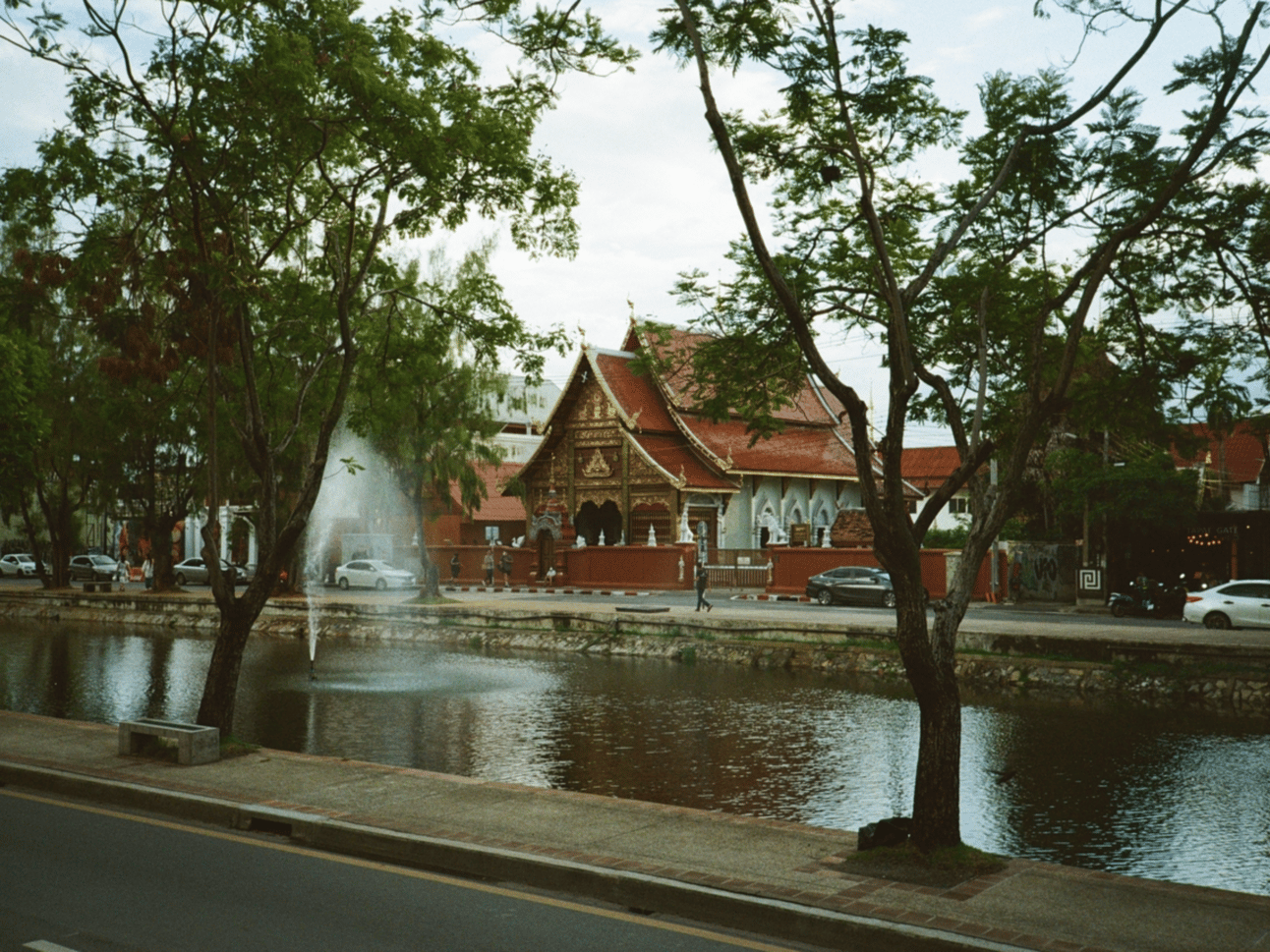
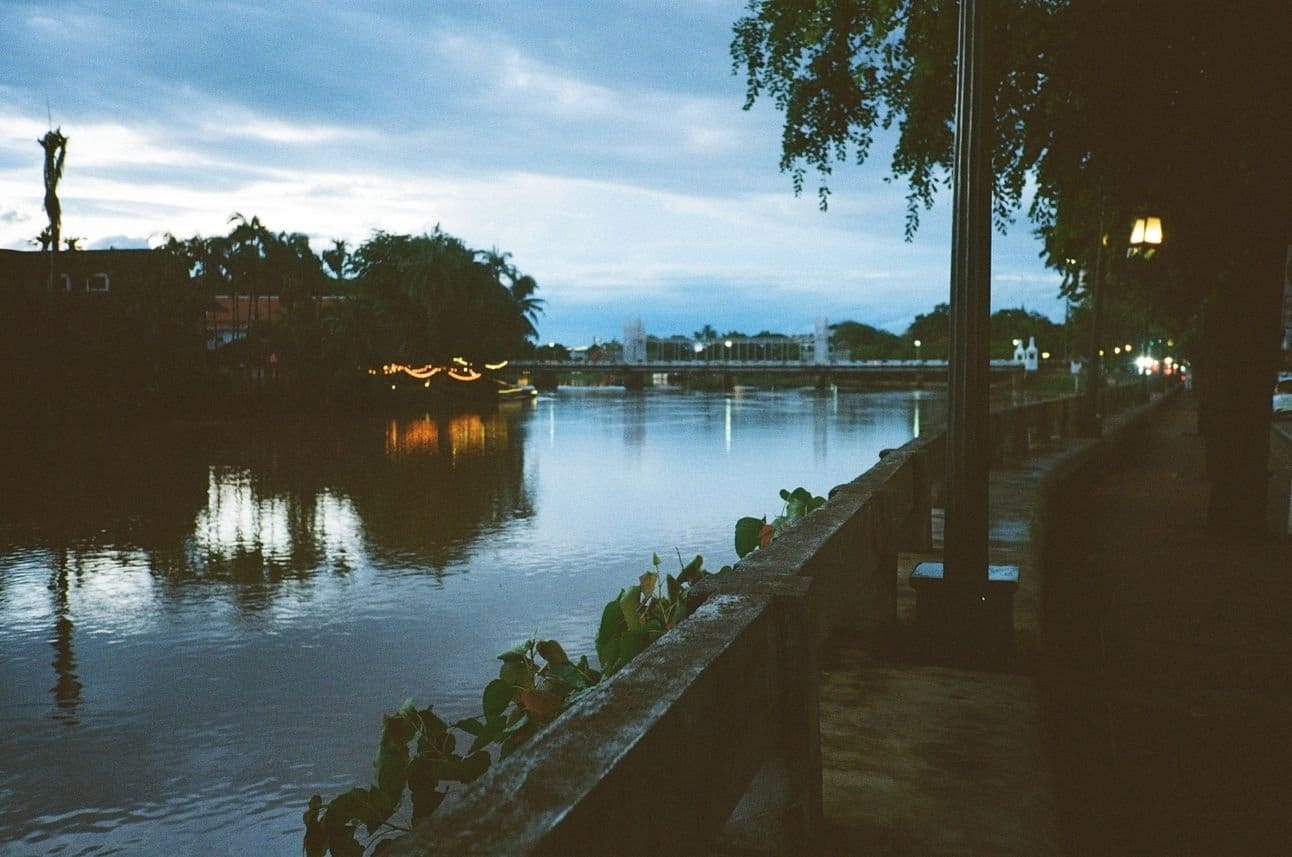
Between these heavy foreign meals, we still manage to eat plenty of Thai food. And even savor a final roti at a Night Bazaar food cart--banana and egg wrapped in crispy pastry and drizzled with sweetened condensed milk.
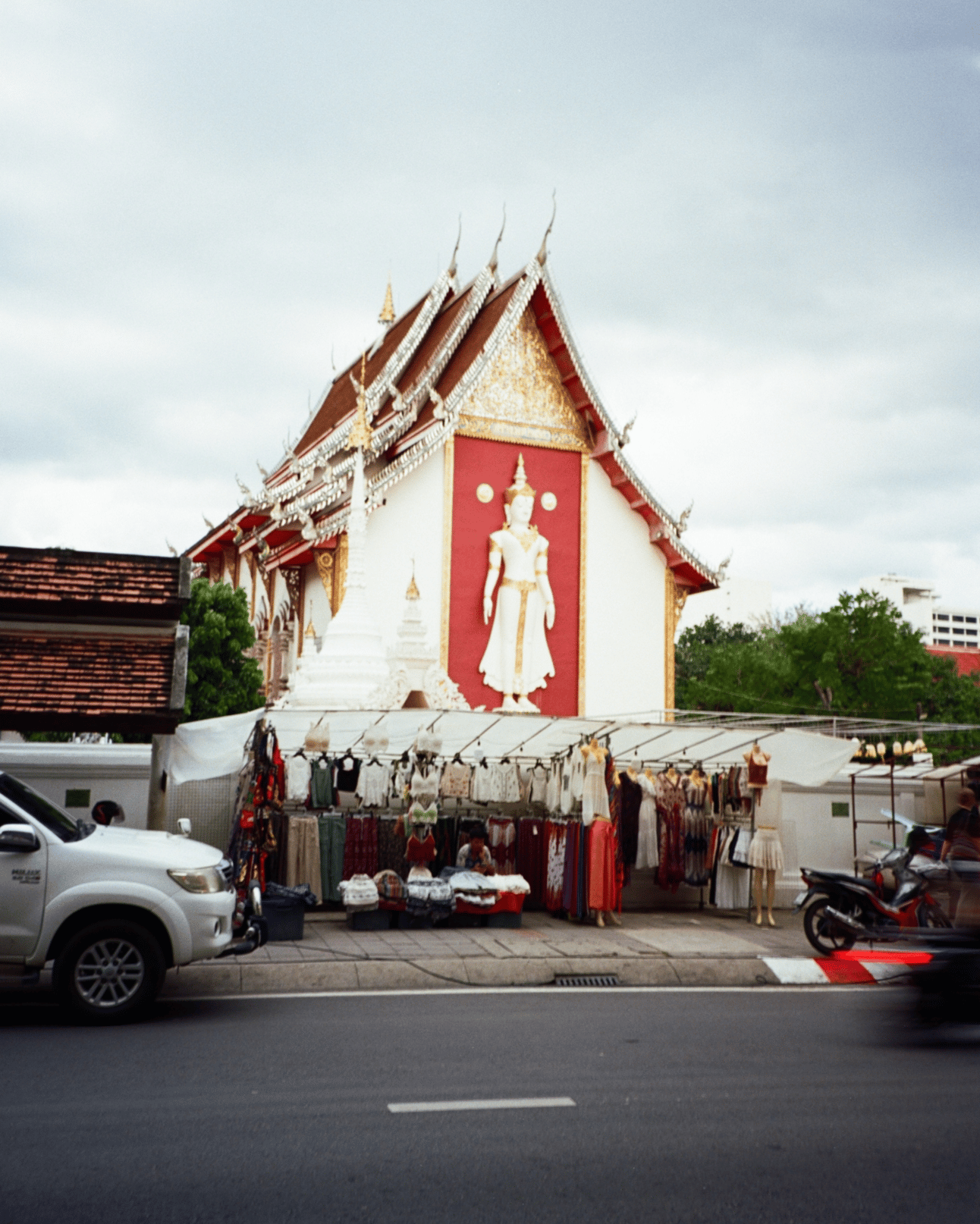
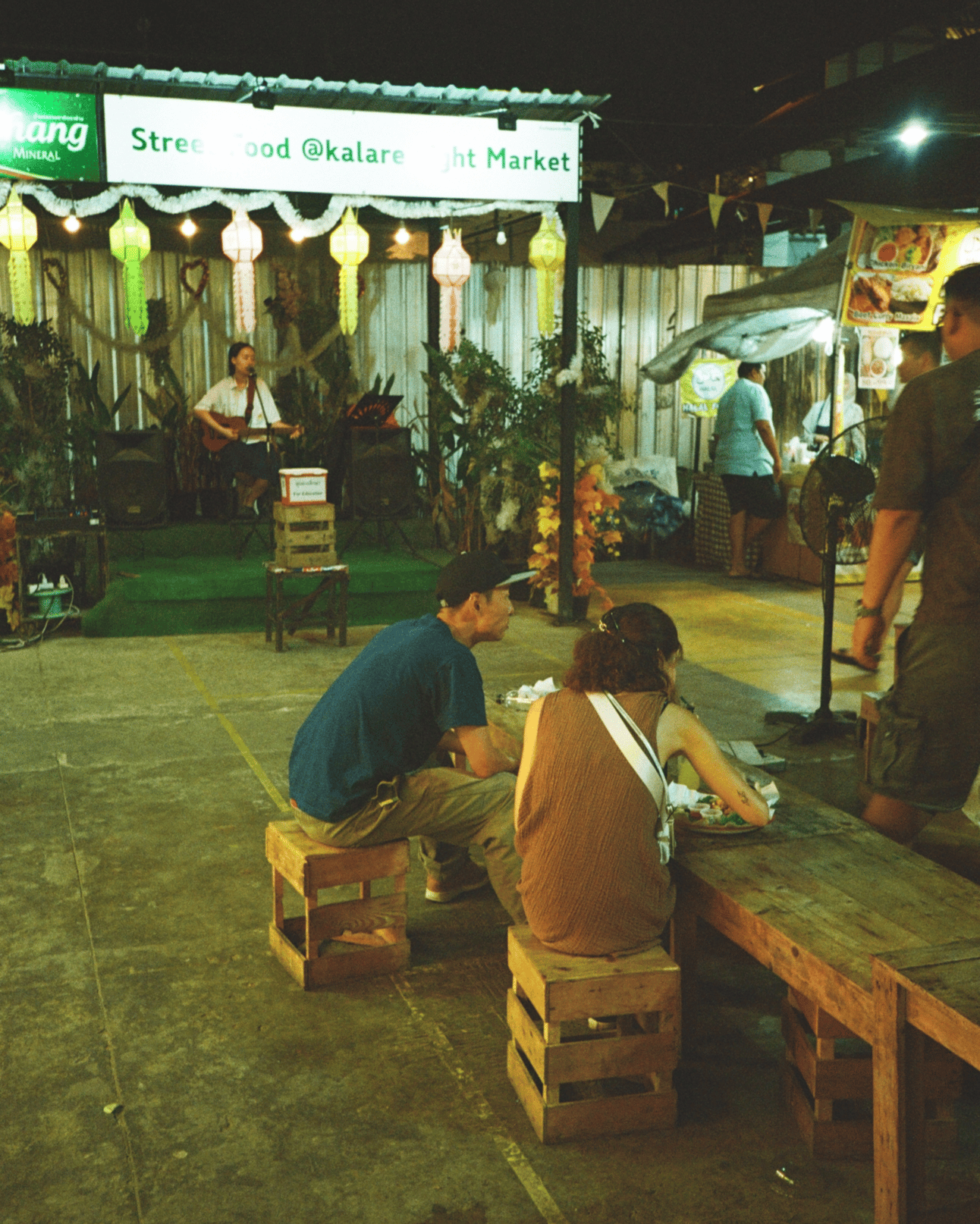
July 30, 2025
05.30.25 | Bangkok
We are packed and waiting in the hotel lobby for our taxi to Chiang Mai International Airport. We’ve bought overflow bags to accommodate all our souvenirs--an inevitable outcome.
I insist on eating a double cheeseburger at the airport Burger King. A silly tradition of mine. The burger is mediocre and the hash browns incredible, as always. We breeze through security. We board. And we are in Bangkok all too quickly.
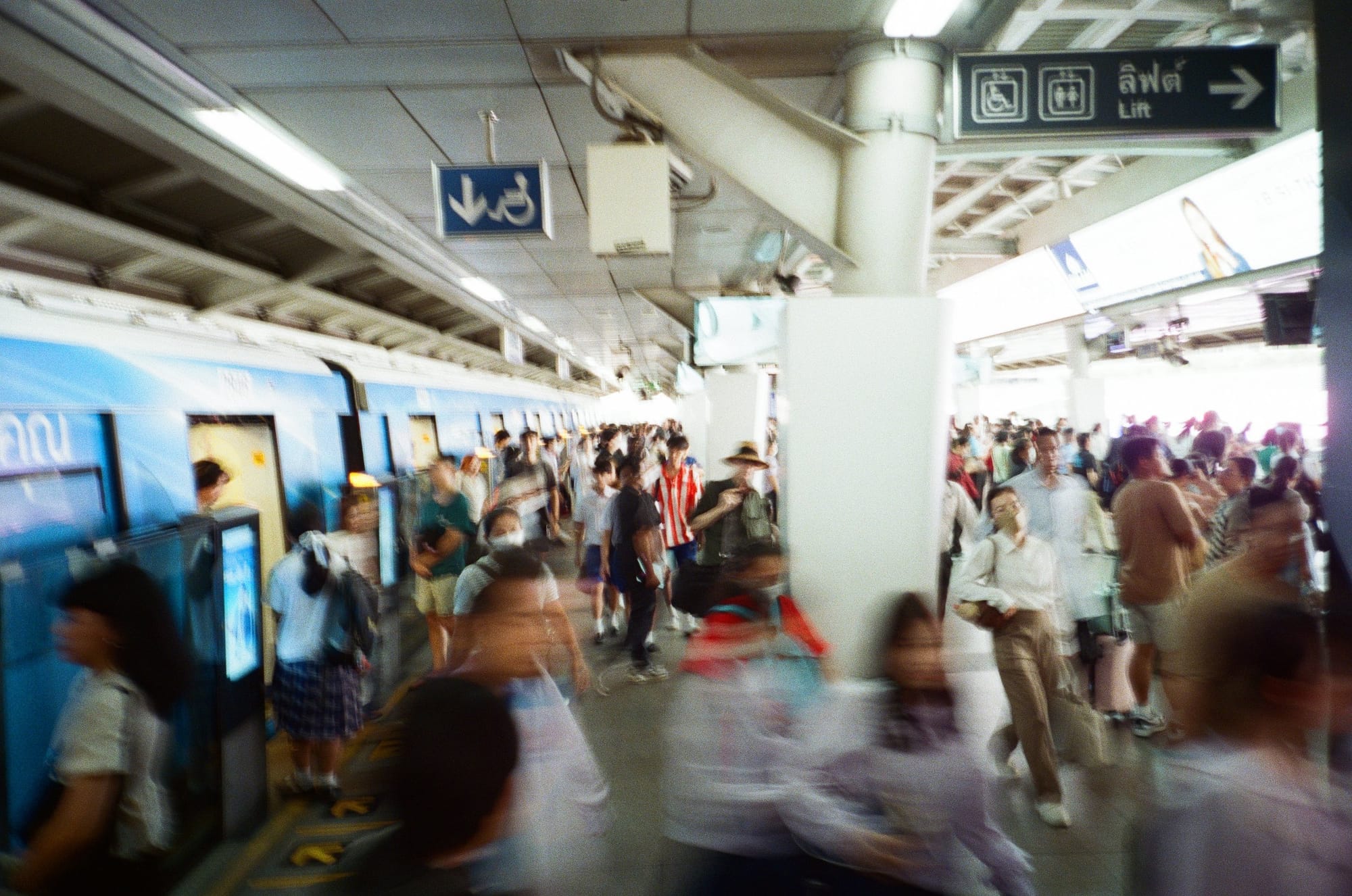
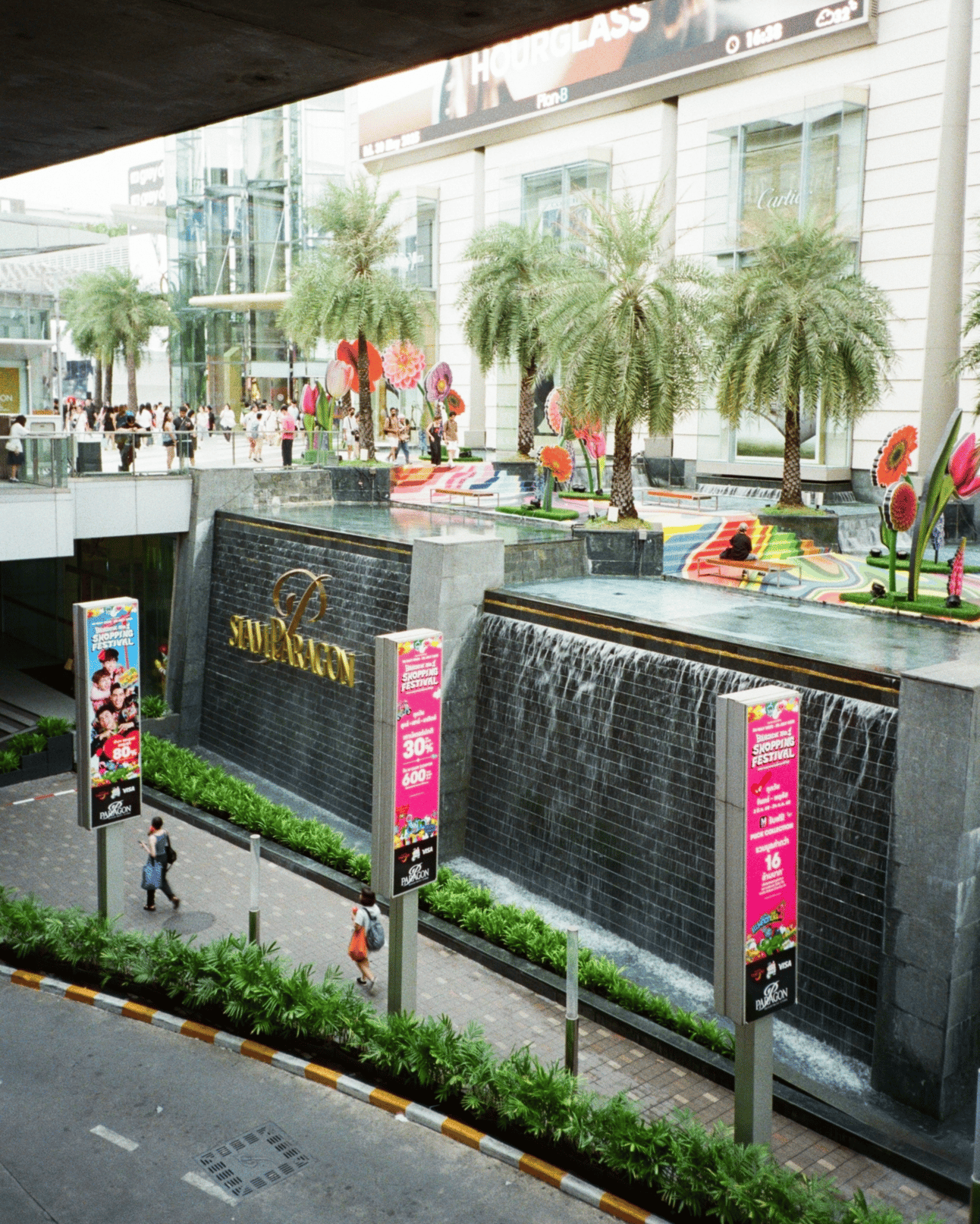
My flight is early next morning, but my parents and little brother fly out tonight. We drop our bags at my hotel room and hop on the skytrain to Paragon mall.
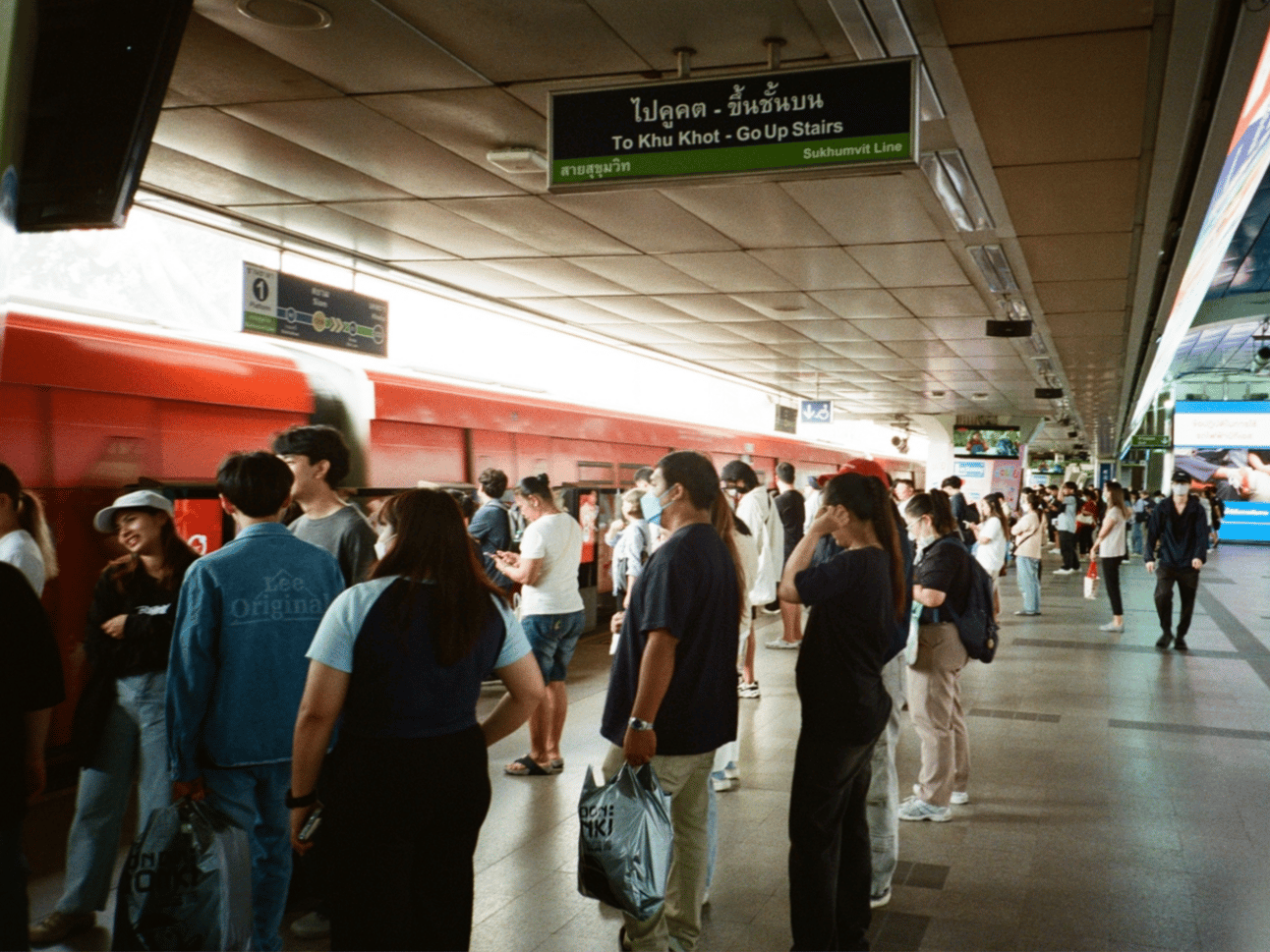
I loathe malls in the States. They’re boring warehouses full of cheap waste and bad food stretched out in a long, windy dark pattern. The only reason for me to step inside one is a movie theater. The malls in Thailand put everything I’ve seen in the States to shame. They’re vertical, knit together with overlapping escalators. Each level is cogently organized: luxury, hobbyist supplies, technology, clothing, home goods, etc. Usually, there’s also a supermarket. The Paragon has an IMAX theater at the top and a whole aquarium in the basement.
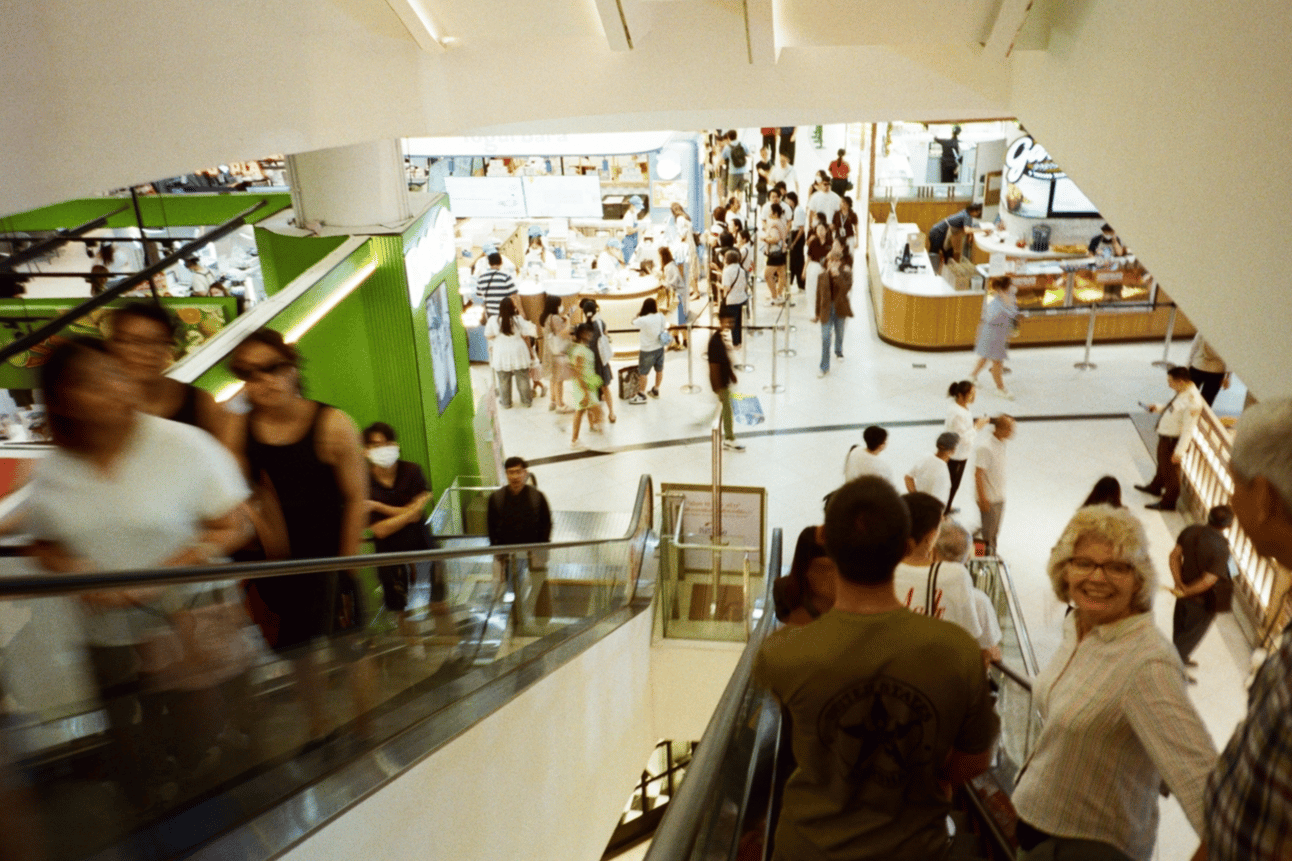
We go to the food court and eat our last bit of native Thai food. We feast on Phat Graprao, Tom Yum, Pak Boong Fai Dang, and what we affectionately call Butt Balls--sausages prepared as spheres and tied together with string. When cooked and the string removed, they look like tanned tushes with the pale shadow of a thong. Dessert is fried banana--so sweet, savory, crunchy, and creamy.
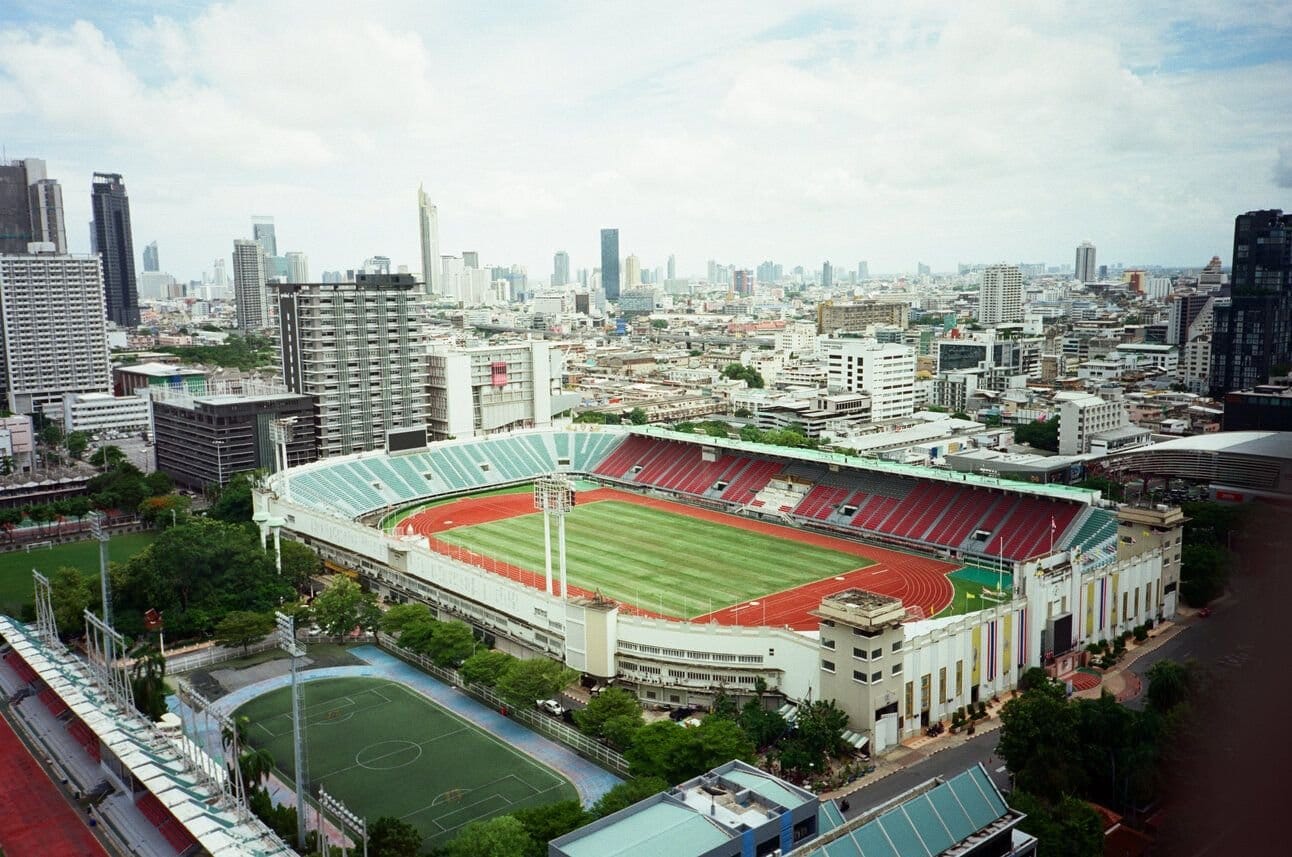
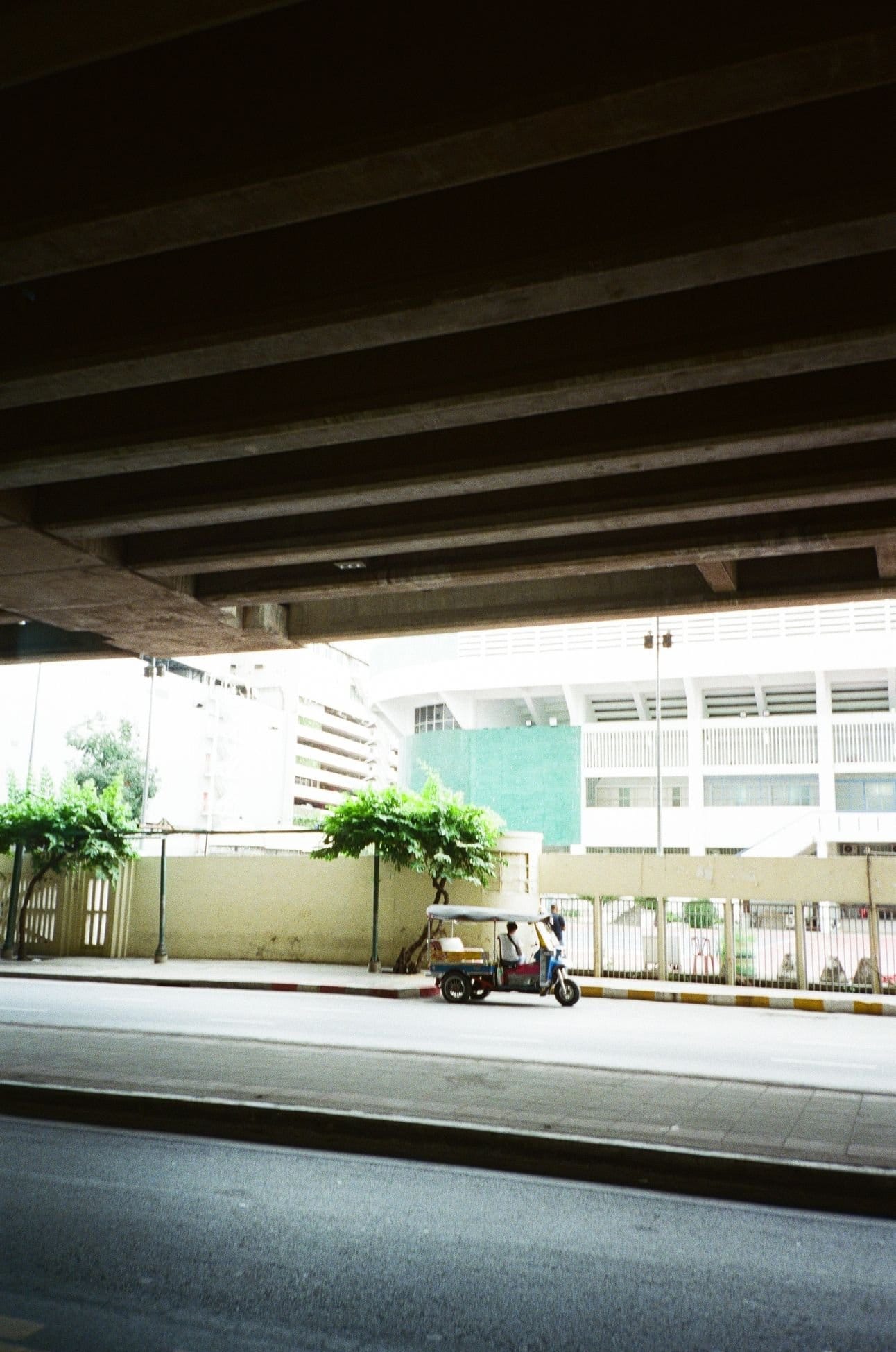
We return to the hotel. The night’s travelers shower. And I say farewell to Mom, Dad, and my brother in the lobby. They wave as their taxi drives away. I return to the room. Shower. Worry over my bags checking, rechecking, triple checking that everything is accounted for. Then attempt to sleep.
July 31, 2025
05.31.25 | BKK>ICN>SEA>BNA
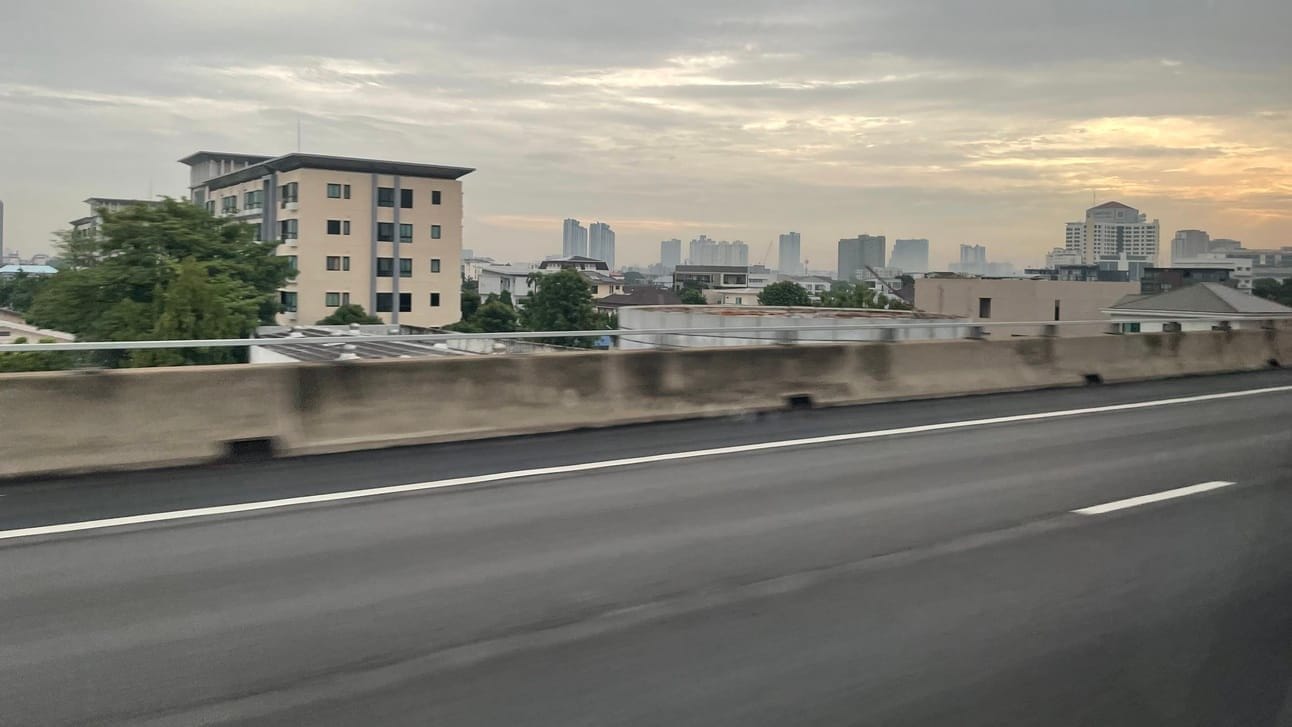
I breakfast alone--friend rice, pad prik king, and pad kana namman hoi--check out and hire a taxi to take me to the international airport. The drive is nearly an hour. Lower roads are bumper to bumper in the shadow of the skyscrapers, overpasses, and skytrain. The scenery is concrete. But here and there bursts unchecked plant life of polluted green.
We move faster on the elevated highway. I can almost see the shape of the city--clustered skyscrapers give way to shorter, stacked suburbs, and beyond that the beginnings of farmland. The highway undulates--dipping below and rising above its neighbors--and I glimpse the river delta Bangkok is built on lurking beneath the overpasses. The water is grey and littered with trash. There’s a reason my parents never took us to the floating market or rode a river taxi. You can see the dysentery slicked on the surface. Tucked away along the overshadowed riverbank are the impoverished homes. Wooden, stilted houses half on land, half in the water crammed together and patched with ramshackle boards and tarps. Some dwellings are concrete. All worn. They look like the homes I’m familiar with up north in the country. Homes my neighbors lived in. Homes I lived in. And here’s the green, too. Fruit trees, vines, and bushes take up as much space as they can from the city.
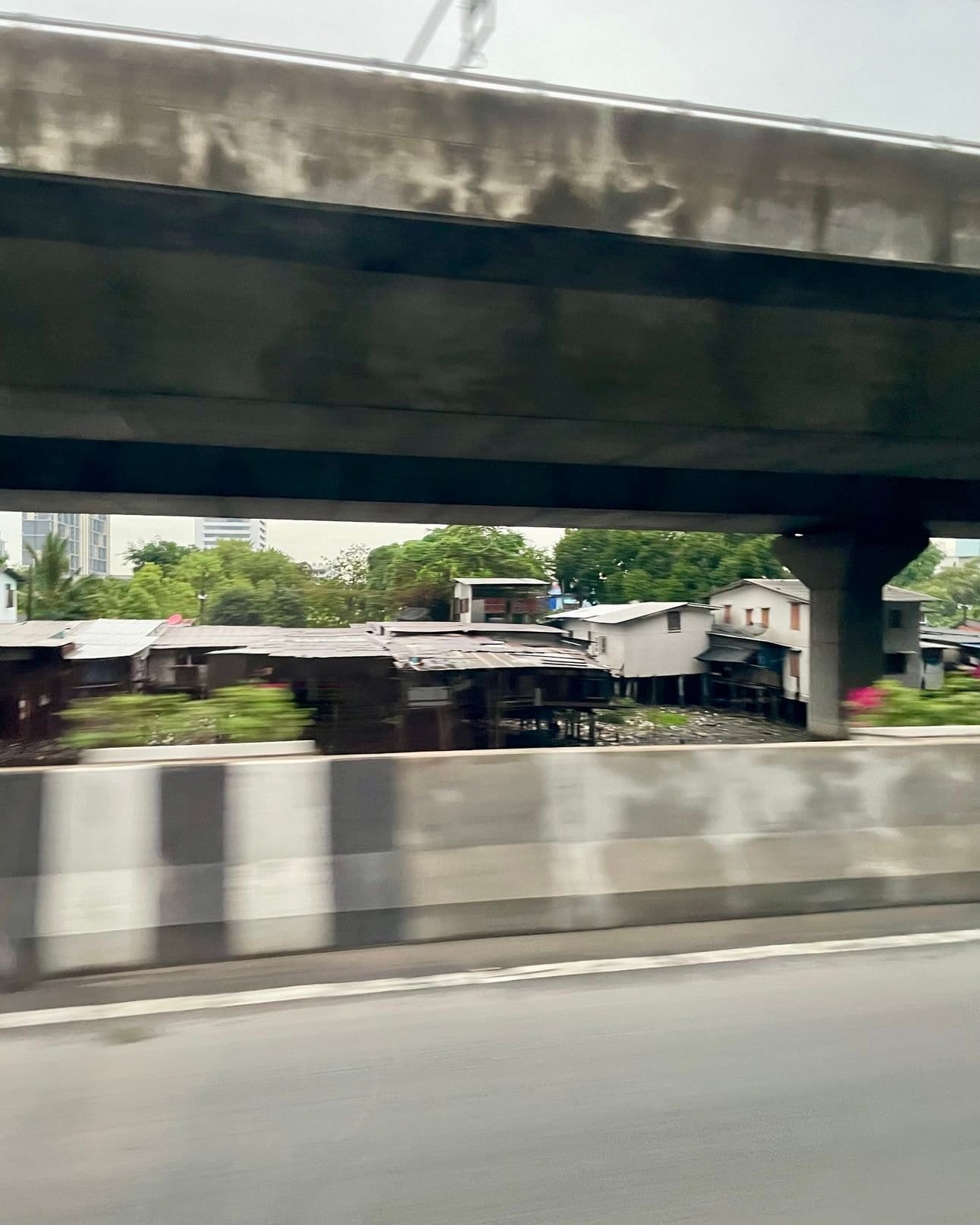
Passing by this liminal region between urban and agriculture, I reluctantly address a thought I’d been avoiding. Something I knew and wish I didn’t. I would never live in Thailand again.
I feel like a tourist. The 14 years of my childhood spent in this country--living in villages by the rice paddies, playing soccer in dirt lots with the goals marked by our flip-flops, eating meals on mats on the floor, going to weddings, going to funerals, listening to the monks’ endless chants--feel like they account for nothing now that I’ve lived over a decade in the States. I left. Thailand moved on without me. Forgot me. My connections to this culture are pulling thin, breaking one by one, and drifting away like spider’s silk.
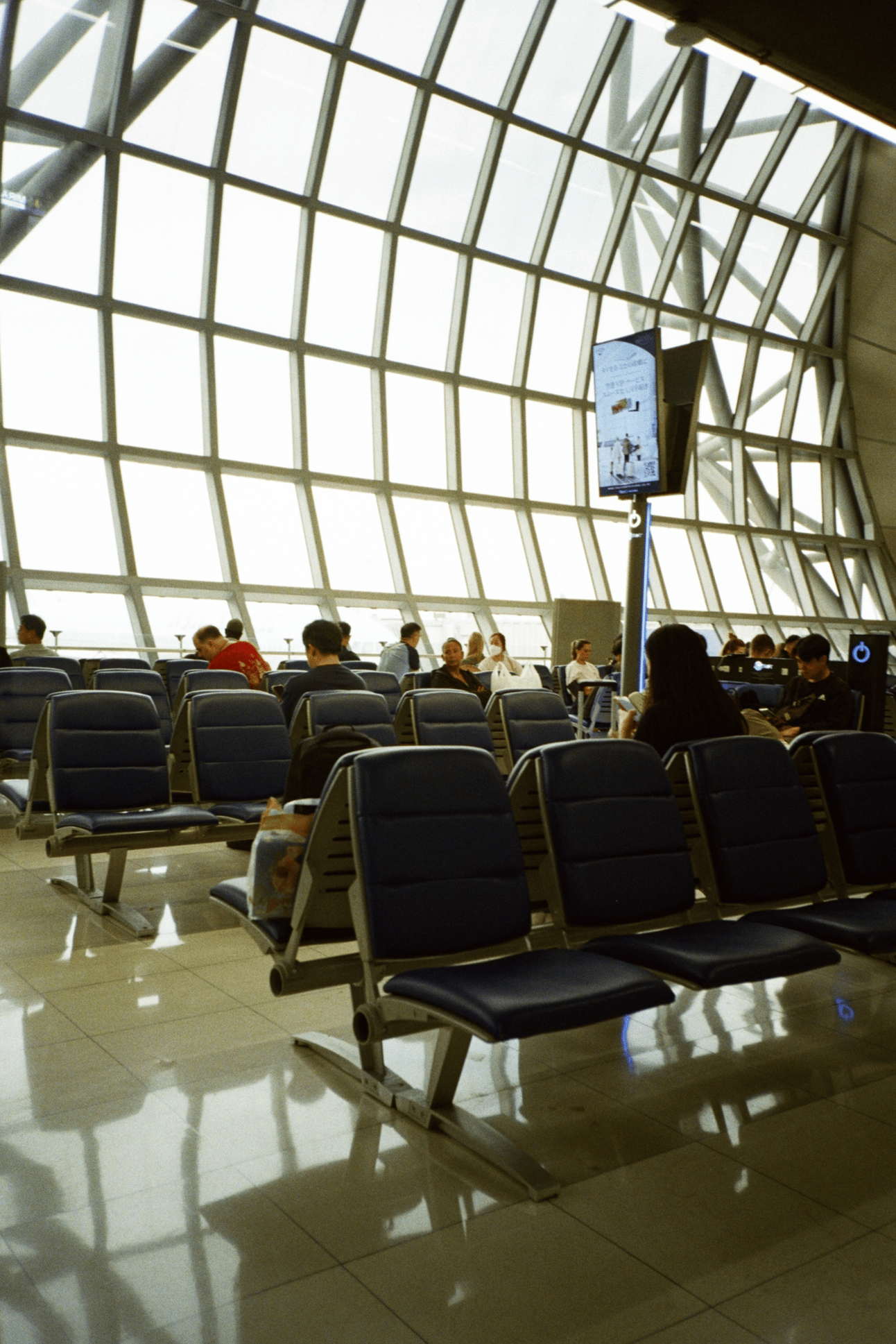
The trip back is uncomfortable but not interminable. I watch my movies, eat bibimbap, pretend to sleep. Each flight worsens as we approach the States. The services and comforts degrade. The passengers grow louder and more inconsiderate. More than sleep deprivation wears at my mood. And then, I’m back at my apartment. It’s the black hours of morning. I want to shower and sleep. But, more than anything, I want to see my friends. Because only with them does this trade makes sense.
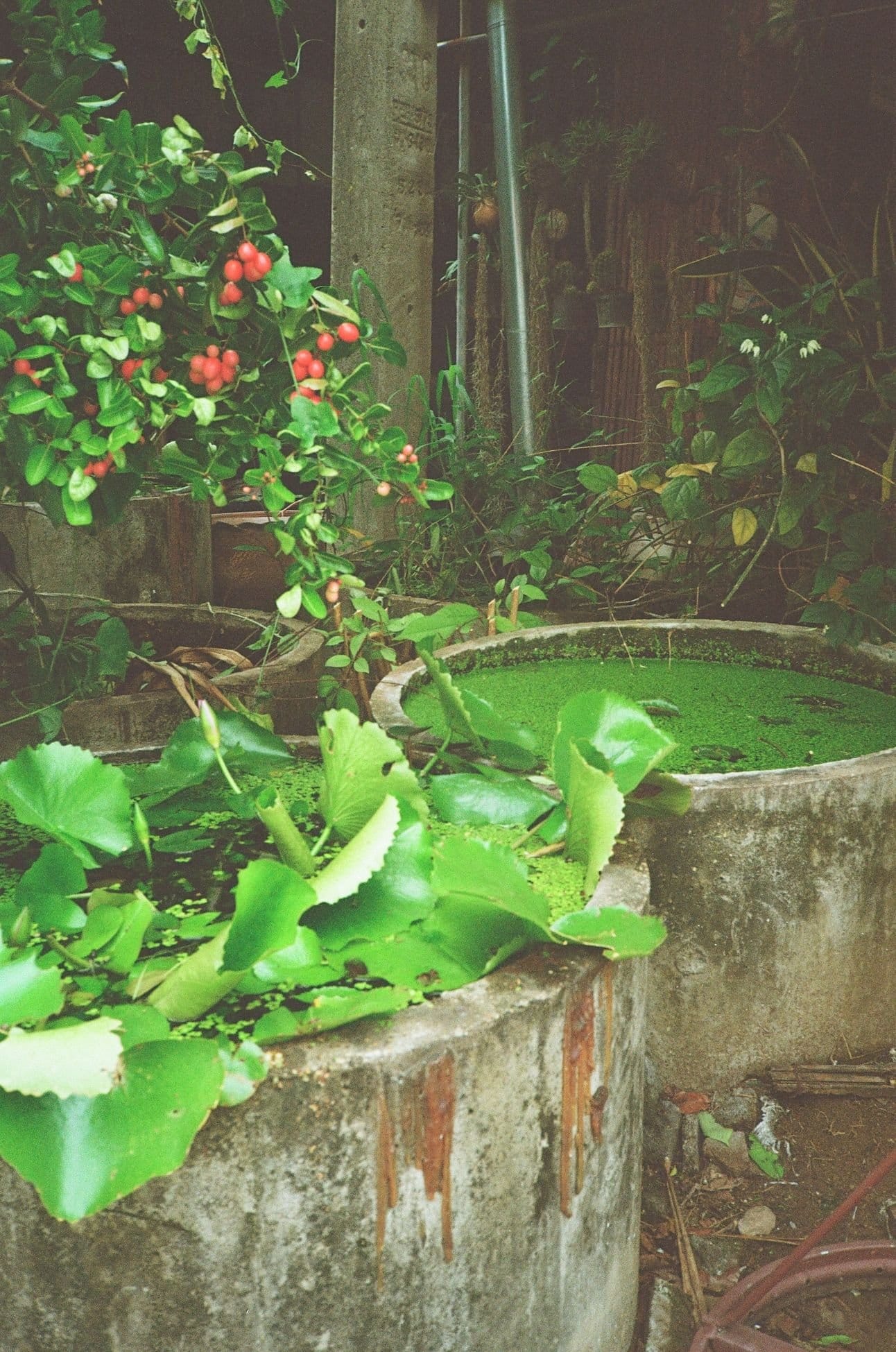
Photos in this series were shot on an Olympus XA1 loaded with Fujifilm 400, an Olympus XA4 loaded with Kodak Ektar 100, and an iPhone 12 Pro.
A few select photos were taken on the Nikonos V with Kodak Ektachrome 100.
The Sigma fp digital camera and Soundman OKM II binaural microphone were used to capture the ambient videos.
Thank you for following along.
 After the travelogue